“Sod the wine, I want to suck on the writing. This man White is an instinctive writer, bloody rare to find one who actually pulls it off, as in still gets a meaning across with concision. Sharp arbitrage of speed and risk, closest thing I can think of to Cicero’s ‘motus continuum animi.’

Probably takes a drink or two to connect like that: he literally paints his senses on the page.”


DBC Pierre (Vernon God Little, Ludmila’s Broken English, Lights Out In Wonderland ... Winner: Booker prize; Whitbread prize; Bollinger Wodehouse Everyman prize; James Joyce Award from the Literary & Historical Society of University College Dublin)


.

.

.

.
Showing posts with label Paul Holloway. Show all posts

09 May 2011

GLENTHORNE CARVE-UP BACK ON TABLE

Hard-core Vineyard Researchers Could Learn From Gum Guardian: Do Science On Glenthorne Farm!
by PHILIP WHITE

Having seen enough vineyards rotting away this vintage, your correspondent was delighted this last week to attend what is Australia’s leading arboretum of eucalypts at Currency Creek.

This amazing plantation is largely the work of one obsessed man, Dean Nicolle Ph. D.; B. Sc. (Hons) Botany; B App Sc. (Natural resources Management). By the age of eight Dean (above) knew he would be dedicating his life to botany, by his sixteenth year he knew his focus would be the eucalypts, and was hard at work collecting and propagating seeds for his collection. He plants four trees from each source tree, and preserves other seedlings which are stored in scientific repositories elsewhere.

He now runs an arboretum of over 900 species and sub-species, totaling some 9000 plants. He talks of individual source trees in the Kimberly, the Simpson Desert or Cape York with the sort of familiarity most of us show our nephews and nieces. With other scientists, he is constantly running essential trials and experiments, and showed us an amazing study in progress examining the carbon-storing capacities of different types of eucalypt. To scientifically test the effect of bushfire on the different types, he even burnt a large part of his original plantings to a cinder, with the help of the local fireys.

It is alarming to realize that the knowledge of our most common indigenous tree rests so much in the zeal of one man, who has tirelessly done most of this off his own bat, working as a consultant to raise the funds to keep the whole complex exercise alive. To visit this quiet corner of the Fleurieu is a humbling, confounding experience.

Which brings me to Glenthorne Farm, the 206ha research station on O’Halloran Hill. In the late ’nineties, the late Greg Trott and I fought for some years to have this saved from sub-division and established as a research vineyard and winemaking site as part of the campus of the University of Adelaide. With some acute wheeling and dealing, and the assistance of Senator Robert Hill, Minister for Environment, and Di Laidlaw, local Minister for Planning, we eventually convinced the CSIRO to dramatically drop the fee it expected. The State government bought the land and a deed was drawn to have it transferred to the University for a dollar.

This deed was very specific. Amongst its Recitals are the following:

B. For many years the CSIRO has used the land for purposes of agriculture and as an agricultural research facility.

D. The CSIRO has only agreed to sell the Land on the proviso that the Land will be preserved and conserved for agriculture and other related activities and will not be used for urban development.

E. The University, as the person nominated by the State, has agreed to purchase the Land from the CSIRO, to preserve and conserve the Land for other related activities and not use, develop or permit the Land to be used or developed for urban development.

Furthermore, the Obligations of the University included the following very specific clauses:

4.1 The University covenants with the Minister that it will, subject to obtaining all necessary statutory approvals, do all reasonably necessary things to ensure that the Land is

4.1.1 preserved, conserved and used for Agriculture, Horticulture, Oenology, Viticulture, Buffer Zones and as Community Recreation Area, and

4.1.2 is available for Project Research Activities, University Research Activities, Education Activities and operating a Wine Making Facility.

4.2 The University covenants with the Minister that it will not at any time hereafter:

4.2.1 use or permit the Land to be used other than as provided for in subclause 4.1 unless such other use is approved in writing by a Minister acting as agent of the Crown,

4.2.2 undertake or permit Development or seek to undertake Development of the Land for uses other than those specified in subclause 4.1 unless such other use or Development (excluding Urban Development which will not be approved) is approved in writing by a Minister acting as agent of the Crown.

4.4 The University covenants with the Minister that it will not at any time hereafter sell, transfer or otherwise dispose of the whole or any portion of the Land unless it shall first procure from the purchaser or transferee a binding undertaking either to be bound by this Deed or to enter into a Deed with the Minister on the same terms as are contained in this Deed.

The University spent almost two years considering this deed before affixing its seal; Trott eventually set up a joint venture with BRL-Hardy, which would buy fruit from the first commercial-scale vineyard there, providing some of the funding for the further development of the facility according to the deed. The transfer eventually went through smoothly, and in the University newspaper, Vice-Chancellor, Professor Mary O’Kane promoted the deal as a sensible triumph for the future of viticultural research in Australia.

“The partnership agreement between the University and BRL Hardy—two of the icons of the South Australian wine industry—will strengthen South Australia’s position as an international leader in wine research and education,” she said.

“This is a strategic, long-term investment based on sound financial principles and an assessment of the future needs of the Australian wine industry.

“In addition to state-of-the-art laboratories and equipment at the Waite campus, the University will now have access to a large commercial vineyard managed by one of the world’s fastest-growing wine companies. This will be a tremendous advantage in ensuring that the University and the South Australian wine industry stay at the forefront of viticulture and oenology research and education.”

Professor O’Kane said most of the land would be put under vines and some research facilities would also be located on the site. The commercial vineyard would contribute further money for research at the University.

“We expect that the vineyard will begin to generate income for research from the third vintage,” Professor O’Kane said. “We have entered into a long-term contract with BRL Hardy for the management of the vineyard and sale of the fruit, more than 50% of which will be available to other winemakers.”

Through hopeless mis-management, and perhaps some nefarious long-term scheming, none of this occurred, and after nearly a decade the University attempted to sub-divide enough of the land to build a thousand houses. BRL-Hardy was absorbed by the giant Constellation Wines of upstate New York, which has now sold everything at bargain basement rates, dumping $1.6 billion, and virtually left Australia. Your correspondent nevertheless spent over a year lobbying to ensure the University kept its side of the very generous deal, and eventually then Planning Minister Paul Holloway ruled that the University should conform to the agreements it made in the deed.

Two short years later, now with Robert Hill as chancellor, the University is again angling to wriggle out of the deed and grab some cash, so the writer is dumbly preparing for another battle, the third, to see this land used to avoid some of the destruction and mismanagement we have seen in Australian viticulture in the last few years.

There are countless trials and tests which urgently need to proceed in the world of viticulture in this time of extreme climate, global warming, and ever-changing wine trends. There are thousands of grape varieties never even trialed in Australia. We need urgently to source better flavours, and more drought and disease resistant grape sorts. There is a desperate need to research better irrigation practices and recycling of water, and scientific tests of organic and bio-dynamic procedures must be commenced to keep international shelf space as the whole world of gastronomy moves toward more wholesome, eco-friendly farming and manufacture.

To think that all the billions invested in the wine industry sit there awaiting their Dean Nicolle leaves me angered and frustrated. With the disappearance of Constellation, and the possible fragmentation of Fosters wine group, now called Treasury, McLaren Vale suddenly has no big winery presence to rekindle that sensible JV arrangement and get on with it.

But now Angoves, the giant Riverland winery more aware than most of the troubles of irrigated viticulture is moving into McLaren Vale with a new cellar door and vineyards, perhaps it’ll take one of the last great wine families to rekindle some sense and some hard, cold science. Any company that saves precious southern vineyard and farming land from ghetto rash would rise immediately to hero status. Internationally.

GLENTHORNE FARM: THE UNIVERSITY OF ADELAIDE IS ATTEMPTING ONCE AGAIN TO WRIGGLE OUT OF THE DEED IT SIGNED, IN WHICH IT PROMISED TO USE THIS RESEARCH STATION FOR VITICULTURAL SCIENCE, WINEMAKING STUDIES AND HORTICULTURE WHILST PRESERVING AND CONSERVING THE ENTIRE 206 ha PROPERTY photo LEO DAVIS


09 January 2011

CONSTELLATION STARS CRASH IN OZPLONK

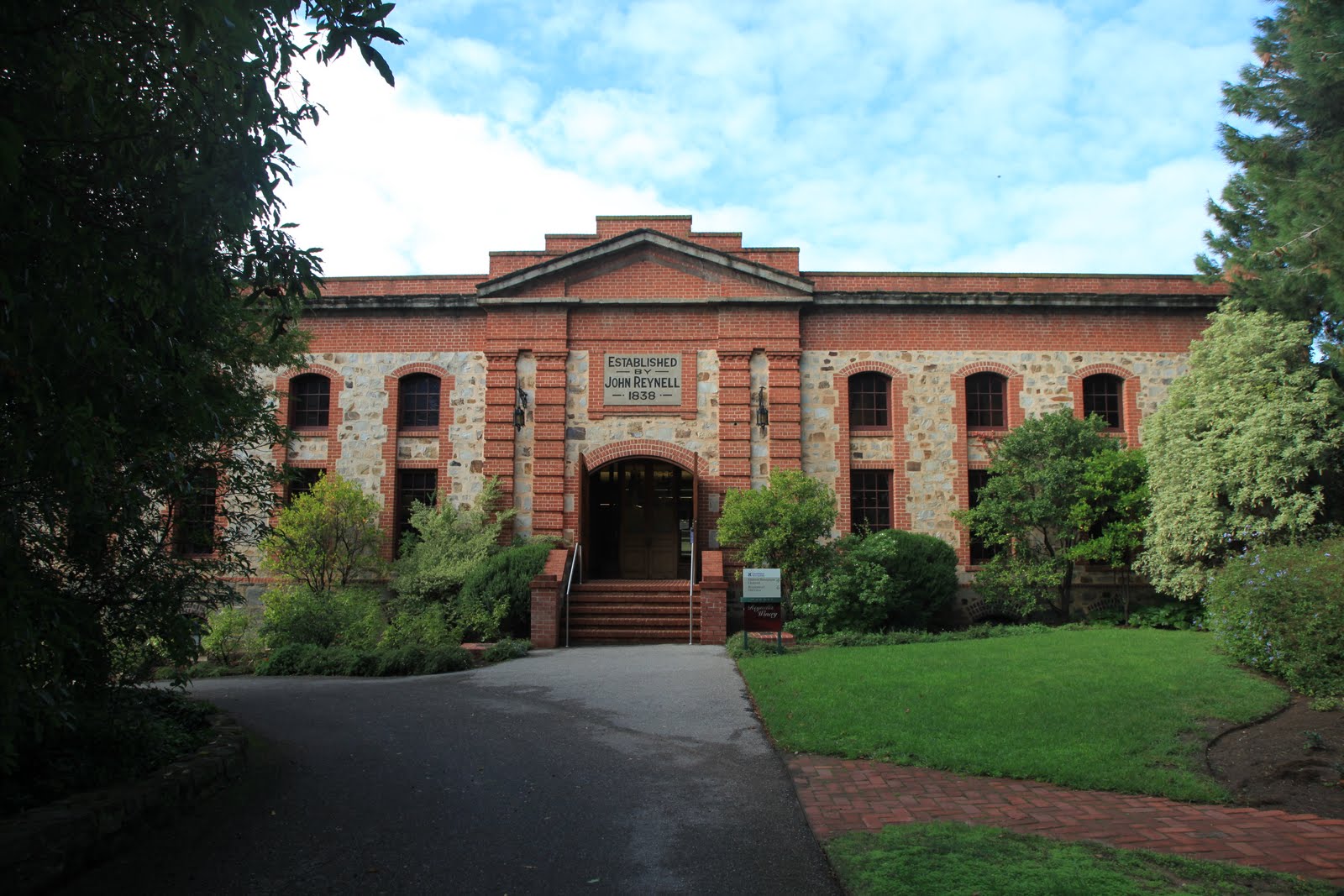
THE GRAND OLD CHATEAU REYNELLA WINERY IN McLAREN VALE; FORMER HQ OF NEW YORK MARAUDERS THE SANDS BROTHERS, UPSTATE NEW YORK RUBES WHO NEVER GRASPED THE HARD REALITIES OF WINEMAKING IN AUSTRALIA'S WILD FRONTIER, WHERE ONLY THE SMART AND THE TRUE SURVIVE PROFITABLY - photo KATE ELMES


Bad Business Butchers Bush Wrong Sands In Our Wineglass Fosters Faces Devalued Assets
by PHILIP WHITE

This is a story of how changing climate, political skulduggery, disastrous public relations and general business ineptitude is destroying what many have long seen to be Australia's greatest agricultural export success.

There has never been a vintage quite like 2011. The calamitous matter of international oversupply aside, Australia’s wine business is a sodden, mouldy husk of its old budding beauty, with great swathes of its traditional lifeblood rotting on the vine because our mightiest ethanol peddlers (read transnational winemakers) refuse to pay the cost price for grapes.

This is coincident with the big chemical manufacturers and importers deciding that nobody could afford to pay for their fungicides because atop the insulting prices offered for fruit, the lack of irrigation water had broken the growers' financial backs. So these chemical traders neither imported or manufactured sufficient fungicide spray to deal with the country's current plague of moulds and mildews.

To help ease this crisis, the irrigated wine business, through the Winemakers Federation of Australia, has even negotiated a temporary relaxation of Canada’s severe restrictions on Australia’s use of phosphorous acid as a fungicide, so the mildew which too much rain and flood has set blooming all the way from Blanchetown to Burke can perhaps be limited and wine exports to Canada will remain unimpeded.

If they're lucky.

China has also been approached for a similar deal, but, perhaps wisely, refuses to respond. China has its own burgeoning wine business, and will soon be exporting cheap wine to Australia.

However you see it in the meantime, that rather vainglorious appellation which some genius, for want of a more precise term, called “South Eastern Australia”, is cactus. At a time of the most destructive irrigation restrictions ever, a deadly percentage of the vineyard in this vast appellation, equal in size to Portugal, Spain, France, Germany and Italy combined, is wet, mouldy and rotting.

The current disastrous floods are only the latest derisive insult to the many thousands of struggling bush families the wine industry is in the business of wrecking.

Otherwise, the season is nearly perfect: the cool wet start has set the better regions up beautifully; ongoing moderate breezy weather ensures the smart cookies who’ve done everything right will get some exemplary fruit. Only the jaundiced take joy suggesting the rotten side of the crop will assist clear the welling lake of unsold swill: only the idiot suggests the sweaty hands steering the industry’s confounding array of governing councils have solved the problem by their own cunning design.

Two of the most inelegant words in the history of English summarise the situation perfectly.

The first, “premiumise”, is the creation of the propaganda unit of the Sands brothers of upstate New York, the men who run Constellation, the world’s biggest wine company until a few minutes ago. They have been “premiumising” their ethanol mongery for a couple of years now, trimming it in the hope it will look better.

The wise observer (barely seen in the international business pages), the comfortably jaundiced, and even the idiot, must agree that “premiumise” seems to mean “hope to charge more for the same old same old”.

The second word, “demerger”, is the new form of “dismantle”, “dismember”, “flay”, or “gut”. It is the creation of the propagandists at Fosters, which intends to rip apart the huge wine and beer businesses it had only just completed “merging”, which always seemed to mean “crash senselessly and illogically together”.

This closely followed the disastrous “merging” of Southcorp with Rosemount, where, disguised as a white knight, Bob “Wild Oats” Oatley walked away with one or two billion, leaving his punchdrunk monolith sitting pretty for Fosters to gobble and rename.

Both “premiumise” and “demerger” are rather quaint negligees for that haggard old whore we once called greed. But these current captains of the ethanol racket can’t even successfully commit greed.

Take Constellation. In 2003, it spent AUD$1.9 billion erecting the Australian winemaking and United Kingdom distribution show it has just dropped for AUD$290 million, although the Sands boys have thrown some snakes in the murky water by insisting they’ll retain a 20% slice of the action, which means they’ll pick up only AUD$230 million “subject to closing adjustments".

Having confidently predicted their determination to get the hell out of Australia two years ago, this writer sees no joy other than cruel ridicule in any of this: in their retreat they clumsily butchered the main bits of their “premium” involvement, the grand old wineries of Chateau Reynella and Tintara. At the former, they last year destroyed a heritage-listed vineyard (below) at least the historical equivalent of Grange or Hill of Grace to make a quick $5 million in a rude housing malignancy; the latter, Tintara, the last winery to survive in the main street of McLaren Vale, they mothballed.

DEPREMIUMISED: THE HERITAGE LISTED JOHN REYNELL VINEYARD DESTROYED BY CONSTELLATION LAST YEAR - photo KATE ELMES

These two deft actions alone cost them much much more than $5 million of goodwill.

After the Reynella destruction, few would dare to permit their interference with Tintara’s heritage status.

One could be forgiven for suspecting that these people have no idea of the common meaning of premium.

A particularly sickly exemplar was their involvement in the USA Merlot racket. Most Americans seemed to think Merlot meant “mellow sweet red” until a schmucky Hollywood film suddenly made Merrrllow soooo yesterday that everybody needed something else to drink, immediately. The movie suggested Pinot noir, so, with Gallo (suddenly the world’s biggest wine company, again), the Sands lads unwittingly got themselves entangled in a scam in which they bought Pinot noir made from south of France Merlot and Shiraz.

This was much easier than mastering the notoriously tricky red grape of Burgundy, but, until the French wine police picked the scab off the racket, America loved it. They were ignorantly drinking the same swill they thought they’d fashionably abandoned, indicating the incredible naïve vulnerability of ethanol addicts who imagine themselves to be epicures and gourmands. Sideways, see?

To rub all this in, the scrillion tonnes of salt the Murray-Darling floods are about to unsettle will be just dandy for curing the wounds Fosters has incurred in its parallel disaster.

Before he jumps ship (as promised), Fosters CEO Ian Johnston will settle David Dearie into the hot seat at Treasury (the new name their propagandists thought up for their wine division), and CUB CEO John Pollard into the beer biz (which should be a cruise, comparatively).

Apart from the brilliant success of Penfolds, the rest of the Treasury wine lake could do with some serious premiumising, but you wouldn’t follow the example set by the Sands brothers.
David Dearie starts his year looking down the backwards telescope of the Sands’ imposed evaluation of the very ordinary end of Treasury’s Noah’s Ark of brands. These stretch from Andrew Garrett (really) to Queen Adelaide (currently in a gay resurrection), and Kaiser Stuhl to Wolf Blass (both of which Fosters has for years listed as Mildura wineries in the Australian Wine Directory).

Mildura is sinking.

If these treasured assets were worth anything last vintage, all the above has seen their value plummet by about the same sickening lurch the Sands brothers have stupidly engineered themselves.

Both these demergers could use some retrospective premiumising. If it had occurred, it could have been called logical and moral propriety, or perhaps even good business, subject to closing adjustments.

SOME BACKGROUND

As through this life you ramble
You’ll meet some funny men

Some will rob you with a six gun

And some with a fountain pen.


- Woody Guthrie

The Sands brothers, of upstate New York, obviously enjoy being seen, on their home patch, as men who respect culture, heritage, and the arts. As well as promoting their awards for community service in these areas, they are proud to pay big money to have their name on the Constellation Brands Marvin Sands Performing Arts Center in their home town of Canandaigua, near the Finger Lakes.

Their propaganda boasts that “The Friends of the Constellation Brands-Marvin Sands Performing Arts Center, Inc (CMAC) is a New York not-for-profit, 501(c)(3) corporation that was formed to assume responsibility for financial operation of CMAC. CMAC supports the mission to improve the quality of life in our community through culture, education and the arts.”

Artists like Willie Nelson, the Levon Helm Band, Robert Cray, Maroon 5, Cheryl Crowe, George Thorogood, Ringo Starr, and the Fabulous Thunderbirds are regular headliners there.

Not to mention a group aptly named Shit Is Fucked.

These people are totally unaware of the cultural destruction the Sands boys have wrought on McLaren Vale, South Australia, the former home of the enormous Australian wine empire they bought, built and butchered in seven quick years.

Just a couple of years back, Constellation’s PR troops were working hard on their “premiumizing”. They boasted of having “defined three areas in which all of its Corporate Social Responsibility focus will take place: sustainable business practices, philanthropy and social responsibility. From these three focus areas flow specific categories of emphasis, including our environmental impact, corporate giving, marketing and advertising codes, community involvement and much more. All of Constellation's social responsibility efforts flow directly from its values and culture."

But, apart from sacking hundreds of faithful workers at their heritage wineries of Reynella and Tintara they last year destroyed one of South Australia’s oldest commercial vineyards, and one which historically was at least as important as the Grange vineyard at Magill Estate, Langmeil’s The Freedom at Tanunda (probabaly the wold's oldest producing Shiraz vineyard), Kalimna near Nuriootpa (the world's oldest producing Cabernet vineyard), and the Hill of Grace near Keyneton.

Constellation made a measly AUD$5 million with the sale.

Just how this occurred is a vivid example of how Australia’s Labor governments, whose leaders seem to yearn to display business acumen not usually evident in the left, are transfixed by flash Harries much more expert at taking money and property from weaker and more vulnerable others.

Constellation hired a little-known historian to contradict years of its own sales hype - and decades of it from BRL-Hardy and Chateau Reynella before they were purchased - which had promoted this vineyard as an invaluable and irreplaceable cornerstone of the history and heritage of the Australian wine story. Together with the master fudgers of the Onkaparinga Council (the local government) and the soft cocks of the State Heritage Branch (State government), they managed to use this expert’s cheaply-bought advice to have the vineyard’s Heritage listing expunged.

ARIEL VIEW OF THE FORMER CONSTELLATION JEWEL AND HEADQUARTERS AT CHATEAU REYNELLA. THIS DISTRICT, WITH ITS PRICELESS ANCIENT GEOLOGIES, WAS ONCE CARPETED WITH DRY-GROWN VINEYARDS.

The photograph above shows the Chateau Reynella complex, and its surrounding vineyards. The large stony vineyard on the slopes to the right is the inferior one, and has been so regarded since John Reynell’s day. The smaller one (2 hectares - marked with the ellipse) bordered the heritage village of Old Reynella, was sold to the developer, Pioneer Homes, to build 41 apartments there on blocks averaging 22 x 22 metres.

Ebenezer Ward was the wine critic on The Advertiser in South Australia in 1862, preceding me by 126 years. Having visited Reynell Farm in that year, he wrote “Thus his [John Reynell’s] vineyard on the hilly land is confined to the Clarendon sorts, The Rousillon, and the Verdeilho. The Carbonet – a variety which, for the quality of its produce, cannot be too highly valued – Mr. Reynell has planted in another vineyard which he formed in 1848 on the flat bordering the creek, and where the soil is a black alluvial deposit on the surface, with a red loam subsoil. In this vineyard there are also Malbec and Shiraz … we thought a wine made from an admixture of Malbec and Carbonet best of all.”

In spite of this published first-hand report, and those many years of praising the vineyard’s significant history, Constellation managed to have the vineyard’s heritage listing removed.

JOHN REYNELL'S OLD CHATEAU REYNELLA HOMESTEAD, THE FORMER HEAD OFFICE OF BRL-HARDY - CONSTELLATION STRIPPED IT OF ITS ANTIQUES A YEAR AGO AND SOLD THEM AT A PITTANCE - photo - KATE ELMES

This occurred when they convinced the powers that be that the hill vineyard was indeed the most significant.

Part of the decision seems to have been justified by confusing the lower vineyard’s name. Somewhere in its recent history, amidst a peculiarly Australian fashion of naming export wines after hills and ridges which usually did not exist (Australia is famously flat) somebody gave the lower site the misnomer, “Stony Hill”, a strange appellation considering its proximity to the adjacent hill, which is indeed stony.

The lower vineyard also had a highly-significant viticultural importance, being the source of what was for years erroneously called “the Reynella clone” of Cabernet sauvignon, a superior strain of the variety which has been favoured, even revered, and propagated all over Australia for its superior flavour.

When I asked Geoff Hardy, the last formidable viticulturist of the Hardy tribe, about this, he explained "Noel Chapman was the architect of the current Reynell selection (not clone) which he told me was a process of elimination through three generations of plantings and he told me it was most recently from about 7 separate mother vines. We know that at least one of these is quite virus affected but I suspect it is two, without having done the testing. I understand the ‘current’ Reynell selection is the older Stony Hill planting (1968?) and this is where I have sourced perhaps 400 acres of planting material from, propagated or distributed through my own nursery business and this is the tip of the iceberg in an Australian sense.

"As regards naming the Stony Hill block I think Noey told me this was his doing because of the limestone in the higher part but my memory is very vague on this. Apparently there’s no mention of Stony Hill’s existence in Margaret Hopton’s significant writings on the Reynell family.

"The block has produced some great wine that I know of but I lost contact with its quality ratings in the late eighties.

"It certainly has a lot of history and is in the wrong hands at the moment."


These comments were backed up by Andrew Hardy, another significent member of the great winemaking family, and managing winemaker of Petaluma.

Chris Hackett, a former Reynella winemaker said that in his day the Cabernet from that block was the best in the winery every vintage and that when he attempted to buy the vineyard the owner dared not let it go.

But subsequently, when Constellation was attempting to convince the diaspora of the Hardy family to buy Reynella and Tintara back, all significant members of the family suddenly clammed up, and withdrew support from the burgeoning movement to save the vineyard. This could simply have been at the urging of Bill Hardy, the last senior member of the tribe to remain employed by Constellation, and the person wheeled out internationally to give the company an air of history and continuing family involvement.

His famous mother, Barbara Hardy, a revered and highly-awarded conservationist, green activist, and heritage enthusiast, also remained silent.

The death knell came when the McLaren Vale Grape Wine and Tourism Association flatly refused to support the vineyard’s retention. This association had long enjoyed the major funding supplied by Hardy’s, BRL-Hardy, and then Constellation, and seemed blind to the reality that the world’s biggest wine company was determinedly pulling out of the district, to concentrate on buying much cheaper, inferior fruit from the irrigated arid lands of the Australia outback, which were even then under severe and ongoing threat due to the abuse and over-allocation of dwindling irrigation water.

Perversely, these areas are now facing freak floods the like of which have not been seen for a century.

In response to a letter from New Zealand journalist, Sally Marden, urging the retention of the Reynell vineyard, Dudley Brown, Chairman of the McLaren Vale Grape Wine And Tourism Association, and a grapegrower who had depended on Constellation’s contract for his fruit, wrote “as our Association represents the interests of multiple industries, we have long had a policy of not commenting on commercial matters of members or disputes between industry groups except to the extent that they violate the law.

“Constellation’s forerunner company, Hardy’s, has been a member of our association in good standing since the inception of our forerunner bodies.

“We have and continue to actively lobby on matters of urban encroachment in our region (including the recent Glenthorne Farm matter) where and when we can.”

Independent State parliamentarian David Winderlich told the Legislative Council “According to Onkaparinga council, the vineyard was removed from the state heritage list by the Department for Environment and Heritage. This is a very strange decision, because the vineyard clearly meets at least three of the seven criteria for listing under the state’s Heritage Places Act: it demonstrates important aspects of the evolution or pattern of the state’s history; it is an outstanding representative of a particular class of places of cultural significance; and it has a special association with the life or work of a person or organisation or an event of historical importance.

“To delist such an important part of our history for such a small gain, 41 homes—we are not talking about this vineyard blocking the development of Roxby [Roxby Downs, the world’s largest uranium mine], for example—raises the concern that nothing is safe. It also raises questions about the integrity of the heritage listing process.”

Local independent parliamentarian Kris Hanna, chairman of the Reynell Business and Tourism Association, said the development would “wreck the place ... The site has been used continuously as vineyards since about 1840 and we’d like to see it preserved as vineyards as a tribute to our early history ... there’s a growing feeling among residents that the senior management at Constellation aren’t concerned with the history of the area or the locals,” he said.

Leon Bignell, a highly-popular parliamentarian from the district, was even more overt in his rage.

"This vital historic vineyard is symbolic of the whole district", he said on ABC TV.

"Gutter to gutter housing is something that belongs in the inner city suburbs where people want to live like that, close to the parklands and the city amenities and the high-rise offices where they're happy to work.

THE AUTHOR AT THE GATE OF THE OLD VINEYARD, JUST WEEKS BEFOTRE ITS DESTRUCTION - photo KATE ELMES

"It's like sub-dividing The Grange," he said. "Putting this sort of development on John Reynell's old block is like putting multi-storey flats on the site of the Old Gum Tree at Glenelg, or like crushing the first FJ Holden for scrap. We've already lost too much beautiful grape-growing land to tupperware tuscany housing. And that's a special piece of soil, Reynell's last block: if you read your history you'll see that ground is perfect for premium vineyard and the unique flavours those soils give, which is why Reynell planted there in the first place. It's a dumb move, and while it's not in my electorate, I'll do whatever I can to stop it."

Bignell’s colleague, Planning and Development Minister Paul Holloway, had seemed in full support when he had earlier promised ABC radio “because the Barossa Valley and McLaren Vale are important economic areas of the state, because they’re wine regions, also significant tourism regions, it would not make sense to have urban encroachment to a significant extent into those areas. So we’ll avoid those areas and the areas that we’ll be looking at for future expansion are those areas where there’ll be less impact on the important tourism and economic areas. So yes we do recognise those areas but look it’s simple common sense: why would you want to encroach on areas that are important to the economy because of the significant contribution that they make to the state’s economy through the wine industry and the tourism industry? Clearly that would be put at threat if we allowed rampant urban development within those areas.”

But it was his government which overthrew the heritage listing, and saw the Pioneer Homes developers bulldoze the heritage left by Reynell, a true pioneer.

Now, at Reynella, since Constellation’s departure, the gate to more destruction swings dangerously open. All it will take is the new owner to suggest that the destroyed vineyard was erroneously removed from its heritage status, and was indeed the more significant, meaning the remaining hill vineyard can now be replaced with housing.

And the old ironstone Tintara winery in the main street of the McLaren Vale township is looking awfully like a nice place for more villa rash.

The best summary of all this is the name of that aforementioned rock band.

EBENEZER WARD'S 1862 REPORT

EBENEZER WARD


THE township of Reynella is about 13 miles from Adelaide, on the Great South-road. The section on which the Crown hostelrie, the Reynella Mills, store &c., now stand was originally taken up by Mr. Reynell in 1838, and he has resided in the locality ever since. His present residence is barely a quarter of mile south-east of the township, on a slight eminence rising from Peel’s Creek. He has now about 450 acres of land in his possession, and in its management he aims at a combination of vine-growing, grazing and farming. He has 15 acres of vines, 2 of orchard and garden, about 100 under crop, and the remainder of the estate is fenced off for grazing.

Mr. Reynell commenced planting 21 years ago, when a considerable portion of the present orchard was formed. A few vine-cuttings from Tasmania were planted at the same time, and three years afterwards wine was made from them. The vineyard proper dates from 1844, when half an acre was planted with cuttings from Mr. Anstey’s. In the following season four-and-a-half acres were planted with cuttings obtained from the Macarthurs, of New South Wales, and the sorts recommended in “Maro’s” letters – viz., the Verdielho, Carbonet, Malbec, Pineau Gris, and Gouais. The situation, however, was too dry, and the soil too light, for most of these varieties to bear largely there, and a number of them have been already superseded. One acre of Pineau Gris has been grubbed up, the Rousillon varieties have been previously planted alternately with the rows of Pineau, and the Rousillon have also been grafted on the Carbonet. In 1847 and 1848 Mr. Reynell obtained cuttings of the white sorts from the Clarendon Vineyard – viz., Pedro Ximines, Doradilla, Temprana, Palo-mino-blanco, &c.: and since then he has planted a considerable extent with the Rousillons.

JOHN REYNELL

Thus his vineyard on the hilly land is chiefly confined to the Clarendon sorts, the Rousillon, and the Verdielho. The Carbonet -- a variety which, from the quality of its produce, cannot be too highly valued – Mr. Reynell has planted in another vineyard which he formed in 1848 on the flat bordering the creek, and where the soil is a black alluvial deposit on the surface, with a red loam subsoil. In this vineyard there are also Malbec and Shiraz to mix with the Carbonet, the Rousillon sorts, and (planted in 1861) Frontignac, Verdeilho, and Riesling. None of Mr. Reynell’s vines are either staked or trellised, and the Rousillon sorts appear very well able to support themselves. The Verdielho have a more straggling growth, but Mr. Reynell thinks the cost of staking is greatly in excess of the advantage to be gained. Throughout the vineyard the rows are 6 feet apart, and the vines at from 4 to 5 feet in the rows. The vineyard has a northern to north-eastern aspect, and is well sheltered on the south and west. The ground between the rows is stirred with horse-hoe or plough two or three times every season, and is flanked with rows of almond trees planted for shelter. On the highest point of the hill the soil is very sandy; but on the lower slopes it is a good red loam on the surface, with a sprinkling of ironstone intermixed, and the subsoil is chiefly composed of friable limestone. Mr. Reynell has about 40 acres of this kind of land at a sufficient elevation above the creek to be secure from frosts, but he unwilling to increase his vineyard very largely until there is a prospect of our wines being admitted to the Melbourne markets without an import duty. We certainly hope the day is not far distant when our friends across the border will be wise and magnanimous enough to reduce very much, or altogether remove, the present impost. The apple- and pear-trees in the orchard are some of the largest we have seen in the colony. We noticed there a tree of the indiarubber variety, which was obtained from Sydney 20 years ago, and has grown to great size. It is an evergreen, and the foliage has an elegant appearance. A few orange-trees have been planted near the creek. Several years ago Mr. Reynell made a pure wine from the Pineau Gris. It is now perfectly matured, and has been highly spoken of by connoisseurs. His Verdielho is also remarkably good, but we thought a wine made from an admixture of Malbec and Carbonet best of all.

- from Ebenezer Ward’s Vineyards & Orchards Of South Australia 1862.

REYNELL'S OLD VINEYARD AS IT WAS, VIEWED THROUGH THE RAZOR WIRE FROM CONSTELLATION'S FORMER HEADQUARTERS - photo KATE ELMES

REYNELLA - by Ernest Whitington, The Register, 1903

The cellars here are the property of Mr. Walter Reynell, who has always taken a keen interest in the wine industry. I believe one of his missions on his present trip to England is to see if he cannot do something to find increased markets for our wine. All vignerons pray that he might be successful. Mr. Reynell’s oldest son was superintending vintage operations when I arrived. The make this year was expected to be between 80,000 and 85,000 gallons. In the winery there are 28 fermenting tanks, each of a capacity of 1,500 gallons. The water for cooling is run down from an underground tank on the top of the hill. After passing through the coils in the fermenting tanks the water is run over eight canvas trays, which have a fan playing on them, and then down into the well, the source whence it first came. The canvas cooling machine cools the water to 60 degrees. There are two gable-roofed storage cellars running parallel to one another, and when the occasion arises the space between will be covered in and converted into a cellar. In the first cellar there are 16 3,000 gallon jarrah vats, and in the second 20 similar receptacles, as well as 300-gallon casks and hogsheads. Altogether there is 170,000 gallons in store. The old cellar, which is 40 years old, is right under the ground. The roof is of logs and earth overgrown with grass, and presents a very picturesque appearance. M. Reynell has 150 acres in bearing at Reynella and 120 acres at Riverton and Magill. The grapes from these vineyards are treated at Reynella, while Mr. Reynell buys from 15 or 16 growers in the district.

- from The South Australian Vintage 1903, by Ernest Whitington

30 May 2009

CONSTELLATION'S REYNELLA PLOT SICKENS


CONSTELLATION'S AUSTRALIAN HEADQUARTERS AT OLD REYNELLA. JOHN REYNELL'S PIONEER HOMESTEAD IS AMONG THE TREES, CENTRE. HIS 161 YEAR OLD VINEYARD IS CIRCLED. THIS IS THE SITE OF PIONEER HOMES' PROPOSED 41 BLOCK INTENSIVE RESIDENTIAL DEVELOPMENT: A PIONEER YUPPIE GHETTO ALREADY IN THE FESTERING STAGE...

Savvy Council Buys Time At Reynella
In Com
e The Heavy State Ministers
Meanwhile, Up Shit Creek With Karlene ...

by PHILIP WHITE

“The Stony Hill Vineyard is the jewel in Australia's viticultural crown,” reads the text on the back of the bottle. “Importantly, it is the birthplace of one of Australia's most famous wine houses, the oldest in South Australia, Chateau Reynella. Today Chateau Reynella, the home of John Reynell, the man who planted the first commercial vineyard in South Australia and who is recognised by many as the father of the State's industry, is again producing quality wines from Stony Hill Vineyard. Stony Hill is the first commercial vineyard planted by John Reynell on his Reynella Farm back in 1839, only one year after he founded the farm and three years after the proclamation of South Australia.”

But that was then. Here’s the latest about that same priceless vineyard from the same crass mob.

“Constellation Wines Australia (CWAU) has entered into an agreement to sell a block of land on the north west corner of Reynell and Panalatinga Roads, Reynella, opposite the main winery grounds. This site is part of the original 32 hectare area purchased by John Reynell in 1839, around 16 hectares of which was sold by John Reynell in 1854 to create the township of Reynella (now Old Reynella).

“Known as Stony Hill vineyard, this block comprises 1.24 hectares of Cabernet Sauvignon vines planted in 1990 and 0.89 hectares of Cabernet Sauvignon planted in 1968. These 18 to 40 year old vines are affected by leaf-roll virus and another disease known as ‘Eutypa dieback’. These grapevine diseases have compromised grape quality and reduced yields, to the point where many vines do not have bunches even though they have shoots and leaves. These diseases, combined with the inferior soils of the Stony Hill block, have resulted in poor quality grapes, compared with those grown in the vineyards located on the main winery site.

“The high quality of fruit grown on the main winery site has formed the backbone of our awarded Chateau Reynella McLaren Vale range for many years, and includes the highly valued Reynell clone of Cabernet, named in honour of John Reynell, and now widely used throughout Australia.

“The main winery site is an important part of the Reynella township heritage and highly valued for its historical significance to our company, the region and the South Australian wine industry.

“Sale of the Stony Hill block will enable further investment in the ongoing maintenance of Reynell’s heritage buildings and the surrounding landscaped gardens, which remain open to the public for self guided tours during business hours.

“Details on what is proposed for the Stony Hill block will be a matter for the new owner and the Onkaparinga Council following settlement, which is expected to occur in the next few weeks.”

This statement is from Sheralee Davies, Group Public Relations Manager, 0407 004 959.

The Onkaparinga Council, now beset by complaints about this plan, bought itself some time at Thursday night’s meeting by insisting it needed more advice and information from Pioneer Homes, the developer.

BIGNELL
Leon “Biggles” Bignell, the ace Labour Member for Mawson, the adjacent parliamentary seat, told DRINKSTER “Whitey, do you realise this is History Week? You know what these people are doing? Like Constellation, Pioneer and the Onkaparinga Council? They’re making history history!”

Biggles has written to Patch Conlon, a dead serious wine lover, and Minister for Transport, Energy and Infrastructure, explaining:

“Last night Onkaparinga Council deferred a decision on the subdivision application pending approval by DTEI of a full range of access from Reynell Road to the new development; i.e. left and right access in and out.
CONLON
“I would like you and officers within DTEI to be fully aware of the large community opposition to this proposal and call on DTEI not to grant approval for any access.”

Biggles will meet Planning Minister Paul Holloway on his return from overseas on Tuesday. Holloway promised in November that there would be no more significant housing developments in the Barossa Valley or McLaren Vale. Reynella is within the official McLaren Vale Geographical Indicator.

“Because they’re wine regions, also significant tourism regions, it would not make sense to have urban encroachment to a significant extent into those areas,” he said. “So we’ll avoid those areas and the areas that we’ll be looking at for future expansion are those areas where there’ll be less impact on the important tourism and economic areas ... why would you want to encroach on areas that are important to the economy because of the significant contribution that they make to the state’s economy through the wine industry and the tourism industry? Clearly that would be put at threat if we allowed rampant urban development within those areas."
HOLLOWAY
As for Cunstellation’s claim that the vineyard’s sick, well. Deary me. The biggest premium wine company on Earth can’t keep one of Australia’s most significant historical vineyards healthy? How can they be trusted to keep the rest of Reynell’s magnificent estate shipshape? Is Eutypa dieback – aka Dead Arm – the end of the world? Chester Osborne has made a healthy profit and a great deal of public favour from his lovely d'Arenberg Dead Arm Shiraz. How many of the oldest McLaren Vale vineyards don’t have some dead arm in them? Duh.

As for the insinuation that the vineyard has no historical significance because it has been replanted? The poppies of Flanders Fields are sacred and revered, not because they're the same ones that were there a century ago, but because of what happened there. And what happened at this sacred site of Australian viticulture, this site which has been under vine for 161 years, makes it absolutely essential that it should remain a vineyard.

SHARLEY
Which leads me to the little matter of Banrock Station. That's the “Help Us Help The Earth – Supporting Global Conservation” Constellation property up the buggered River Murray. Years ago I warned David Woods, CEO of BRL-Hardy before the Constellation invasion, that Banrock was a deadly PR trap unless the vineyard itself was an environmental triumph, and the vineyard most certainly was not, as it was your basic high-tonnage arid land petro-chem sprayed speculation watered by saline water from a River which was obviously not going to last.

Mysteriously, suddenly, Constellation last week “let go” Tony Sharley, the brilliant research scientist and conservationist who managed the swamps below the vineyard.

MAYWALD
The Riverland is abuzz with rumours about Sharley’s relationship with Karlene Maywald, the Minister for the River Murray and Water Security. If these have substance, it should be very good for South Australia and the River, as Sharely will be much more influential advising Ms Maywald than he ever could have been working for the retreating Constellation.

And, believe me, Karlene needs better advice than any she's had so far.

It's just a pity that Constellation hasn't taken better counsel. The four or five million bucks it might get for this act of barefaced vandalism is peanuts compared to the permanent international disgrace this whole thing has brought down.

Help us help the Earth, indeed. Support global conservation? Yes, please! And Banrock Station? Isn't that up shit creek?

Click on George Grainger Aldridge's cartoon for the ancient history:


20 May 2009

CONSTELLATION MUST NEED QUICK BUCKS

AUSTRALIAN WINE PIONEER JOHN REYNELL (1809 - 1873) WHOSE LAST SURVIVING VINEYARD BLOCK IS ABOUT TO BE SUBDIVIDED BY PIONEER HOMES (!) THANKS TO THE TRANSNATIONAL CONSTELLATION WINES, THE BIGGEST WINE COMPANY ON EARTH.


World’s Biggest Fine Wine Company Hard Up?
Cash Lust To Kill Historic Reynella Vineyard

by PHILIP WHITE

The cash-strapped Constellation wine company, owner of the conglomerate South Australian winemakers Berri-Renmano, Stanley, Leasingham, Thomas Hardy & Son, and Chateau Reynella, has announced plans to replace one of South Australia’s most historic vineyards with extremely high-density housing.

This conflicts directly with Labor government promises to put an end to housing in the McLaren Vale vignoble.

The 2 hectare vineyard was the source of the famous pre-phylloxera Reynella clone of Cabernet sauvignon – a clone which has spread all over Australia and is revered for its flavour.

John Reynell first planted grapes on this block in the early 1840s. It is immediately opposite the Australian headquarters of Constellation, which is housed in Reynell's old homestead and the grand winery buildings he established. Rumours suggesting Constellation plans to develop the whole site, as the Kent Town Brewery in Rundle Street Kent Town, Adelaide, was developed, are already rife.

Constellation has sold the vineyard, in the heart of the heritage village of Old Reynella, to the developer Pioneer Homes, as part of a greedy scheme to build 41 ticky-tacky houses. That’s 22 x 22 metres per block. Constellation hardly needs the neighbours as workers: it’s been closing wineries and putting people off for years. Now it’s put off the whole suburb, and wine-lovers everywhere.

Local Mitchell MP Kris Hanna, chairman of the Reynell Business and Tourism Association, told the local paper the development would “wreck the place”.

“The site has been used continuously as vineyards since about 1840 and we’d like to see it preserved as vineyards as a tribute to our early history ... there’s a growing feeling among residents that the senior management at Constellation aren’t concerned with the history of the area or the locals,” he said.

Constellation’s PR flak Sheralee Davies told press that keeping the vineyard was difficult to justify from a financial or historical perspective.

The vineyard is the historic heart of the McLaren Vale wine district and is well within the McLaren Vale GIC – the official government boundary.

The move is, to put it mildy, audacious and hubristic. South Australian Planning Minister, Paul Holloway, has promised there would be no further urban encroachment in the vignobles of Barossa and McLaren Vale.

“Because the Barossa Valley and McLaren Vale are important economic areas of the state,” he promised last November, “because they’re wine regions, also significant tourism regions, it would not make sense to have urban encroachment to a significant extent into those areas. So we’ll avoid those areas and the areas that we’ll be looking at for future expansion are those areas where there’ll be less impact on the important tourism and economic areas. So yes we do recognise those areas but look it’s simple common sense: why would you want to encroach on areas that are important to the economy because of the significant contribution that they make to the state’s economy through the wine industry and the tourism industry? Clearly that would be put at threat if we allowed rampant urban development within those areas.”


Holloway was recently persuaded by Cabinet to keep this promise and prevent the University of Adelaide from breaking its deed, which precluded development on nearby Glenthorne Farm, so we shall see whether he can stand up to a shrinking transnational plonkmonger and a housing development company named after the very sorts of pioneers that John Reynell exemplified.

Old Reynella is in the state parliamentary seat of Mitchell, which the governing Labor Party lost to the Independent Chris Hanna at the last election. Hanna, a former Labor man, is firmly opposed to the development.

Labor Member for the traditionally conservative seat of Mawson, which includes McLaren Vale proper, to the south of the Hanna's Mitchell electorate, is the increasingly popular Leon Bignell, a dairy farmer's son and former journalist, whom many voters felt should have been given the Agriculture Ministry in the recent Cabinet reshuffle. Through arcane Labor factional bullshit, the job went a bloke who is obviously new to agriculture, Paul Caica.

Bignell, affectionately known as Biggles, is peeved and alarmed at the thought of another sacred vineyard site tumbling.

"This vital historic vineyard is symbolic of the whole district", he said. "Gutter to gutter housing is something that belongs in the inner city suburbs where people want to live like that, close to the parklands and the city amenities and the high-rise offices where they're happy to work.

"It's like sub-dividing The Grange," he said. "Putting this sort of development on John Reynell's old block is like putting multi-storey flats on the site of the Old Gum Tree at Glenelg, or like crushing the first FJ Holden for scrap. We've already lost too much beautiful grape-growing land to tupperware Tuscany housing. And that's a special piece of soil, Reynell's last block: if you read your history you'll see that ground is perfect for premium vineyard and the unique flavours those soils give, which is why Reynell planted there in the first place. It's a dumb move, and while it's not in my electorate, I'll do whatever I can to stop it."

There will a state election in March.

Reynella Farm
The residence of Mr. John Reynell
by Ebenezer Ward, The Advertiser , 1862

CHATEAU REYNELLA A CENTURY AGO: A TRUE PIONEER HOMESTEAD, NOW THE AUSTRALIAN HEADQUARTERS OF CONSTELLATION WINES AND A TOURISM SITE EQUAL TO THE GRANGE AT MAGILL ... HAS THE TRANSNATIONAL PLONKMOGER SPOKEN TO THE CYNICALLY-NAMED PIONEER HOMES ABOUT SUBDIVIDING/REDEVELOPING THE ENTIRE HISTORIC PRECINCT?
THE CASH-STRAPPED CONSTELLATION COULD GO ANYWHERE... AND DOES...

THE township of Reynella is about 13 miles from Adelaide, on the Great South-road. The section on which the Crown hostelrie, the Reynella Mills, store &c., now stand was originally taken up by Mr. Reynell in 1838, and he has resided in the locality ever since. His present residence is barely a quarter of mile south-east of the township, on a slight eminence rising from Peel’s Creek. He has now about 450 acres of land in his possession, and in its management he aims at a combination of vine-growing, grazing and farming. He has 15 acres of vines, 2 of orchard and garden, about 100 under crop, and the remainder of the estate is fenced off for grazing.

Mr. Reynell commenced planting 21 years ago, when a considerable portion of the present orchard was formed. A few vine-cuttings from Tasmania were planted at the same time, and three years afterwards wine was made from them. The vineyard proper dates from 1844, when half an acre was planted with cuttings from Mr. Anstey’s. In the following season four-and-a-half acres were planted with cuttings obtained from the Macarthurs, of New South Wales, and the sorts recommended in “Maro’s” letters – viz., the Verdielho, Carbonet, Malbec, Pineau Gris, and Gouais. The situation, however, was too dry, and the soil too light, for most of these varieties to bear largely there, and a number of them have been already superseded. One acre of Pineau Gris has been grubbed up, the Rousillon varieties have been previously planted alternately with the rows of Pineau, and the Rousillon have also been grafted on the Carbonet. In 1847 and 1848 Mr. Reynell obtained cuttings of the white sorts from the Clarendon Vineyard – viz., Pedro Ximines, Doradilla, Temprana, Palo-mino-blanco, &c.: and since then he has planted a considerable extent with the Rousillons.

Thus his vineyard on the hilly land is chiefly confined to the Clarendon sorts, the Rousillon, and the Verdielho. The Carbonet -- a variety which, from the quality of its produce, cannot be too highly valued – Mr. Reynell has planted in another vineyard which he formed in 1848 on the flat bordering the creek, and where the soil is a black alluvial deposit on the surface, with a red loam subsoil. In this vineyard there are also Malbec and Shiraz to mix with the Carbonet, the Rousillon sorts, and (planted in 1861) Frontignac, Verdeilho, and Riesling. None of Mr. Reynell’s vines are either staked or trellised, and the Rousillon sorts appear very well able to support themselves. The Verdielho have a more straggling growth, but Mr. Reynell thinks the cost of staking is greatly in excess of the advantage to be gained. Throughout the vineyard the rows are 6 feet apart, and the vines at from 4 to 5 feet in the rows. The vineyard has a northern to north-eastern aspect, and is well sheltered on the south and west. The ground between the rows is stirred with horse-hoe or plough two or three times every season, and is flanked with rows of almond trees planted for shelter. On the highest point of the hill the soil is very sandy; but on the lower slopes it is a good red loam on the surface, with a sprinkling of ironstone intermixed, and the subsoil is chiefly composed of friable limestone. Mr. Reynell has about 40 acres of this kind of land at a sufficient elevation above the creek to be secure from frosts, but he unwilling to increase his vineyard very largely until there is a prospect of our wines being admitted to the Melbourne markets without an import duty. We certainly hope the day is not far distant when our friends across the border will be wise and magnanimous enough to reduce very much, or altogether remove, the present impost. The apple- and pear-trees in the orchard are some of the largest we have seen in the colony. We noticed there a tree of the indiarubber variety, which was obtained from Sydney 20 years ago, and has grown to great size. It is an evergreen, and the foliage has an elegant appearance. A few orange-trees have been planted near the creek. Several years ago Mr. Reynell made a pure wine from the Pineau Gris. It is now perfectly matured, and has been highly spoken of by connoisseurs. His Verdielho is also remarkably good, but we thought a wine made from an admixture of Malbec and Carbonet best of all. - transcribed by Philip White from Ebenezer Ward’s Vineyards & Orchards Of South Australia 1862.

Reynella
By Ernest Whitington, The Register, 1903

The cellars here are the property of Mr. Walter Reynell, who has always taken a keen interest in the wine industry. I believe one of his missions on his present trip to England is to see if he cannot do something to find increased markets for our wine. All vignerons pray that he might be successful. Mr. Reynell’s oldest son was superintending vintage operations when I arrived. The make this year was expected to be between 80,000 and 85,000 gallons. In the winery there are 28 fermenting tanks, each of a capacity of 1,500 gallons. The water for cooling is run down from an underground tank on the top of the hill. After passing through the coils in the fermenting tanks the water is run over eight canvas trays, which have a fan playing on them, and then down into the well, the source whence it first came. The canvas cooling machine cools the water to 60 degrees. There are two gable-roofed storage cellars running parallel to one another, and when the occasion arises the space between will be covered in and converted into a cellar. In the first cellar there are 16 3,000 gallon jarrah vats, and in the second 20 similar receptacles, as well as 300-gallon casks and hogsheads. Altogether there is 170,000 gallons in store. The old cellar, which is 40 years old, is right under the ground. The roof is of logs and earth overgrown with grass, and presents a very picturesque appearance. M. Reynell has 150 acres in bearing at Reynella and 120 acres at Riverton and Magill. The grapes from these vineyards are treated at Reynella, while Mr. Reynell buys from 15 or 16 growers in the district. - transcribed by Philip White from The South Australian Vintage 1903, by Ernest Whitington

So? When Constellation's boss propagandist Sheralee Davies says that keeping the vineyard was difficult to justify from a financial perspective, we might believe her, given the parlous state of the shrinking, retreating Constellation transnational and its past blunders. But difficult to justify from a HISTORICAL perspective? Who the hell are these people? Who the hell do they think WE are? Do they think history will forgive them?

They gotta be kidding. Vote with your wallet. Stop buying their wines. To see the full list, click HERE.

25 March 2009

UNI LEARNS THE MEANING OF SOLEMN DEED

GLENTHORNE: NOW FOR SOME VITI RESEARCH - PHOTO by LEO DAVIS

STATEMENT from the offices of the Premier Mike Rann and Hon Paul Holloway, Minister for Urban Development and Planning

Tuesday, 24 March 2009

GLENTHORNE FARM DEVELOPMENT REQUEST DECLINED

The State Government has today declined a request from the University of Adelaide to set aside a section of Glenthorne Farm for housing.

Premier Mike Rann said the University had requested that some of the farm near O’Halloran Hill in Adelaide’s south be redeveloped to fund its Woodland Recovery Initiative.

“The Government has declined that request and has instead offered to work with the University to find alternative sources of funding for its aim of reafforesting the property to create native
woodland,” Mr Rann said.

“Glenthorne Farm has a special relationship with the community in the southern suburbs as well as the winemaking industry at McLaren Vale.

In 2001 Glenthorne Farm, the former CSIRO research facility at O'Halloran Hill, was handed over to Adelaide University by the State Government for use as a vineyard and winemaking facility.

The former State Government purchased the 200-hectare property from the Commonwealth in 1998 after CSIRO’s decision to quit the site.

Minister for Urban Development and Planning Paul Holloway says the proposal put to the State Government by the University failed to meet the terms of the deed and land management agreement signed at the time of the transfer in 2001.

“The State Government's view remains that the land was transferred to the University on the basis that there would be no housing on the site and that it would become a teaching and research centre for the wine industry,” Mr Holloway says.

“The University proposes to reafforest 150,000 hectares of woodlands in the Adelaide Hills face, a concept which has some merit.

“I have written to the University vice-chancellor offering to work with his staff to identify Alternative funding through research grants that can finance the woodland recovery initiative without requiring any of the land to be sold off for housing.

“The State Government supports the retention of open space within the metropolitan area.

“We remain committed to ensuring that the pressure to develop land within the urban growth Boundary is balanced by the retention of sufficient public open space for community use.”

News Release

www.premier.sa.gov.au

for background to this strange odyssey of humans vs. hubris type Glenthorne Farm in the search box top left corner

02 January 2009

UN MAN RECALLS GLENTHORNE GRAPE DEAL


THE HON. ROBERT HILL, AUSTRALIA'S AMBASSADOR TO THE UNITED NATIONS, WAS FEDERAL MINISTER FOR THE ENVIRONMENT WHEN HE ASSISTED TRANSFER GLENTHORNE FARM FROM THE CSIRO TO THE ADELAIDE UNIVERSITY AT ABSOLUTELY MINIMAL COST


UN Ambassador Insists No Housing Permitted On Glenthorne Plan

Greedy University Scrambles For Credibility


By PHILIP WHITE


The Hon. Robert Hill, Australia’s Ambassador and Permanent Representative to the United Nations, New York, says the whole idea of the CSIRO letting Adelaide University have Glenthorne Farm was to prevent it from being subdivided.


“The land was sold to the State Goverment so that it would be preserved from urban development” Mr. Hill told DRINKSTER.


“They nominated Adelaide University.”


The Adelaide University, however, continues with its push to sell 1,000 housing blocks on the land.


In a demand many consider akin to blackmail, the University says that if allowed to break the Deed it signed in 2001, which very specifically disallowed housing, it would use the money raised to reforest the South Mount Lofty Ranges over the next 100 years.


The University was given the land after winemaker Greg Trott convinced the South Australian government to purchase it from the CSIRO.


Mr. Hill, a Senator for South Australia (1981 – 2006) was Federal Minister for Environment from March 1996 to October 2001. He assisted in ensuring the CSIRO - which could have subdivided the land, as it certainly needed the money - to keep its price down to $7 million.


While the University Council gave authority for the Glenthorne Deed to be signed on the 26 July 1999, the University then took almost two years considering the deal.


Vice-Chancellor Mary O’Kane did not sign the deed and affix the University seal until 24 May 2001. Mr. Hill was Federal Minister for Environment for that duration. He played a key role in assisting the transfer of the land from the CSIRO through the State Government, and Minister for Planning, Di Laidlaw, to the University of Adelaide.


The Deed says “For many years the CSIRO has used the land for purposes of agriculture and as an agricultural research facility.


“The CSIRO has only agreed to sell the Land on the proviso that the Land will be preserved and conserved for agriculture and other related activities and will not be used for urban development.


“The University, as the person nominated by the State, has agreed to purchase the Land from the CSIRO , to preserve and conserve the Land for other related activities and not use, develop or permit the Land to be used or developed for urban development”, the Deed says.


“Part of the farm was to be planted with grapes for research and as a repository of genetic material”, Mr. Hill said of convenor Greg Trott’s plan for Glenthorne.


“The balance was to be conserved as open space and ultimately rehabilitated.


“It was a unique opportunity, care of CSIRO, to provide a large green space between the suburbs of southern Adelaide”, Mr Hill enthused.


Mr Hill held a number of shadow portfolios in opposition including Justice, Foreign Affairs, Defence, Public Administration, Education and Science and Technology before taking Ministry. He studied law at the Universities of Adelaide and London, where he took his Masters. He lists environmental education among his deepest interests.


The University pledged to forever preserve, conserve and use Glenthorne Farm for agriculture, horticulture, oenology, viticulture, buffer zones and for community recreation.


It further promised to ensure that land was available for project research activities, University research, education activities and operating a wine making facility.


Since the Roseworthy winemaking college was closed, and that college was absorbed by Adelaide University during the determined deputy-chancellorship of Brian Croser, there has been no room at the University’s Waite campus for full-scale industrial winemaking experiments or realistically-scaled viticulture.


The purpose of having Glenthorne passed from the CSIRO to the University was to permit large tracts of land for viticulture research and winemaking, as such facilities were not covered at the jam-packed Waite Campus.


The trial vineyard there is only a couple of acres on the Urrbrae Secondary School campus.


Adelaide University winemaking students are now expected to learn their industrial hands-on knowledge out in the wine industry, which enjoys the cheap labour, but doesn’t supply the space for trials and independent industrial-scale viticultural experimentation which Roseworthy permitted and Glenthorne promised.


I refer to the sort of research no transnational will pay for, especially when grapes are in oversupply and stupidly cheap, and the environment looks dangerously short-term.


The current parlous state of the Australian wine industry reflects the yawning need for such research. (See the following article.)


If our University had been up to speed with issues of drought-resistant viticulture and minimal irrigation procedures, our precious River should still have some water in it, and we should have wines which the world wants to buy at a fair price.


Martyn Evans, boss of Community Engagement at the University, recently summoned me to a tour on which he tensely struggled to prove there was no need for real-scale vineyards or winemaking, considering the excellence of the laboratory research facilities at the Waite, which he seemed to regard as part of his vast estate.


I agreed that the facilities are very impressive, surpassed only by the bright diligence and tenacity of the staff there.


However, I couldn't help feeling that the great minds which had been briefed for my visit were holding a preset spin line: that indeed the University needed no ground for full-scale independent viticulture research or winemaking.


Ask a winemaker/viticulturer if free land is neeeded for tests and experiments, and I know what you'll be told, especially if the land is perfect for the job and a quick 20 minute drive away.


Powers that be at the University seem to have decided long ago to sit on Glenthorne until all those original promises were forgotten, and then go for the money with a subdivision.


They seem genuinely surprised that anybody remembers the details of the arrangement, let alone objects intelligently to their audacious intention to scrap the solemn agreement which got them the gift of this priceless land to be protected and maintained in perpetuity.


Evans looked incredulous when I asked him why he hadn’t considered subdividing the reserve Peter Waite bequeathed to the University in 1914 – land which has increased with further gifts and purchases. There is 147 hectares of prime land there now, beside Brownhill Creek, immediately behind the new laboratories and greenhouses.


Being in the ranges, and not maritime coastal, this property is obviously more appropriate for the nursery work the University says it will conduct on the undeveloped land at Glenthorne in order to reforest the South Mount Lofty Ranges.


And of course this Hills Face Zone would be worth much more as housing land than any of Glenthorne.


“You are obviously more respectful of the citizens of Mitcham and Springfield than you are of those of Hackham”, I suggested to Mr. Evans.


I told him that I believe in moral exactitude, which seemed to leave him dumbfounded.


Neither Mr. Evans, nor the popular environmentalist, Dr. David paton, whom the University habitually wheels out to defend and announce its intentions, have ever laid eyes on the Deed.


The late Greg Trott, visionary environmentalist and founder of Wirra Wirra, carefully engineered this Deed so that Glenthorne could be used for the research of dryland viticulture, which would be essential at this time of climate change, drought, and consequent industry collapse.


Trott imagined the revegetation of the creeklines and headlands, and the rest of the land used for trialling premium-quality minimal-irrigation drought-resistant vine types that had never before been tested in Australia.


There are at least 10,000 grape varieties yet to be planted here.


Some of the best hot climate dry-land red wines on Earth, for example, right now come from from Greece, which has always been a laughing stock wine producer in Australia. We don't even know what these varieties are.


Trott was keen to see Glenthorne used for such things, and biodynamic and organic viticulture trials. He was particularly interested in developing natural bird management techniques without shotguns or noisy scaring devices.


To fund his idea, Trott struck a deal with Stephen Millar, the boss of BRL-Hardy, to participate in these trials and ensure his company bought the grapes not used by University students.


BRL-Hardy immediately sought to plant a large frontignac vineyard.


“Fronti” of high quality would have brought the earliest possible monetary return to both partners, as BRL-Hardy sought to use it to make a low-alcohol, high quality Moscato d’Asti-style sparkling wine, then barely known in Australia.


This would have provided the company with a premium low-alcohol product at a time of increasing wowserism, and quickly provided funds to assist the University trial other types of minimal-irrigation or completely dry-grown viticulture.


Industry sources say Deputy-Chancellor Croser wanted chardonnay and not frontignac.


BRL-Hardy said Australia had far too much chardonnay of the quality Glenthorne would provide, but no quality frontignac.


Eventually BRL-Hardy found the University’s approach unworkable, and withdrew from the arrangement.


The University interprets this as the site being “not viable” for viticulture. It also imagines this as being "full consultation with the wine industry."

While Dudley Brown, Chairman of McLaren Vale Wine Grape And Tourism, says nobody in his region has been consulted by the University over the issue, the University claims it has widely consulted the wine industry, which it claims says Glenthorne is not viable for vineyard, partly because there’s insufficient water.


The University obviously has no problem finding water for the 1,000 houses it wants, and cannot produce any wine industry operative who will publicly state the land is not viable for viticulture.


“It’s bloody perfect for viticulture” McLaren Vale winemaker Jock Harvey said before handing the Chairmanship of the McLaren Vale Vale Wine Grape And Tourism to Mr. Brown.


“Experimental vineyards; community fruit and vegetable gardens, native reveg, box gums .... all the things we need to be doing except building more of the crap housing government seems to expect us to accept in this district."


In response to attitudes like this, Patrick Conlon, Minister for Infrastructure, has courted winemakers' concerns over Bowering Hill, another piece of contentious McLaren Vale land which had been deemed due for subdivision by planning Minister Paul Holloway.


Mr. Conlon recently declared his government "has no intention to use the [Bowering] land for housing.


"This land is unique given its location and potential importance to the wine industry and tourism", he said, "and their input into the future potential and nature of development in this area, along with the broader community, will be important."


Immediately upon taking the McLaren Vale Chairmanship, Mr. Brown issued a statement saying his organisation expected the University to stick to its vows in the Glenthorne Deed. His statement suggested the organisation would be delighted to have its first consultation with the University, but that the University should keep all the promises it made in the Deed.


To make matters worse for the University, Planning Minister Holloway recently announced an end to rampant urban development in the gazetted wine districts of Barossa and McLaren Vale.


To ensure there would be no housing on Glenthorne Farm, the Mclaren Vale winemakers drew their appellation boundary around the farm’s northern fenceline some years back, with the full knowledge of the University.


“Look it’s simple common sense”, Mr. Holloway said. “Why would you want to encroach on areas that are important to the economy because of the significant contribution that they make to the state’s economy through the wine industry and the tourism industry?


“Clearly that would be put at threat if we allowed rampant urban development within those areas.”


So, Mr. Conlon. Is this little matter of 1,000 houses rampant urban development?


As Glenthorne is truly the gateway to the McLaren Vale, through which all tourists approach, and there is the little, ahem, matter of this Deed and the solemn vows contained therein, would you bow to the sly developers at the University of Adelaide?


If they expect the community to let them break a vow they made eight short years ago, in exchange for a priceless spread of land which we bought for them, and entrusted them with, why should we now trust their offer of a hundred years of reforestation of a huge range many kilometres distant?


A Deed with seals and signatures is the heaviest piece of pledge/vow/oath this society has. Monarchs have run entire countries on such terse, unbreakable solemnities for thousands of years. Modern republics and states use them.


What do we have to replace this? The word of a politician? The solemn promise of the current staff of the University of Adelaide?


FOR DETAILS OF THE UNIVERSITY’S PUBLIC OPINION POLLING, CLICK

Honest Boffin Takes Polish Off Glenthorne Poll