“Sod the wine, I want to suck on the writing. This man White is an instinctive writer, bloody rare to find one who actually pulls it off, as in still gets a meaning across with concision. Sharp arbitrage of speed and risk, closest thing I can think of to Cicero’s ‘motus continuum animi.’

Probably takes a drink or two to connect like that: he literally paints his senses on the page.”


DBC Pierre (Vernon God Little, Ludmila’s Broken English, Lights Out In Wonderland ... Winner: Booker prize; Whitbread prize; Bollinger Wodehouse Everyman prize; James Joyce Award from the Literary & Historical Society of University College Dublin)


.

.

.

.
Showing posts with label Fosters. Show all posts

05 February 2011

VINEPULL FOLLOWS THE OZ FLOODS SOUTH

Symptomatic Week For Ozplonk
Hunter Vineyards Shrink By Half
Fosters Battles Wine Australia
 
by PHILIP WHITE


It’s been a symptomatic week in Australian wine.

The biggest end of the Australian wine industry has a long record of ignoring the symptoms of its ailments. This week leaves the callow observer wondering just how crook it’ll let itself get.

First came the news that half the vines in the Hunter Valley have been uprooted in the last eighteen months.

Compared to the Barossa and McLaren Vale, the Hunter has never been a great player, depending historically on fruit from both those regions, and the big rivers, for its bulk products. While its best producers – usually long-term family wineries - can grow and make truly wonderful Semillon and Shiraz, the Hunter’s hardly ideal for viticulture, being sub-tropical, and would probably not be there if there was no Sydney. Nevertheless, the removal of 3250 hectares of vines is a big deal.

In the good old days Max Schubert (right) would flog his horny Rambler coupe – “she’ll sit on 140 MPH”, he’d say with a grin – from Penfolds at Magill to check the vintage at Penfolds’ Dalwood winery in the Hunter. Within years of his death, the Oatleys, founders of the mercurial Rosemount in the Upper Hunter, had raided Southcorp’s Penfolds, and flew regularly the other way in their private jet.

Their audacious 2001 reverse takeover saw Bob “Wild Oats” Oatley (below) paid $1.4 billion - $881 million cash and 94.3 million shares – which swelled beautifully by the time the monolith was “rationalized” and sold to Fosters in 2005.

Fosters soon butchered this prime wine business with further “rationalization”, confusing its management, marketing and sales with its beer sector, an entirely destructive process which it now professes to have successfully reversed in its disentanglement of both sides of the firm for sale.

In ten years it spent AUS$6.7 billion building an empire with a current book value of $3 billion.

Clever operators, the Oatleys. They knew the difference between barley and grapes. And coffee. They made their first fortune running plantations in Papua New Guinea. Of all the coffee-producing countries, it was the closest to the International Date Line, making it easier to influence daily international coffee prices as the sunrise moved west.

Now Rosemount’s iconic Roxburgh Vineyard is part of a coal mine, like an increasing amount of the Hunter. When I visited the region last year, the chopper flew into a thin layer of brown gas the moment we crossed the crest of the Brokenback Range. This was the colour and aroma of hydrogen sulphide, or rotten egg gas, one of the things you tend to get when you scratch open great swathes of lignite and coal shale.

It seems strange that in recent years, the owners of the region’s many thoroughbred studs have complained more loudly about the resultant health of their nags than the locals have about their children.

The coal business is a big employer.

Patriarchal winemaker Murray Tyrrell complained regularly to me about the industrialisation of his beloved Hunter in the ’eighties. At one point he suggested the pollutants in the air were as corrupting of his business as the corruption of the NSW Labor government, and said it was becoming increasingly difficult to fully ripen grapes.

The late Tyrrell (left), “The Mouth Of The Hunter”, once told a gathering of wine writers that with two other prominent Hunter winemakers, he visited Premier Neville Wran, slapped their sugar invoices on the table, and complained that the pollution had become so bad that some years they were forced to illegally chaptalise their wine to get to the point of “ripeness” the market demanded.

Adding sugar to fermenting must is permitted in cold countries like France, but not in Australia, where ripening is sometimes too easily achieved, and acid additions are permitted to bring the wines back into balance.

It says something about the compliant nature of wine criticism that I was the only reporter on that junket who reported Tyrrell’s claim.

Since then, government claims consequent regulations have restricted Hunter pollution, and winemakers say ripening is no longer such a problem.

Newcomers, largely opportunist short-term investors driven by the government’s stupid tax incentives, planted most of the industrial grapeyards which have just been uprooted. If you can stomach their current claims, it is these types of vineyards, and not seriously profitable products like Grange, that keep giant exporters of bottom-end discount plonk, like Fosters, in business.

This leaves the Hunter in the hands of the old families who’ve always been there, stoically growing quality grapes for their old-style wines.

‘‘Fifteen to 20 years ago the dream was to retire from Sydney and live in the Hunter making a wine that was better than Grange and it just hasn’t happened,’’ Tyrrell’s son Bruce (below) said this week.

‘‘There were many vines planted in the wrong place, for the wrong reasons and they will all have to come out.’’

In the same week another small symptom of a huge change: psychologist Karen Hutchison was named NSW Rural Woman of the year at a posh dinner in parliament house. Formerly CEO of the Murrumbidgee Horticulture Council, she currently works for Murrumbidgee Irrigation, which has been responsible for watering enormous vineyards that supply the sorts of wine Fosters exports in shipping containers stuffed with giant bladder packs.

Fair dink. A huge rubber bag is laid into each container, then pumped full of wine which is pumped back out after its voyage.

The current ruin of much of the vast vignoble of the Murray-Darling, through fungal disease and flood in the short-term, and the sudden government-imposed cessation of unsustainable, profligate, environmentally-destructive irrigation in the longer view, must see great reductions in the amount of rock bottom fruit these exporting discounters say they depend upon.

The Hunter diminishing by half is nothing on what’s happening in the Murray-Darling. In the Murrumbidgee catchment alone the draft basin plans irrigation cuts of up to 45 per cent leaving more water to flow into the Murray.

"I've come from the Snowy Mountains, so I've seen first-hand the power of water to build communities and also to change landscapes,” Hutchinson (below) said at her award bash. "I now find myself working in the irrigation industry at a time of fundamental change around water policy so I'm seeing the power of water to both divide communities and galvanise them.”

She has just converted her wine grape vineyards to Sultana production for table grapes.

Which is almost funny. It wasn’t that long ago that highly-irrigated, obscenely high-yielding Sultana was Australia’s most used white wine grape, and Fosters, and the preceding owner/managers of its wine group were amongst its worst addicts. Like, they had to realize that Cabernet franc, watered to crop at 12 tonnes an acre, trucked across two states then bleached, was no longer ideal for making things they called Champagne. At least sultanas are already white - they don’t need bleaching. And you can get forty tonnes of sully to the acre, given enough water.

At the insistence of companies like Fosters, the Murray-Darling growers soon replaced their dual-purpose Sultana with Chardonnay, which yielded just as well, was of a similar quality, and at least had a name you could put on the bottle or bag.

But you couldn’t sell it as food.

Another symptom of panic in the boardrooms is this sudden changing of names. Like Fosters recently rebranded its huge wine group with the name of one of Tony Bilson’s grand old restaurants, Treasury. Constellation took a UAS$1.6 billion dive flogging its Australian business to the investment group Champ, which also delves in mining, media and other industries, and promptly changed the name of its new monster baby to Accolade.

These sound like the names of Korean cars, which is another symptom, given their resale value.

And now that the Australian Wine and Brandy Corporation has become Wine Australia, Foster’s Treasury has had a hissy fit and withdrawn its financial support for Wine Australia’s first big global promo push. Fosters says this campaign, called A+, fails to promote importer's “own labels”. These are the bottom-end Australian plonks exported and flogged under generic labels by supermarkets and the very same giant discounting retailers which have brought the Australian wine business to its knees.

Wine Australia was, in an unusually enlightened manner, attempting to promote the sorts of premium wines that have a home, a winery, a historic reputation, and a profit margin. Sustainable products. Like Grange, and its siblings at Penfolds, which may bear lesser appellations, but in both profit and quality are a serious step above the sort of plonk exported in those big bladders.

Which, incidentally, are bottled by foreign packagers with little of our wine quality control, but ridiculous complexities masquerading as occupational health safeguards.

Could it be that Fosters hasn’t really learned anything?

Or is its spat with Wine Australia a desperate grasp at increasing the value of the discount brands it expects to sell to another Champ in a bulk deal?

And I mean the brands, not the booze. The booze is worth almost nothing. But I suppose that because there’s such an ocean of it still to sell, Fosters’ attempt to outstare Wine Australia could be a last-gasp attempt to flog more grog at any price.

It must realise the Hunter uprooting is miniscule compared to the great vine pull which is working its way down the plagued river systems from the Murrumbidgee and Bourke to Blanchetown and beyond, and that the days are dying when they can pay less than cost price for grapes.

In the meantime, this ongoing devaluation of the once grand Brand Australia is of little consequence to a company which intends to be out of the business the minute it finds its Champ.

That’d leave it with lots of beer, a direct rival of cheap wine.

09 January 2011

CONSTELLATION STARS CRASH IN OZPLONK

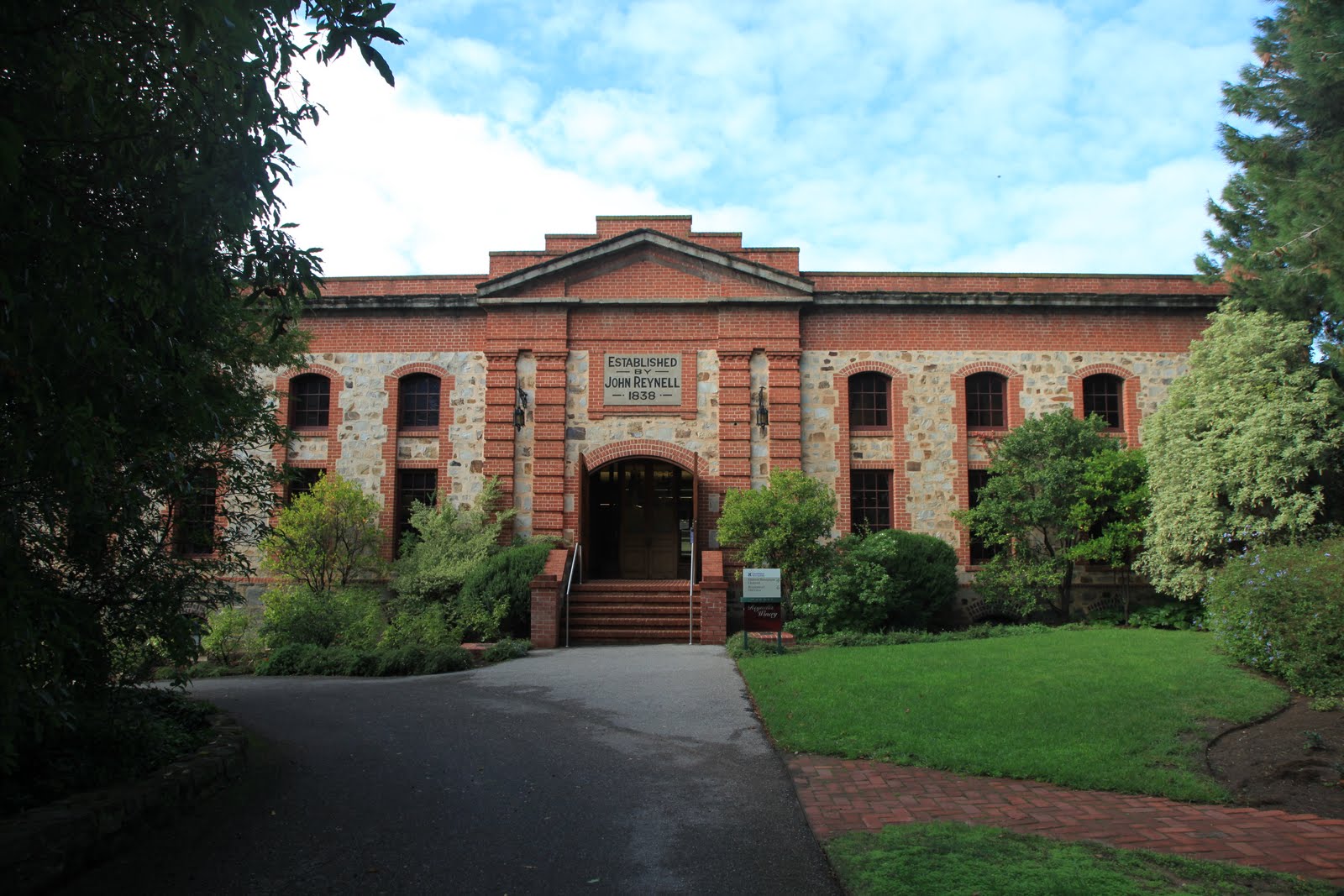
THE GRAND OLD CHATEAU REYNELLA WINERY IN McLAREN VALE; FORMER HQ OF NEW YORK MARAUDERS THE SANDS BROTHERS, UPSTATE NEW YORK RUBES WHO NEVER GRASPED THE HARD REALITIES OF WINEMAKING IN AUSTRALIA'S WILD FRONTIER, WHERE ONLY THE SMART AND THE TRUE SURVIVE PROFITABLY - photo KATE ELMES


Bad Business Butchers Bush Wrong Sands In Our Wineglass Fosters Faces Devalued Assets
by PHILIP WHITE

This is a story of how changing climate, political skulduggery, disastrous public relations and general business ineptitude is destroying what many have long seen to be Australia's greatest agricultural export success.

There has never been a vintage quite like 2011. The calamitous matter of international oversupply aside, Australia’s wine business is a sodden, mouldy husk of its old budding beauty, with great swathes of its traditional lifeblood rotting on the vine because our mightiest ethanol peddlers (read transnational winemakers) refuse to pay the cost price for grapes.

This is coincident with the big chemical manufacturers and importers deciding that nobody could afford to pay for their fungicides because atop the insulting prices offered for fruit, the lack of irrigation water had broken the growers' financial backs. So these chemical traders neither imported or manufactured sufficient fungicide spray to deal with the country's current plague of moulds and mildews.

To help ease this crisis, the irrigated wine business, through the Winemakers Federation of Australia, has even negotiated a temporary relaxation of Canada’s severe restrictions on Australia’s use of phosphorous acid as a fungicide, so the mildew which too much rain and flood has set blooming all the way from Blanchetown to Burke can perhaps be limited and wine exports to Canada will remain unimpeded.

If they're lucky.

China has also been approached for a similar deal, but, perhaps wisely, refuses to respond. China has its own burgeoning wine business, and will soon be exporting cheap wine to Australia.

However you see it in the meantime, that rather vainglorious appellation which some genius, for want of a more precise term, called “South Eastern Australia”, is cactus. At a time of the most destructive irrigation restrictions ever, a deadly percentage of the vineyard in this vast appellation, equal in size to Portugal, Spain, France, Germany and Italy combined, is wet, mouldy and rotting.

The current disastrous floods are only the latest derisive insult to the many thousands of struggling bush families the wine industry is in the business of wrecking.

Otherwise, the season is nearly perfect: the cool wet start has set the better regions up beautifully; ongoing moderate breezy weather ensures the smart cookies who’ve done everything right will get some exemplary fruit. Only the jaundiced take joy suggesting the rotten side of the crop will assist clear the welling lake of unsold swill: only the idiot suggests the sweaty hands steering the industry’s confounding array of governing councils have solved the problem by their own cunning design.

Two of the most inelegant words in the history of English summarise the situation perfectly.

The first, “premiumise”, is the creation of the propaganda unit of the Sands brothers of upstate New York, the men who run Constellation, the world’s biggest wine company until a few minutes ago. They have been “premiumising” their ethanol mongery for a couple of years now, trimming it in the hope it will look better.

The wise observer (barely seen in the international business pages), the comfortably jaundiced, and even the idiot, must agree that “premiumise” seems to mean “hope to charge more for the same old same old”.

The second word, “demerger”, is the new form of “dismantle”, “dismember”, “flay”, or “gut”. It is the creation of the propagandists at Fosters, which intends to rip apart the huge wine and beer businesses it had only just completed “merging”, which always seemed to mean “crash senselessly and illogically together”.

This closely followed the disastrous “merging” of Southcorp with Rosemount, where, disguised as a white knight, Bob “Wild Oats” Oatley walked away with one or two billion, leaving his punchdrunk monolith sitting pretty for Fosters to gobble and rename.

Both “premiumise” and “demerger” are rather quaint negligees for that haggard old whore we once called greed. But these current captains of the ethanol racket can’t even successfully commit greed.

Take Constellation. In 2003, it spent AUD$1.9 billion erecting the Australian winemaking and United Kingdom distribution show it has just dropped for AUD$290 million, although the Sands boys have thrown some snakes in the murky water by insisting they’ll retain a 20% slice of the action, which means they’ll pick up only AUD$230 million “subject to closing adjustments".

Having confidently predicted their determination to get the hell out of Australia two years ago, this writer sees no joy other than cruel ridicule in any of this: in their retreat they clumsily butchered the main bits of their “premium” involvement, the grand old wineries of Chateau Reynella and Tintara. At the former, they last year destroyed a heritage-listed vineyard (below) at least the historical equivalent of Grange or Hill of Grace to make a quick $5 million in a rude housing malignancy; the latter, Tintara, the last winery to survive in the main street of McLaren Vale, they mothballed.

DEPREMIUMISED: THE HERITAGE LISTED JOHN REYNELL VINEYARD DESTROYED BY CONSTELLATION LAST YEAR - photo KATE ELMES

These two deft actions alone cost them much much more than $5 million of goodwill.

After the Reynella destruction, few would dare to permit their interference with Tintara’s heritage status.

One could be forgiven for suspecting that these people have no idea of the common meaning of premium.

A particularly sickly exemplar was their involvement in the USA Merlot racket. Most Americans seemed to think Merlot meant “mellow sweet red” until a schmucky Hollywood film suddenly made Merrrllow soooo yesterday that everybody needed something else to drink, immediately. The movie suggested Pinot noir, so, with Gallo (suddenly the world’s biggest wine company, again), the Sands lads unwittingly got themselves entangled in a scam in which they bought Pinot noir made from south of France Merlot and Shiraz.

This was much easier than mastering the notoriously tricky red grape of Burgundy, but, until the French wine police picked the scab off the racket, America loved it. They were ignorantly drinking the same swill they thought they’d fashionably abandoned, indicating the incredible naïve vulnerability of ethanol addicts who imagine themselves to be epicures and gourmands. Sideways, see?

To rub all this in, the scrillion tonnes of salt the Murray-Darling floods are about to unsettle will be just dandy for curing the wounds Fosters has incurred in its parallel disaster.

Before he jumps ship (as promised), Fosters CEO Ian Johnston will settle David Dearie into the hot seat at Treasury (the new name their propagandists thought up for their wine division), and CUB CEO John Pollard into the beer biz (which should be a cruise, comparatively).

Apart from the brilliant success of Penfolds, the rest of the Treasury wine lake could do with some serious premiumising, but you wouldn’t follow the example set by the Sands brothers.
David Dearie starts his year looking down the backwards telescope of the Sands’ imposed evaluation of the very ordinary end of Treasury’s Noah’s Ark of brands. These stretch from Andrew Garrett (really) to Queen Adelaide (currently in a gay resurrection), and Kaiser Stuhl to Wolf Blass (both of which Fosters has for years listed as Mildura wineries in the Australian Wine Directory).

Mildura is sinking.

If these treasured assets were worth anything last vintage, all the above has seen their value plummet by about the same sickening lurch the Sands brothers have stupidly engineered themselves.

Both these demergers could use some retrospective premiumising. If it had occurred, it could have been called logical and moral propriety, or perhaps even good business, subject to closing adjustments.

SOME BACKGROUND

As through this life you ramble
You’ll meet some funny men

Some will rob you with a six gun

And some with a fountain pen.


- Woody Guthrie

The Sands brothers, of upstate New York, obviously enjoy being seen, on their home patch, as men who respect culture, heritage, and the arts. As well as promoting their awards for community service in these areas, they are proud to pay big money to have their name on the Constellation Brands Marvin Sands Performing Arts Center in their home town of Canandaigua, near the Finger Lakes.

Their propaganda boasts that “The Friends of the Constellation Brands-Marvin Sands Performing Arts Center, Inc (CMAC) is a New York not-for-profit, 501(c)(3) corporation that was formed to assume responsibility for financial operation of CMAC. CMAC supports the mission to improve the quality of life in our community through culture, education and the arts.”

Artists like Willie Nelson, the Levon Helm Band, Robert Cray, Maroon 5, Cheryl Crowe, George Thorogood, Ringo Starr, and the Fabulous Thunderbirds are regular headliners there.

Not to mention a group aptly named Shit Is Fucked.

These people are totally unaware of the cultural destruction the Sands boys have wrought on McLaren Vale, South Australia, the former home of the enormous Australian wine empire they bought, built and butchered in seven quick years.

Just a couple of years back, Constellation’s PR troops were working hard on their “premiumizing”. They boasted of having “defined three areas in which all of its Corporate Social Responsibility focus will take place: sustainable business practices, philanthropy and social responsibility. From these three focus areas flow specific categories of emphasis, including our environmental impact, corporate giving, marketing and advertising codes, community involvement and much more. All of Constellation's social responsibility efforts flow directly from its values and culture."

But, apart from sacking hundreds of faithful workers at their heritage wineries of Reynella and Tintara they last year destroyed one of South Australia’s oldest commercial vineyards, and one which historically was at least as important as the Grange vineyard at Magill Estate, Langmeil’s The Freedom at Tanunda (probabaly the wold's oldest producing Shiraz vineyard), Kalimna near Nuriootpa (the world's oldest producing Cabernet vineyard), and the Hill of Grace near Keyneton.

Constellation made a measly AUD$5 million with the sale.

Just how this occurred is a vivid example of how Australia’s Labor governments, whose leaders seem to yearn to display business acumen not usually evident in the left, are transfixed by flash Harries much more expert at taking money and property from weaker and more vulnerable others.

Constellation hired a little-known historian to contradict years of its own sales hype - and decades of it from BRL-Hardy and Chateau Reynella before they were purchased - which had promoted this vineyard as an invaluable and irreplaceable cornerstone of the history and heritage of the Australian wine story. Together with the master fudgers of the Onkaparinga Council (the local government) and the soft cocks of the State Heritage Branch (State government), they managed to use this expert’s cheaply-bought advice to have the vineyard’s Heritage listing expunged.

ARIEL VIEW OF THE FORMER CONSTELLATION JEWEL AND HEADQUARTERS AT CHATEAU REYNELLA. THIS DISTRICT, WITH ITS PRICELESS ANCIENT GEOLOGIES, WAS ONCE CARPETED WITH DRY-GROWN VINEYARDS.

The photograph above shows the Chateau Reynella complex, and its surrounding vineyards. The large stony vineyard on the slopes to the right is the inferior one, and has been so regarded since John Reynell’s day. The smaller one (2 hectares - marked with the ellipse) bordered the heritage village of Old Reynella, was sold to the developer, Pioneer Homes, to build 41 apartments there on blocks averaging 22 x 22 metres.

Ebenezer Ward was the wine critic on The Advertiser in South Australia in 1862, preceding me by 126 years. Having visited Reynell Farm in that year, he wrote “Thus his [John Reynell’s] vineyard on the hilly land is confined to the Clarendon sorts, The Rousillon, and the Verdeilho. The Carbonet – a variety which, for the quality of its produce, cannot be too highly valued – Mr. Reynell has planted in another vineyard which he formed in 1848 on the flat bordering the creek, and where the soil is a black alluvial deposit on the surface, with a red loam subsoil. In this vineyard there are also Malbec and Shiraz … we thought a wine made from an admixture of Malbec and Carbonet best of all.”

In spite of this published first-hand report, and those many years of praising the vineyard’s significant history, Constellation managed to have the vineyard’s heritage listing removed.

JOHN REYNELL'S OLD CHATEAU REYNELLA HOMESTEAD, THE FORMER HEAD OFFICE OF BRL-HARDY - CONSTELLATION STRIPPED IT OF ITS ANTIQUES A YEAR AGO AND SOLD THEM AT A PITTANCE - photo - KATE ELMES

This occurred when they convinced the powers that be that the hill vineyard was indeed the most significant.

Part of the decision seems to have been justified by confusing the lower vineyard’s name. Somewhere in its recent history, amidst a peculiarly Australian fashion of naming export wines after hills and ridges which usually did not exist (Australia is famously flat) somebody gave the lower site the misnomer, “Stony Hill”, a strange appellation considering its proximity to the adjacent hill, which is indeed stony.

The lower vineyard also had a highly-significant viticultural importance, being the source of what was for years erroneously called “the Reynella clone” of Cabernet sauvignon, a superior strain of the variety which has been favoured, even revered, and propagated all over Australia for its superior flavour.

When I asked Geoff Hardy, the last formidable viticulturist of the Hardy tribe, about this, he explained "Noel Chapman was the architect of the current Reynell selection (not clone) which he told me was a process of elimination through three generations of plantings and he told me it was most recently from about 7 separate mother vines. We know that at least one of these is quite virus affected but I suspect it is two, without having done the testing. I understand the ‘current’ Reynell selection is the older Stony Hill planting (1968?) and this is where I have sourced perhaps 400 acres of planting material from, propagated or distributed through my own nursery business and this is the tip of the iceberg in an Australian sense.

"As regards naming the Stony Hill block I think Noey told me this was his doing because of the limestone in the higher part but my memory is very vague on this. Apparently there’s no mention of Stony Hill’s existence in Margaret Hopton’s significant writings on the Reynell family.

"The block has produced some great wine that I know of but I lost contact with its quality ratings in the late eighties.

"It certainly has a lot of history and is in the wrong hands at the moment."


These comments were backed up by Andrew Hardy, another significent member of the great winemaking family, and managing winemaker of Petaluma.

Chris Hackett, a former Reynella winemaker said that in his day the Cabernet from that block was the best in the winery every vintage and that when he attempted to buy the vineyard the owner dared not let it go.

But subsequently, when Constellation was attempting to convince the diaspora of the Hardy family to buy Reynella and Tintara back, all significant members of the family suddenly clammed up, and withdrew support from the burgeoning movement to save the vineyard. This could simply have been at the urging of Bill Hardy, the last senior member of the tribe to remain employed by Constellation, and the person wheeled out internationally to give the company an air of history and continuing family involvement.

His famous mother, Barbara Hardy, a revered and highly-awarded conservationist, green activist, and heritage enthusiast, also remained silent.

The death knell came when the McLaren Vale Grape Wine and Tourism Association flatly refused to support the vineyard’s retention. This association had long enjoyed the major funding supplied by Hardy’s, BRL-Hardy, and then Constellation, and seemed blind to the reality that the world’s biggest wine company was determinedly pulling out of the district, to concentrate on buying much cheaper, inferior fruit from the irrigated arid lands of the Australia outback, which were even then under severe and ongoing threat due to the abuse and over-allocation of dwindling irrigation water.

Perversely, these areas are now facing freak floods the like of which have not been seen for a century.

In response to a letter from New Zealand journalist, Sally Marden, urging the retention of the Reynell vineyard, Dudley Brown, Chairman of the McLaren Vale Grape Wine And Tourism Association, and a grapegrower who had depended on Constellation’s contract for his fruit, wrote “as our Association represents the interests of multiple industries, we have long had a policy of not commenting on commercial matters of members or disputes between industry groups except to the extent that they violate the law.

“Constellation’s forerunner company, Hardy’s, has been a member of our association in good standing since the inception of our forerunner bodies.

“We have and continue to actively lobby on matters of urban encroachment in our region (including the recent Glenthorne Farm matter) where and when we can.”

Independent State parliamentarian David Winderlich told the Legislative Council “According to Onkaparinga council, the vineyard was removed from the state heritage list by the Department for Environment and Heritage. This is a very strange decision, because the vineyard clearly meets at least three of the seven criteria for listing under the state’s Heritage Places Act: it demonstrates important aspects of the evolution or pattern of the state’s history; it is an outstanding representative of a particular class of places of cultural significance; and it has a special association with the life or work of a person or organisation or an event of historical importance.

“To delist such an important part of our history for such a small gain, 41 homes—we are not talking about this vineyard blocking the development of Roxby [Roxby Downs, the world’s largest uranium mine], for example—raises the concern that nothing is safe. It also raises questions about the integrity of the heritage listing process.”

Local independent parliamentarian Kris Hanna, chairman of the Reynell Business and Tourism Association, said the development would “wreck the place ... The site has been used continuously as vineyards since about 1840 and we’d like to see it preserved as vineyards as a tribute to our early history ... there’s a growing feeling among residents that the senior management at Constellation aren’t concerned with the history of the area or the locals,” he said.

Leon Bignell, a highly-popular parliamentarian from the district, was even more overt in his rage.

"This vital historic vineyard is symbolic of the whole district", he said on ABC TV.

"Gutter to gutter housing is something that belongs in the inner city suburbs where people want to live like that, close to the parklands and the city amenities and the high-rise offices where they're happy to work.

THE AUTHOR AT THE GATE OF THE OLD VINEYARD, JUST WEEKS BEFOTRE ITS DESTRUCTION - photo KATE ELMES

"It's like sub-dividing The Grange," he said. "Putting this sort of development on John Reynell's old block is like putting multi-storey flats on the site of the Old Gum Tree at Glenelg, or like crushing the first FJ Holden for scrap. We've already lost too much beautiful grape-growing land to tupperware tuscany housing. And that's a special piece of soil, Reynell's last block: if you read your history you'll see that ground is perfect for premium vineyard and the unique flavours those soils give, which is why Reynell planted there in the first place. It's a dumb move, and while it's not in my electorate, I'll do whatever I can to stop it."

Bignell’s colleague, Planning and Development Minister Paul Holloway, had seemed in full support when he had earlier promised ABC radio “because the Barossa Valley and McLaren Vale are important economic areas of the state, because they’re wine regions, also significant tourism regions, it would not make sense to have urban encroachment to a significant extent into those areas. So we’ll avoid those areas and the areas that we’ll be looking at for future expansion are those areas where there’ll be less impact on the important tourism and economic areas. So yes we do recognise those areas but look it’s simple common sense: why would you want to encroach on areas that are important to the economy because of the significant contribution that they make to the state’s economy through the wine industry and the tourism industry? Clearly that would be put at threat if we allowed rampant urban development within those areas.”

But it was his government which overthrew the heritage listing, and saw the Pioneer Homes developers bulldoze the heritage left by Reynell, a true pioneer.

Now, at Reynella, since Constellation’s departure, the gate to more destruction swings dangerously open. All it will take is the new owner to suggest that the destroyed vineyard was erroneously removed from its heritage status, and was indeed the more significant, meaning the remaining hill vineyard can now be replaced with housing.

And the old ironstone Tintara winery in the main street of the McLaren Vale township is looking awfully like a nice place for more villa rash.

The best summary of all this is the name of that aforementioned rock band.

EBENEZER WARD'S 1862 REPORT

EBENEZER WARD


THE township of Reynella is about 13 miles from Adelaide, on the Great South-road. The section on which the Crown hostelrie, the Reynella Mills, store &c., now stand was originally taken up by Mr. Reynell in 1838, and he has resided in the locality ever since. His present residence is barely a quarter of mile south-east of the township, on a slight eminence rising from Peel’s Creek. He has now about 450 acres of land in his possession, and in its management he aims at a combination of vine-growing, grazing and farming. He has 15 acres of vines, 2 of orchard and garden, about 100 under crop, and the remainder of the estate is fenced off for grazing.

Mr. Reynell commenced planting 21 years ago, when a considerable portion of the present orchard was formed. A few vine-cuttings from Tasmania were planted at the same time, and three years afterwards wine was made from them. The vineyard proper dates from 1844, when half an acre was planted with cuttings from Mr. Anstey’s. In the following season four-and-a-half acres were planted with cuttings obtained from the Macarthurs, of New South Wales, and the sorts recommended in “Maro’s” letters – viz., the Verdielho, Carbonet, Malbec, Pineau Gris, and Gouais. The situation, however, was too dry, and the soil too light, for most of these varieties to bear largely there, and a number of them have been already superseded. One acre of Pineau Gris has been grubbed up, the Rousillon varieties have been previously planted alternately with the rows of Pineau, and the Rousillon have also been grafted on the Carbonet. In 1847 and 1848 Mr. Reynell obtained cuttings of the white sorts from the Clarendon Vineyard – viz., Pedro Ximines, Doradilla, Temprana, Palo-mino-blanco, &c.: and since then he has planted a considerable extent with the Rousillons.

JOHN REYNELL

Thus his vineyard on the hilly land is chiefly confined to the Clarendon sorts, the Rousillon, and the Verdielho. The Carbonet -- a variety which, from the quality of its produce, cannot be too highly valued – Mr. Reynell has planted in another vineyard which he formed in 1848 on the flat bordering the creek, and where the soil is a black alluvial deposit on the surface, with a red loam subsoil. In this vineyard there are also Malbec and Shiraz to mix with the Carbonet, the Rousillon sorts, and (planted in 1861) Frontignac, Verdeilho, and Riesling. None of Mr. Reynell’s vines are either staked or trellised, and the Rousillon sorts appear very well able to support themselves. The Verdielho have a more straggling growth, but Mr. Reynell thinks the cost of staking is greatly in excess of the advantage to be gained. Throughout the vineyard the rows are 6 feet apart, and the vines at from 4 to 5 feet in the rows. The vineyard has a northern to north-eastern aspect, and is well sheltered on the south and west. The ground between the rows is stirred with horse-hoe or plough two or three times every season, and is flanked with rows of almond trees planted for shelter. On the highest point of the hill the soil is very sandy; but on the lower slopes it is a good red loam on the surface, with a sprinkling of ironstone intermixed, and the subsoil is chiefly composed of friable limestone. Mr. Reynell has about 40 acres of this kind of land at a sufficient elevation above the creek to be secure from frosts, but he unwilling to increase his vineyard very largely until there is a prospect of our wines being admitted to the Melbourne markets without an import duty. We certainly hope the day is not far distant when our friends across the border will be wise and magnanimous enough to reduce very much, or altogether remove, the present impost. The apple- and pear-trees in the orchard are some of the largest we have seen in the colony. We noticed there a tree of the indiarubber variety, which was obtained from Sydney 20 years ago, and has grown to great size. It is an evergreen, and the foliage has an elegant appearance. A few orange-trees have been planted near the creek. Several years ago Mr. Reynell made a pure wine from the Pineau Gris. It is now perfectly matured, and has been highly spoken of by connoisseurs. His Verdielho is also remarkably good, but we thought a wine made from an admixture of Malbec and Carbonet best of all.

- from Ebenezer Ward’s Vineyards & Orchards Of South Australia 1862.

REYNELL'S OLD VINEYARD AS IT WAS, VIEWED THROUGH THE RAZOR WIRE FROM CONSTELLATION'S FORMER HEADQUARTERS - photo KATE ELMES

REYNELLA - by Ernest Whitington, The Register, 1903

The cellars here are the property of Mr. Walter Reynell, who has always taken a keen interest in the wine industry. I believe one of his missions on his present trip to England is to see if he cannot do something to find increased markets for our wine. All vignerons pray that he might be successful. Mr. Reynell’s oldest son was superintending vintage operations when I arrived. The make this year was expected to be between 80,000 and 85,000 gallons. In the winery there are 28 fermenting tanks, each of a capacity of 1,500 gallons. The water for cooling is run down from an underground tank on the top of the hill. After passing through the coils in the fermenting tanks the water is run over eight canvas trays, which have a fan playing on them, and then down into the well, the source whence it first came. The canvas cooling machine cools the water to 60 degrees. There are two gable-roofed storage cellars running parallel to one another, and when the occasion arises the space between will be covered in and converted into a cellar. In the first cellar there are 16 3,000 gallon jarrah vats, and in the second 20 similar receptacles, as well as 300-gallon casks and hogsheads. Altogether there is 170,000 gallons in store. The old cellar, which is 40 years old, is right under the ground. The roof is of logs and earth overgrown with grass, and presents a very picturesque appearance. M. Reynell has 150 acres in bearing at Reynella and 120 acres at Riverton and Magill. The grapes from these vineyards are treated at Reynella, while Mr. Reynell buys from 15 or 16 growers in the district.

- from The South Australian Vintage 1903, by Ernest Whitington

09 May 2010

GRANGE MAN DOES IT AGAIN FOR PENFOLDS

PENFOLDS WINEMAKER PETER GAGO IN THE PRICELESS 1888 KALIMNA VINEYARD IN THE MOPPA, NORTH OF THE BAROSSA; THE OLDEST CABERNET SAUVIGNON ON EARTH IN CONTINUOUS PRODUCTION

Penfolds Lights Fosters Path ... Gago's New Grange All Go ... Gail Kicks Butt For Little Guys
by PHILIP WHITE - a version of this was published in The Independent Weekly


Busy week at the Gago household. One of the Honorable Gail’s five cabinet ministries is Consumer Affairs, so there she was cleaning up the liquor licensing act to make it easier for little guys to sell their wines and bar staff to refuse service to drunks in pubs. Very cool.

At the same time Peter was launching the new Penfold’s super-premiums at Magill, with every wino’s gimlets focused on the new Grange, the 2005.

They don’t need kids, these Gagos. Gail (right) raises smart legislations like offspring. And of the regular annual fixtures on the Casa Blanco calendar, none is better anticipated than the day Pete lines up his new tribe.

Which he did this year at the grand old Kalimna vineyard in the Barossa. Block 42 there is the oldest Cabernet sauvignon vineyard on Earth to be in continuous production. Planted in the Moppa – the flat triangle of alluvium north of the Barossa – in 1888, this is ten precious acres indeed. Grey wind-blown sands sit atop riverine alluvium, and the old grey trunks of the troopers always make me think of Napoleon’s army being snap frozen on the way home from St Petersberg. Biggest difference is, these guys are still fighting, and it’s drought and heat they’ve battled, and wave after wave of owners and corporate geniuses with bad ties.

Gago’s quietly determined restoration of the old farmhouse there looks precisely like the sort of thing you wouldn’t see too much of going on in the way of Fosters these days.

It’s a slomo revolution.

A few years back, Peter complained about how every year for twelve in a row he’d had to re-write his meaning of extreme vintage conditions. Since that alarming utterance, there’s been extreme records broken every year, so it’s almost divinely reassuring to sit down at a table heavy with such vinous reponsibilities and discover they are still mighty Penfolds wines.

“Authority and composure” are words which reappear through all my notes this year. No other big winery on Earth has such an authoritative and expansive range of treasures.

It normally takes four to six dozen wines for me to find something to recommend with more than ninety points. My average over a week of new releases is around seventy, often below. So to gaze confounded at these notes of about thirty wines, including unfinished and unbottled ones from recent years, and see that they fall below ninety on three occasions is, well, can I say comforting?

First wine on the table 94+++. 2005 Reserve Bin Riesling. Opulent, majestic wine more like a mighty Chablis than Germanic Riesling, even at only eleven per cent alcohol. 2009 Koonunga Hill Autumn Riesling, 93: the genteel, autumnal aromas of grannie’s handbag and strawberries in a pleasant off-dry old fashioned style to match the label. 2009 Bin 51 Eden Valley Reserve. Austere and steely: mighty stuff to dissolve that Austrian moustache wax. 93+++. All bases covered in the Riesling dept., see.

And on it went, variety after variety. All bases and styles worth noting are covered. In that unchallengable Penfold’s manner: there’s the sort of reassuring arrogance about them that you like to find in your monarch, especially when times are tough. These may be polite wines, but they’re not shy.

Tellingly, there is no Sauvignon blanc.

Harcore plonkies regard Chardonnay as a sort of gay brother of Riesling, but these four Chardonnays were a lot more Navratilova than Nureyev. Maybe the Thomas Hyland (92+) strayed over toward the younger Bardot, and the Yattarna’s a bit more Catherine the Great (95++), but the forearms are all Martina’s.


The 08 Cellar Reserve Sangioivese (93+++) smelt like a Tuscan kitchen with a big wood oven; a forthcoming 09 Pinot, just bottled and not yet for release, smelt like Penfolds had exploded all over us. Try “black tea, aniseed balls, Choo Choo Bar, juniper, blueberry, beetroot, sour cream, borscht”.

Peter’s ongoing mission to moderate the raw American oak in brands which depended upon it, without letting them lose a splinter of their Penfold heritage, is best seen in the stunning new Bin 707 2007 (93+++), a totally Australian Cabernet of incredible intensity and finesse. The 06 Cellar Reserve Barossa Cabernet (94++) seemed even more woody, but it’s had 100% French oak. The superiority of 06 over the difficult 07 is most evident here.

And oh yes, the Shiraz. Oh Lawdy. A sicko-plush 06 St Henri (93+++) like a Hispano-Suiza J-12. The charcuterie blast of the 07’s: Magill Estate (92+++) and RWT Barossa (93+) the former with a lollyshop next door; the latter so disarmingly open and neat, like the bucherie of the great Max Noske in Hahndorf. (Sorry Barossa, but we got Germans down this end, too!)

And then, of course, the Big Cheese. Grange. You can read my praise of this marvel alongside, and more detailed notes of all the wines on drankster.blogspot.com. I only wish there was a Peter and Gail blog.


Penfolds Koonunga Hill Shiraz Cabernet sauvignon 2008
$9; screw cap; 13.5% alcohol; 80+ points
I simply cannot imagine why you’d risk fewer dollars on cleanskins of dubious provenance when you can buy this for the price of two schooners of beer. It’s an audacious, cheeky, sassy wine: a brash brat from the Bash Street Kids. The fruit cannot be contained. The stylish oak tries to wrap that fruit up, but it leaps off again and there you go after it, glass after glass. I thought at first the wine had been made like a Beaujolais, with carbonic maceration, but no, Peter assures me, it’s straight down the line conventional winemaking in the Penfolds style.

Penfolds Grange 2005
$650; cork; ??% alcohol; 95+++ points
I gave the 2004 Grange a point more than this, because of its seductive streamlining and silky feminine sheen: Morticia Addams stuff. This is more a cross-dressing Heathcliff. My notes: “Pretty Polly! Wet hessian. Sap: raw sawn wood. Cordite. Incredible bowl of fruits: currants, blackcurrants, red currants, raspberries, nectar, strawberries, cranberries, medlar berries, salmonberries and watermelon. Musk. Civet. Banana lollies. Paper. A chip off the old block. Shit. Cowshed. Milk. Chaos!! Perfection!! Fractal!! In this church, they’re still trying to recognize the congregation.” Which is not to say this wine will not eventually mellow to become one of the best ever.

14 November 2009

CHARDONNAY MONGERS' MEETING

SIR ARTHUR STREETON: 'FIR'ES ON' (LAPSTONE TUNNEL) 1891 - AUSTRALIA'S MOST AROMATIC PAINTING? CLICK ON IMAGE TO READ STREETON'S LETTER TO FRED McCUBBIN


The Look Of Smell
Sexy Sexton Stuffs
The Desert Weed


by PHILIP WHITE - A VERSION OF THIS APPEARED IN THE INDEPENDENT WEEKLY


They say the difference between drunks and alcoholics is alcoholics go to meetings. The chardonnay addicts have obviously had a meeting. But bugger their meeting: here I sit drinking chardonnay, gazing at an Arthur Streeton painting.

So what’s chardonnay got to do with Sir Arthur Streeton? Well, it has to do with the look of smell.


I can tell the chardonnay addicts – and I mean those addicted to growing and making the stuff - have had a meeting because everywhere I hear the breathless news that chardonnay is coming back. My e-mail is full of this naive hope. I find this advice rather telling, if not threatening. I even heard it, for Bacchus’ sake, at the McLaren Vale wine show. (McLaren Vale grows about 6000 tonnes of ordinary chardonnay a year, which is a drop in the total 444,000 tonnes Australian bucket.)


I’ve heard it all before. Len Evans, that old rogue who ran the wine show system for thirty years, preached incessantly that ‘chardonnay will become the vanilla of the Australian wine industry’. They took this variety from the snow and chalk of Champagne and Burgundy and planted it all over the desert and prayed that it would turn into vanilla. They told us it HAD turned into vanilla. And then they put caramelised oak chips and whatnot into it so it tasted more like vanilla. But it’s a thirsty weed in our desert: never even
getting vaguely close to vanilla essence; much less the true and perfect vanilla bean.

THE LATE LEONARD P EVANS: LA-LA IN VANILLALAND

Industry leaders Dick Smart, Adrian Read and Ian Kidd even planted chardonnay at Bourke. Or got some other poor bugger to plant it, as a millennium PR stunt: the first wine on Earth to be picked in the new millennium. Read: ‘Kidding’, Smartypants.

One of the reasons our wine business is on the nose is that all the punters in the world will not, cannot, drink all the terrible chardonnay that Australia grows. If, like with albarino, they suddenly discovered it was really savignin or traminer or something they’d been passing off in ignorance, and they could rename it and relaunch it, even then it wouldn’t be drunk. Not for a profit.


There are about ten true estates in Australia making good chardonnay. Cullen, Lubiana, Leeuwin, Ashton Hills, Marchand and Burch, Tarrawarra, Romney Park, Montalto, Mountadam, Tallarook ... all reliable chardonnay makers.


Fosters and Constellation can do it well with bought fruit, but they make lakes of the worst stuff, too. And as the chardonnay gets worse, fatter or thinner, so does the dodgy intellect of those who persist with it at the swill end of the market.

Who do they think we are?


Which leads me to the 24 year old Arthur Streeton, in the Blue Mountains in 1891, painting the colour of the air above the Lapstone Tunnel, an excavation the navvies were making for the new trainline. There was an explosion, and a man lost his life. So Streeton painted the faintest wisp of blue smoke over his perfectly-measured air, there in the dry eucalypt bush with the sweat and the horses and the broken hearts and stone and gunpowder. This could be Australia’s most aromatic painting.

I am tasting five successive vintages of Giant Steps Yarra Valley Sexton Vineyard Chardonnay, made by that Merlin, Steve Flamsteed, and Dave McIntosh. These are distinctive and beautiful wines to sniff, because they do not resemble vanilla. They have a range of fruity esters that spread from the smell of Kingston Black cider apples, through stewed to fresh crunchy pear, maybe quince paste, then lemon juice and ginger, to the very edge of oxalis, like the whiff of rhubarb pie, or the taste of a soursob stalk, and on almost to methoxypyrazine, the smell of a tomato leaf, or sauvignon blanc.
They are lean, naturally acidic sentinels of great longevity, almost carved from stone. And each one, to varying degrees, also has the acrid, nostril-twitching aroma of Arthur Streeton’s ‘Fire’s On’, (Lapstone Tunnel) 1891, which you can disappear into at the Art Gallery of New South Wales.

These wines are grown without poison sprays, and made with the yeasts of the air. They need no shovelled acid; only a drinker patient enough to realise their beauty is not always overt, like the old peach syrup/Dolly Parton chardonnays of Rosemount’s Roxburgh, a vineyard which has just been bought by BHP-Billiton, who can smell coal.


The Giant Steps chardonnays do have a little of the chubby fatty acids that often mark the best Burgundian versions, but these simply make these staunch wines more wholesome. The 2008 version has about as much butter as the thinnest layer of flake pastry, as if all the abovementioned fruits were on a lightly-cooked tart.


Despite them regularly winning major shiny at the Royal Melbourne, these pristine, honest wines, from an honest, lovingly-tended garden, are not the sort of chardonnays those refinery managers decided to persist with at their meeting. I’ve already drunk glumly to that.

FOOTNOTE: After publishing this, the author discovered there had indeed been a meeting to stir the troops to get chardonnay back on the shelves in place of the dreaded Kiwi savvy-B. Fosters called the meeting. The wine show judges promptly obeyed!

10 March 2009

PENFOLDS KICKS FOSTERS HUGE ARSE

PENFOLDS' CHIEF WINEMAKER PETER GAGO


Fosters Aside, Penfolds Has Never Looked Better
Gago's Golden Boys Press On Regardless

by PHILIP WHITE - A SHORTER VERSION OF THIS WAS PUBLISHED IN THE INDEPENDENT WEEKLY ON 06 MAR 09

Of all the wry ironies of agriculture, the weirdest lies right now in that gargantuan stack of contradictions we politely call Fosters.

Fosters, of course, is a monstrous secondary and tertiary industrial body, but it depends completely upon humble primary producers: barley and hop growers, and grape farmers.

So now that it’s decided that it wants to be in the wine industry, again, why would it simultæneously decide to shop its own incredible library of vineyards, and chase profit by ensuring its huge Bilyara wine refinery at Nuriootpa works at full capacity, twelve months of the year? This, surely, is a straightforward application of beer-brewing mentality to winemaking, the precise antithesis of what Peter Gago and his team do at Penfolds, which must be Fosters’ most profitable brand. It is certainly its most revered.

The purchase-amalagamate-and-shrink dogma imposed by determined, Thatcherite wine economic rationalists, like Randolph Bowen, is nearing the end of another cycle in the homogenisation of the Fosters portfolio. Bowen was part of the team that hired an oil refinery engineer to design the Bilyara refinery, years after I’d got constant flack from Southcorp and Fosters for calling their big wineries refineries. His entry in the last Wine Industry Directory to list him before his departure two years back, says “Beringer Blass Wine Estates t/a Foster’s Wine Estates and Southcorp Wines t/a Foster’s Wine Estates VIC”. I think he was really called Vice President Global Supply Chain.

I spent a morning tasting at the original suburban Penfolds winery at Magill with Peter Gago recently, and at its conclusion, was delighted to announce that of every grand tasting I’d ever had at any grand winery, from the first growths of Bordeaux, through the hallowed halls of Burgundy and Champagne, to the full breadth of Australia, none could match Peter’s Penfolds for quality, amazing range, and sheer shimmering gastronomic brilliance.

How he’s managed to do it in that vicious melee beats me. But that’s not all he’s done. He’s managed to improve it, to add to its incredible brocade of luxury product, and make the whole damn thing more distinctive in itself, whilst rendering its products even more accurate reflections of their many diverse sources. And he’s done all that whilst bringing the most sacred chalices back to the styles of their traditions.

Speaking of chalices, Peter’s even conspired with Jamie Sach, who’s mysteriously called Penfolds Ambassador, to renovate the neat little pressed tin-lined private tasting room that had fallen to bits outside Jeffrey Penfold Hyland’s office. Without any budget from Fosters, They paid for the significant renovation from their own pockets, although Jamie’s Dad, Randall, a glass-blower who does a spot of plastic surgery to help pay for his hobby, contributed the spittoons, which look like they’ve been blown by René Lalique.

ONE OF RANDALL SACH'S BEAUTIFUL MOUTH-BLOWN GLASS SPITTOONS IN THE NEW PENFOLD'S TASTING ROOM. THAT'S ONE OF JOHN BIRD'S RETIREMENT WATCHES ON THE LEFT.

Even the lowly Koonunga Hill has had a lurch toward gastronomy. Peter has released two wines of this brand bearing their original labels from the early ’seventies. These are for sale at cellar door ($17 and $18), in restaurants and duty free stores only, and are exquisite. The white, called Autumn Riesling after Max Schubert’s 1971 Riesling Traminer, and the trophy-winning red, called Seventy Six, after the vintage of Don Ditter’s first red from what was then a new vineyard, are spectacular value for money, and a serious improvement on the standard bottle-o Koonunga wines which are made in much larger volumes. I can see Peter drawing these divergencies together, increasing the quality of the standard lines.

The lower-end numbered bin wines, too, are looking better than ever. The Bin 51 Eden Valley Riesling (92+++), from vineyards either side of the High Eden Ridge, is a beautifully balanced measure of Germanic austerity and refinement; the Bin 311 Tumbarumba Chardonnay (92+++) a similar exercise in the same mood, but Chablisienne. This latter wine is a brilliant entry to the two higher tiers of chardonnay, the Trophy winning 07A from the Adelaide Hills, and the royal Yattarna, both of which will be released and reviewed on May 1.

The entry-level numbered bin reds are also improving apace. From the classic Barossa chocolate of the 2007 Bin 138 GMS (reviewed last week; 93+++), through the tight sandy sparsity of the 2006 Bin 28 Kalimna Shiraz (94+++), and the lighter, more twee 2007 Bin 128 Coonawarra Shiraz (88++) to the incredible perfume of the 2006 Bin 407 Cabernet blend (93+++), these wines are almost disgustingly good value at their recommended prices, which are generally discounted so brutally by the trade that it’s not worth mentioning the numbers on the official Penfolds cellar door list.

Then comes what some naively used to call The Baby Grange: the 2006 Bin 389 Cabernet Shiraz (92+++), to whose score I’d like to add another couple of pluses, but that would set a silly precedent. These symbols are indicators of how many more points the wine may score if properly cellared, and this most Australian wonder, painstakingly assembled from fruit from Barossa, Langhorne, Coonawarra, McLaren Vale, Robe and Clare, had me scribbling “Jesus! Penfolds gets a facial!” This wine’s stunning freshness and intensity somehow sees it brazenly walking the tightwire between the past and future of Penfolds. Rarely have I seen such a brew of modern and ancient. It would make Max giggle, and then go on to grow for thirty years in the dungeon.

Honourably, Peter declined to tell me which of these source vineyards would now be mothballed or sold.

Then, the obvious exclusions aside – I swear to an embargo at this annual tasting, promising not to publish reviews of the next Grange et al until they’re made available for select public tasting late in April – there were many incredible trial wines and barrel samples that I’d be stupid not to report.

Prominent among these were wines from vintage 2008, which, as we all know, included the longest hottest spell on record until 2009.

There was, for example, a pinot noir that was picked in the first week of that heat, in the Adelaide Hills. It looked like Sandro Mosel had been invited to sculpt Miss Piggy from pinot. But given the Gago team and its nous, this wine will end up with the Penfolds’ mark all over it.

I saw two McLaren Vale tempranillos from Don Oliver’s vineyard that are sure to change Australia’s ranking of its temps extant. The 07 smelled like Charlotte Rampling in a bloke’s tux, soused with Deprez Bal à Versailles; the 08 better: no Charlotte; no Zorro; all bull. “But Señor, sometimes ze bull wins!”

McLAREN VALE, NEAR OLIVER'S TEMPRANILLO VINEYARD. THE VALES ARE RIFE WITH RUMOURS OF THE POSSIBLE CLOSURE OF FOSTER'S LOCAL REFINERY, ROSEMOUNT. PHOTO BY MILTON WORDLEY (CLICK FOR GALLERY)

The 08 sangiovese, mainly from the Georgiadis family’s vineyard at Marananga, Barossa, looks even better – more vibrant and intense - than the stunning 2006 (reviewed in DRANKSTER).

There were two breathtaking old vine Barossa cabernets, 06 and 08, which were made completely in French oak, putting them in the cabernet side of the RWT slot, but apparently they’ll cost more than 707. And so they should: they have French oak, which is much better.

To balance the mighty ship of state – SA has no other – there’s a Marananga shiraz which echoes the drift of all big companies to get vineyards closer to Greenock Creek, and when you taste it you can see why; and, yes, a 2008 Bin 620 Coonawarra cabernet shiraz, which was good enough to have me scribbling: “50 years under screw – a condescending dream of a wine”.

“So”, I asked. “What? No 2008 60A?”

“Oh”, said Gago. “We do have a Cellar Reserve”.

I felt like asking what his name was.

But, fair dinkum, Penfolds has never looked better. The bewildering muckabouts of Fosters aside, the Penfolds team has slaved away beneath the haphazard influences of decades of the selfish ignorant foolishness of top management, and are now running an incredible tight ship of utter dream wines.

Just for the record, they are Peter Gago (twenty years with Penfolds), Steve Lienert (31 years), John Bird (50 years), Andrew Baldwin (24 years), Kym Schroeter (23 years) and Tom Riley (two years).

They might look desperate, but they still look like they’re having fun.

I tell you, I certainly have fun when I make my annual visit. And I'm desperate.

GO TO DRANKSTER FOR MORE PENFOLDS REVIEWS

04 March 2009

JANCIS: 2009 OZ VINTAGE NOT SO BAD

"We've All Got Some Adjustments To Make"
Fosters Admits Simple Cockups
Pommie Coke Hits £1 A Line

by PHILIP WHITE

Since the Wine And Brandy Corporation AND St. Jancis are saying the Australian vintage is not as bad as some errant scoundrels reported, I knew a brilliant statement from Fosters must be coming next.

It seemed unlikely on the face of it, because Fosters must be all statemented out after last week, with a new business plan for their wineries, and their new wine branch and all, and the terrible challenge of what to call it ... I mean they’ve decided it’s there, and there it must be, like the wine group and everything, suddenly absorbing baby wine marketers like a driver recruitment racket for a stretch limo mob, and it hasn’t got a name? Oh my God.

What comes to mind? Now, let me see ... Fosters? Penfolds? Wolf Blass? Rosemount? Tollana? Jamieson’s Run? Black Opal? Kaiser Stuhl? Andrew Garrett? Tin Men? Repo Man?

But it came! Nah, not the name. That’ll cost ’em $200,000 ... Not for me - I’m not in the league of the winebiz serpent greaser who could sell Fosters its own word for $200,000. I'm talking about the unlikely statement from Fosters, which would once and for all trounce the namby-pamby positivism of our beloved vintage Jancis and the Australian Wine And Brandy Corporation.

Something really bloody gut-wrenchingly depressing!

It came. It was magnificent when it came. It even trounced the hot slow news of how the fair Jancis narrowly survived Black Saturday. It came from Group Director James Lovell, who today told the Australian Bureau of Agriculture Resource Economics Outlook 2009 conference:

“We've all got some adjustments to make".

Does he know something Jancis and the AW&BC don't?

“Our competitive advantage has gone and our competitors are catching up”, he said.

Dr Lovell must have verged on bitter regret when he then went on to explain that Australian wines were “a bit the same”, that drinkers were “looking elsewhere”, and that Australia needed to push and "rebuild brand Australia” by promoting luxury wines and making wines with a broader ranger of flavours and styles.

This astonishing revelation came hard on the heels of that same Fosters, Australia’s largest sudsmonger, admitting it had completely buggered up when it shrunk the Cascade stubby by 45ml from 375ml to 330ml without dropping the price accordingly.

James must have been completely shagged after the humiliation of admitting that Australian wines are a bit the same, so another Fosters person, Felicity Watson, took her turn at the Gatling and admitted that when Fosters shrunk the stubby by 12%, sales dropped by 33%.

In a more or less blondish moment she said they’d shrunk it to “give the bottle a more European appearance”.

Why didn't she say it was an attempt to stem binge drinking?

And Tasmanian beer? European? I thought it had a Tasmanian tiger, a thylacine, on the label. European? With the help of the swarthy Armada Irish, the blonde European settlers killed all the poor bloody thylacines by 1936!


Highly retouched, Thylacinus cynocephalus, above, [Greek: dog-headed pouched one] is what we call the Tasmanian Tiger. Fosters put 'em on its Cascade beer label, long after they were all dead by 1936. And then the boofheads cut the volume of the stubby by 12% and left the price where it was!

Anyway, Fosters will gradually reintroduce the 375ml stubbie for the thylacine freaks, without increasing the price. Talk about capitulation!

You’d think that at a time when so many great minds are completely contrite and freshly focused on the brave new hyperprofits of tomorrow, they’d have the brilliance to just go that little bit extra and realise that they’re all in the business of flogging really cheap recreational drugs which are in fact dangerously depressive. So the cut in volume could have been sold as a socially-responsible manouvre. No?

Okay. Try this: Why not sell cheaper, stronger, arguably safer, much more reliable stuff that won't cause depression?

The Babyboomers need pain relief!

The British Home Office has just admitted that the street price of both cocaine and heroin has fallen by half in a decade, with cocaine now available for £20 a gram, down from £77 ten years back.

So when a takeaway bottle of execrable Australian plonk can set you back £2 to £4 in a London Tesco, a glass of said swill at a bar £3.50, and a pint of lager around £2.75, a line of coke will set you back just £1. Glass of water, line in the bogs, go home sober without your head kicked in, still do the bedroom business, and save money, see?

In a stroke of analysis whose brilliance could only be matched by Fosters, the Home Office suggested that drug prices may be falling partly because fewer people are buying drugs.

So why are previously reliable British plonk discounters’ not restocking shelves? Why do five British pubs go bankrupt each week? Eh? Don't try to tell me it's not 'cause cocaine's the better buy.

Are we all incapable of stretching our tiny minds just that one extra inch? Bugger this pretending vintage is lovely and Fosters will get better, and Cascade drinkers can count ... why don’t we all work together to sell beautiful Tasmanian Government heroin to the rest of the world? We can make cleaner hospital grade opiates than Afghanistan in Tassie, and we do!

You might think I'm getting off the track here, but please bear me out. This is lateral thinking, and, as my dear departed mate Stephen Hickinbotham used to say, "one lateral kiss is worth a thousand standing up".

Over thirty years, the Tasmanian opiate industry has grown to a $200 million a year business. Best pain relief on Earth, so America insists it should remain illegal.

Funny, really. The American wowsers are encouraging Tassie to bugger its beautiful opiates business in much the same way Carlton United Breweries, now a Foster's subsidiary, mucked up the Tasmanian hop business when they monopolised it and tried to control the market, and the flavour of all Australian beer, by making an essence from all the hops and selling only that to anybody who needed fresh hops.

Imagine Coopers having to buy industrial hop essence from CUB.

Pretty soon all Australian beer tasted like Carlton Draught, so we flocked en masse to Coopers, and to European lagers. To discover why, CUB got into bed with Interbrew, the Belgian Beer Cafe mob who owns nearly every interesting beer. They set up Belgian beer pubs around Australia to learn about the premium beer market. They even tried to buy The Exeter!

So soon we had the new smaller Cascade bottles filled with beer which the labels boasted was lovingly hand-crafted with only the best fresh hops from Europe.

The USA, which runs the world's opiates business, buys 80% of its hospital-grade opiates from India and Turkey, whilst much of its street hammer comes from Afghanistan. It strictly limits the amount of opium poppy Tassie can grow to supply the rest of the world's hospitals, using the excuse that stuff might seep onto the streets of Emurka. We wouldn't want to interfere in the Afghan trade, now, would we. Nope.

Now, driven by their paranoid fear of morphine, the Americans are gradually relaxing their 80-20 rule on the proviso that Tassie grows more of the tricked-up opiate-free Thebain poppy, which is used to make the drug OxyCodon, which is not as intense in its pain-relieving capacities as morphine or the old Nepenthe hospital grade heroin, which the pious and sanctimonious USA also put an end to.

It's like the genetically modified Canola business, or the corn/petrochem industry.

Mallinckrodt and Noramco, the Johnson and Johnson subsidiary, report that last year their sales of OxyCodon increased by 95% to suddenly make it a $1 billion business.

Anyway, I reckon that with CUB's raw experience in the Tassie hops racket, and the brilliant marketing skills of Fosters, who know how to provide less for more, then replace it with more for less and get everybody feeling sorry for them, we should nationalise Fosters, liberate the Tassie poppy farms, and flood the UK and USA with pure Tasmanian Government grade heroin, using Fosters' expansive international distribution networks.

There are those among us, after all, who cannot forget the pristine beauty of Sandoz, the USA goverment branded LSD, which was second only to Owsley's in quality.

Sandoz, eh? ... Mmmmm ... Fosters posh new wine division, whatever they eventually call it, could distribute the Thylacine Superior brand, which would be in a pack just 12% smaller than the Tassie Devil Magnum, which would be the bigger pack, but cheaper, and distributed by the beer division.

This would return Australia's competitive advantage, and destroy the traditional marketplaces of all other purveyors of the Dreaded Devil's Brew.

We've all got some adjustments to make.

I could get my lovely Mum Drinksy (top) out of the pinot vat long enough to pose for some poppy shots for the "Put An End To Depression" advertising campaign, and Brand Australia would once again conquer the world ...