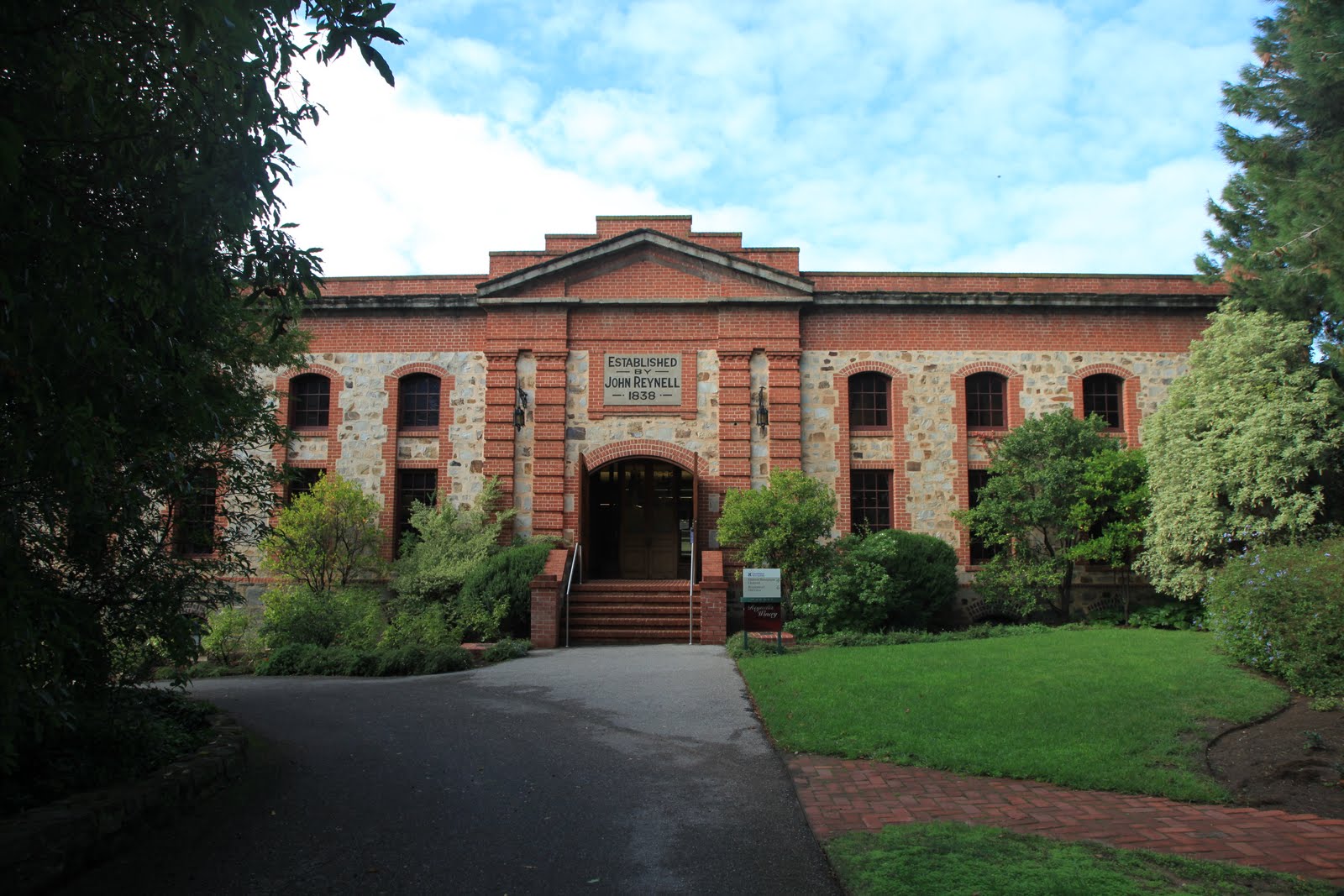
THE GRAND OLD CHATEAU REYNELLA WINERY IN McLAREN VALE; FORMER HQ OF NEW YORK MARAUDERS THE SANDS BROTHERS, UPSTATE NEW YORK RUBES WHO NEVER GRASPED THE HARD REALITIES OF WINEMAKING IN AUSTRALIA'S WILD FRONTIER, WHERE ONLY THE SMART AND THE TRUE SURVIVE PROFITABLY - photo KATE ELMES
Bad Business Butchers Bush Wrong Sands In Our Wineglass Fosters Faces Devalued Assetsby PHILIP WHITEThis is a story of how changing climate, political skulduggery, disastrous public relations and general business ineptitude is destroying what many have long seen to be Australia's greatest agricultural export success. There has never been a vintage quite like 2011. The calamitous matter of international oversupply aside, Australia’s wine business is a sodden, mouldy husk of its old budding beauty, with great swathes of its traditional lifeblood rotting on the vine because our mightiest ethanol peddlers (read transnational winemakers) refuse to pay the cost price for grapes.
This is coincident with the big chemical manufacturers and importers deciding that nobody could afford to pay for their fungicides because atop the insulting prices offered for fruit, the lack of irrigation water had broken the growers' financial backs. So these chemical traders neither imported or manufactured sufficient fungicide spray to deal with the country's current plague of moulds and mildews.
To help ease this crisis, the irrigated wine business, through the Winemakers Federation of Australia, has even negotiated a temporary relaxation of Canada’s severe restrictions on Australia’s use of phosphorous acid as a fungicide, so the mildew which too much rain and flood has set blooming all the way from Blanchetown to Burke can perhaps be limited and wine exports to Canada will remain unimpeded.
If they're lucky.
China has also been approached for a similar deal, but, perhaps wisely, refuses to respond. China has its own burgeoning wine business, and will soon be exporting cheap wine to Australia.
However you see it in the meantime, that rather vainglorious appellation which some genius, for want of a more precise term, called “South Eastern Australia”, is cactus. At a time of the most destructive irrigation restrictions ever, a deadly percentage of the vineyard in this vast appellation, equal in size to Portugal, Spain, France, Germany and Italy combined, is wet, mouldy and rotting.
The current disastrous floods are only the latest derisive insult to the many thousands of struggling bush families the wine industry is in the business of wrecking.
Otherwise, the season is nearly perfect: the cool wet start has set the better regions up beautifully; ongoing moderate breezy weather ensures the smart cookies who’ve done everything right will get some exemplary fruit. Only the jaundiced take joy suggesting the rotten side of the crop will assist clear the welling lake of unsold swill: only the idiot suggests the sweaty hands steering the industry’s confounding array of governing councils have solved the problem by their own cunning design.
Two of the most inelegant words in the history of English summarise the situation perfectly.
The first, “premiumise”, is the creation of the propaganda unit of the Sands brothers of upstate New York, the men who run Constellation, the world’s biggest wine company until a few minutes ago. They have been “premiumising” their ethanol mongery for a couple of years now, trimming it in the hope it will look better.
The wise observer (barely seen in the international business pages), the comfortably jaundiced, and even the idiot, must agree that “premiumise” seems to mean “hope to charge more for the same old same old”.
The second word, “demerger”, is the new form of “dismantle”, “dismember”, “flay”, or “gut”. It is the creation of the propagandists at Fosters, which intends to rip apart the huge wine and beer businesses it had only just completed “merging”, which always seemed to mean “crash senselessly and illogically together”.
This closely followed the disastrous “merging” of Southcorp with Rosemount, where, disguised as a white knight, Bob “Wild Oats” Oatley walked away with one or two billion, leaving his punchdrunk monolith sitting pretty for Fosters to gobble and rename.
Both “premiumise” and “demerger” are rather quaint negligees for that haggard old whore we once called greed. But these current captains of the ethanol racket can’t even successfully commit greed.
Take Constellation. In 2003, it spent AUD$1.9 billion erecting the Australian winemaking and United Kingdom distribution show it has just dropped for AUD$290 million, although the Sands boys have thrown some snakes in the murky water by insisting they’ll retain a 20% slice of the action, which means they’ll pick up only AUD$230 million “subject to closing adjustments".

Having confidently predicted their determination to get the hell out of Australia two years ago, this writer sees no joy other than cruel ridicule in any of this: in their retreat they clumsily butchered the main bits of their “premium” involvement, the grand old wineries of Chateau Reynella and Tintara. At the former, they last year destroyed a heritage-listed vineyard (below) at least the historical equivalent of Grange or Hill of Grace to make a quick $5 million in a rude housing malignancy; the latter, Tintara, the last winery to survive in the main street of McLaren Vale, they mothballed.
 DEPREMIUMISED: THE HERITAGE LISTED JOHN REYNELL VINEYARD DESTROYED BY CONSTELLATION LAST YEAR - photo KATE ELMES
These two deft actions alone cost them much much more than $5 million of goodwill.
After the Reynella destruction, few would dare to permit their interference with Tintara’s heritage status.
One could be forgiven for suspecting that these people have no idea of the common meaning of premium.

A particularly sickly exemplar was their involvement in the USA Merlot racket. Most Americans seemed to think Merlot meant “mellow sweet red” until a schmucky Hollywood film suddenly made Merrrllow soooo yesterday that everybody needed something else to drink, immediately. The movie suggested Pinot noir, so, with Gallo (suddenly the world’s biggest wine company, again), the Sands lads unwittingly got themselves entangled in a scam in which they bought Pinot noir made from south of France Merlot and Shiraz.
This was much easier than mastering the notoriously tricky red grape of Burgundy, but, until the French wine police picked the scab off the racket, America loved it. They were ignorantly drinking the same swill they thought they’d fashionably abandoned, indicating the incredible naïve vulnerability of ethanol addicts who imagine themselves to be epicures and gourmands. Sideways, see?
To rub all this in, the scrillion tonnes of salt the Murray-Darling floods are about to unsettle will be just dandy for curing the wounds Fosters has incurred in its parallel disaster.
Before he jumps ship (as promised), Fosters CEO Ian Johnston will settle David Dearie into the hot seat at Treasury (the new name their propagandists thought up for their wine division), and CUB CEO John Pollard into the beer biz (which should be a cruise, comparatively).
Apart from the brilliant success of Penfolds, the rest of the Treasury wine lake could do with some serious premiumising, but you wouldn’t follow the example set by the Sands brothers.
David Dearie starts his year looking down the backwards telescope of the Sands’ imposed evaluation of the very ordinary end of Treasury’s Noah’s Ark of brands. These stretch from Andrew Garrett (really) to Queen Adelaide (currently in a gay resurrection), and Kaiser Stuhl to Wolf Blass (both of which Fosters has for years listed as Mildura wineries in the Australian Wine Directory).
Mildura is sinking.
If these treasured assets were worth anything last vintage, all the above has seen their value plummet by about the same sickening lurch the Sands brothers have stupidly engineered themselves.
Both these demergers could use some retrospective premiumising. If it had occurred, it could have been called logical and moral propriety, or perhaps even good business, subject to closing adjustments.
SOME BACKGROUNDAs through this life you ramble
You’ll meet some funny men
Some will rob you with a six gun
And some with a fountain pen.
- Woody Guthrie
The Sands brothers, of upstate New York, obviously enjoy being seen, on their home patch, as men who respect culture, heritage, and the arts. As well as promoting their awards for community service in these areas, they are proud to pay big money to have their name on the Constellation Brands Marvin Sands Performing Arts Center in their home town of Canandaigua, near the Finger Lakes.
Their propaganda boasts that “The Friends of the Constellation Brands-Marvin Sands Performing Arts Center, Inc (CMAC) is a New York not-for-profit, 501(c)(3) corporation that was formed to assume responsibility for financial operation of CMAC. CMAC supports the mission to improve the quality of life in our community through culture, education and the arts.”
Artists like Willie Nelson, the Levon Helm Band, Robert Cray, Maroon 5, Cheryl Crowe, George Thorogood, Ringo Starr, and the Fabulous Thunderbirds are regular headliners there.
Not to mention a group aptly named Shit Is Fucked.
These people are totally unaware of the cultural destruction the Sands boys have wrought on McLaren Vale, South Australia, the former home of the enormous Australian wine empire they bought, built and butchered in seven quick years.
Just a couple of years back, Constellation’s PR troops were working hard on their “premiumizing”. They boasted of having “defined three areas in which all of its Corporate Social Responsibility focus will take place: sustainable business practices, philanthropy and social responsibility. From these three focus areas flow specific categories of emphasis, including our environmental impact, corporate giving, marketing and advertising codes, community involvement and much more. All of Constellation's social responsibility efforts flow directly from its values and culture."
But, apart from sacking hundreds of faithful workers at their heritage wineries of Reynella and Tintara they last year destroyed one of South Australia’s oldest commercial vineyards, and one which historically was at least as important as the Grange vineyard at Magill Estate, Langmeil’s The Freedom at Tanunda (probabaly the wold's oldest producing Shiraz vineyard), Kalimna near Nuriootpa (the world's oldest producing Cabernet vineyard), and the Hill of Grace near Keyneton.
Constellation made a measly AUD$5 million with the sale.
Just how this occurred is a vivid example of how Australia’s Labor governments, whose leaders seem to yearn to display business acumen not usually evident in the left, are transfixed by flash Harries much more expert at taking money and property from weaker and more vulnerable others.
Constellation hired a little-known historian to contradict years of its own sales hype - and decades of it from BRL-Hardy and Chateau Reynella before they were purchased - which had promoted this vineyard as an invaluable and irreplaceable cornerstone of the history and heritage of the Australian wine story. Together with the master fudgers of the Onkaparinga Council (the local government) and the soft cocks of the State Heritage Branch (State government), they managed to use this expert’s cheaply-bought advice to have the vineyard’s Heritage listing expunged.
 ARIEL VIEW OF THE FORMER CONSTELLATION JEWEL AND HEADQUARTERS AT CHATEAU REYNELLA. THIS DISTRICT, WITH ITS PRICELESS ANCIENT GEOLOGIES, WAS ONCE CARPETED WITH DRY-GROWN VINEYARDS.
The photograph above shows the Chateau Reynella complex, and its surrounding vineyards. The large stony vineyard on the slopes to the right is the inferior one, and has been so regarded since John Reynell’s day. The smaller one (2 hectares - marked with the ellipse) bordered the heritage village of Old Reynella, was sold to the developer, Pioneer Homes, to build 41 apartments there on blocks averaging 22 x 22 metres.
Ebenezer Ward was the wine critic on
The Advertiser in South Australia in 1862, preceding me by 126 years. Having visited Reynell Farm in that year, he wrote “Thus his [John Reynell’s] vineyard on the hilly land is confined to the Clarendon sorts, The Rousillon, and the Verdeilho. The Carbonet – a variety which, for the quality of its produce, cannot be too highly valued – Mr. Reynell has planted in another vineyard which he formed in 1848 on the flat bordering the creek, and where the soil is a black alluvial deposit on the surface, with a red loam subsoil. In this vineyard there are also Malbec and Shiraz … we thought a wine made from an admixture of Malbec and Carbonet best of all.”
In spite of this published first-hand report, and those many years of praising the vineyard’s significant history, Constellation managed to have the vineyard’s heritage listing removed.
 JOHN REYNELL'S OLD CHATEAU REYNELLA HOMESTEAD, THE FORMER HEAD OFFICE OF BRL-HARDY - CONSTELLATION STRIPPED IT OF ITS ANTIQUES A YEAR AGO AND SOLD THEM AT A PITTANCE - photo - KATE ELMES
This occurred when they convinced the powers that be that the hill vineyard was indeed the most significant.
Part of the decision seems to have been justified by confusing the lower vineyard’s name. Somewhere in its recent history, amidst a peculiarly Australian fashion of naming export wines after hills and ridges which usually did not exist (Australia is famously flat) somebody gave the lower site the misnomer, “Stony Hill”, a strange appellation considering its proximity to the adjacent hill, which is indeed stony.
The lower vineyard also had a highly-significant viticultural importance, being the source of what was for years erroneously called “the Reynella clone” of Cabernet sauvignon, a superior strain of the variety which has been favoured, even revered, and propagated all over Australia for its superior flavour.
When I asked Geoff Hardy, the last formidable viticulturist of the Hardy tribe, about this, he explained "Noel Chapman was the architect of the current Reynell selection (not clone) which he told me was a process of elimination through three generations of plantings and he told me it was most recently from about 7 separate mother vines. We know that at least one of these is quite virus affected but I suspect it is two, without having done the testing. I understand the ‘current’ Reynell selection is the older Stony Hill planting (1968?) and this is where I have sourced perhaps 400 acres of planting material from, propagated or distributed through my own nursery business and this is the tip of the iceberg in an Australian sense.
"As regards naming the Stony Hill block I think Noey told me this was his doing because of the limestone in the higher part but my memory is very vague on this. Apparently there’s no mention of Stony Hill’s existence in Margaret Hopton’s significant writings on the Reynell family.
"The block has produced some great wine that I know of but I lost contact with its quality ratings in the late eighties.
"It certainly has a lot of history and is in the wrong hands at the moment."

These comments were backed up by Andrew Hardy, another significent member of the great winemaking family, and managing winemaker of Petaluma.
Chris Hackett, a former Reynella winemaker said that in his day the Cabernet from that block was the best in the winery every vintage and that when he attempted to buy the vineyard the owner dared not let it go.
But subsequently, when Constellation was attempting to convince the diaspora of the Hardy family to buy Reynella and Tintara back, all significant members of the family suddenly clammed up, and withdrew support from the burgeoning movement to save the vineyard. This could simply have been at the urging of Bill Hardy, the last senior member of the tribe to remain employed by Constellation, and the person wheeled out internationally to give the company an air of history and continuing family involvement.
His famous mother, Barbara Hardy, a revered and highly-awarded conservationist, green activist, and heritage enthusiast, also remained silent.
The death knell came when the McLaren Vale Grape Wine and Tourism Association flatly refused to support the vineyard’s retention. This association had long enjoyed the major funding supplied by Hardy’s, BRL-Hardy, and then Constellation, and seemed blind to the reality that the world’s biggest wine company was determinedly pulling out of the district, to concentrate on buying much cheaper, inferior fruit from the irrigated arid lands of the Australia outback, which were even then under severe and ongoing threat due to the abuse and over-allocation of dwindling irrigation water.
Perversely, these areas are now facing freak floods the like of which have not been seen for a century.
In response to a letter from New Zealand journalist, Sally Marden, urging the retention of the Reynell vineyard, Dudley Brown, Chairman of the McLaren Vale Grape Wine And Tourism Association, and a grapegrower who had depended on Constellation’s contract for his fruit, wrote “as our Association represents the interests of multiple industries, we have long had a policy of not commenting on commercial matters of members or disputes between industry groups except to the extent that they violate the law.
“Constellation’s forerunner company, Hardy’s, has been a member of our association in good standing since the inception of our forerunner bodies.
“We have and continue to actively lobby on matters of urban encroachment in our region (including the recent Glenthorne Farm matter) where and when we can.”
Independent State parliamentarian David Winderlich told the Legislative Council “According to Onkaparinga council, the vineyard was removed from the state heritage list by the Department for Environment and Heritage. This is a very strange decision, because the vineyard clearly meets at least three of the seven criteria for listing under the state’s Heritage Places Act: it demonstrates important aspects of the evolution or pattern of the state’s history; it is an outstanding representative of a particular class of places of cultural significance; and it has a special association with the life or work of a person or organisation or an event of historical importance.
“To delist such an important part of our history for such a small gain, 41 homes—we are not talking about this vineyard blocking the development of Roxby [Roxby Downs, the world’s largest uranium mine], for example—raises the concern that nothing is safe. It also raises questions about the integrity of the heritage listing process.”
Local independent parliamentarian Kris Hanna, chairman of the Reynell Business and Tourism Association, said the development would “wreck the place ... The site has been used continuously as vineyards since about 1840 and we’d like to see it preserved as vineyards as a tribute to our early history ... there’s a growing feeling among residents that the senior management at Constellation aren’t concerned with the history of the area or the locals,” he said.
Leon Bignell, a highly-popular parliamentarian from the district, was even more overt in his rage.
"This vital historic vineyard is symbolic of the whole district", he said on ABC TV.
"Gutter to gutter housing is something that belongs in the inner city suburbs where people want to live like that, close to the parklands and the city amenities and the high-rise offices where they're happy to work.
 THE AUTHOR AT THE GATE OF THE OLD VINEYARD, JUST WEEKS BEFOTRE ITS DESTRUCTION - photo KATE ELMES
"It's like sub-dividing The Grange," he said. "Putting this sort of development on John Reynell's old block is like putting multi-storey flats on the site of the Old Gum Tree at Glenelg, or like crushing the first FJ Holden for scrap. We've already lost too much beautiful grape-growing land to tupperware tuscany housing. And that's a special piece of soil, Reynell's last block: if you read your history you'll see that ground is perfect for premium vineyard and the unique flavours those soils give, which is why Reynell planted there in the first place. It's a dumb move, and while it's not in my electorate, I'll do whatever I can to stop it."
Bignell’s colleague, Planning and Development Minister Paul Holloway, had seemed in full support when he had earlier promised ABC radio “because the Barossa Valley and McLaren Vale are important economic areas of the state, because they’re wine regions, also significant tourism regions, it would not make sense to have urban encroachment to a significant extent into those areas. So we’ll avoid those areas and the areas that we’ll be looking at for future expansion are those areas where there’ll be less impact on the important tourism and economic areas. So yes we do recognise those areas but look it’s simple common sense: why would you want to encroach on areas that are important to the economy because of the significant contribution that they make to the state’s economy through the wine industry and the tourism industry? Clearly that would be put at threat if we allowed rampant urban development within those areas.”
But it was his government which overthrew the heritage listing, and saw the Pioneer Homes developers bulldoze the heritage left by Reynell, a true pioneer.
Now, at Reynella, since Constellation’s departure, the gate to more destruction swings dangerously open. All it will take is the new owner to suggest that the destroyed vineyard was erroneously removed from its heritage status, and was indeed the more significant, meaning the remaining hill vineyard can now be replaced with housing.
And the old ironstone Tintara winery in the main street of the McLaren Vale township is looking awfully like a nice place for more villa rash.
The best summary of all this is the name of that aforementioned rock band.
EBENEZER WARD'S 1862 REPORT EBENEZER WARD
THE township of Reynella is about 13 miles from Adelaide, on the Great South-road. The section on which the Crown hostelrie, the Reynella Mills, store &c., now stand was originally taken up by Mr. Reynell in 1838, and he has resided in the locality ever since. His present residence is barely a quarter of mile south-east of the township, on a slight eminence rising from Peel’s Creek. He has now about 450 acres of land in his possession, and in its management he aims at a combination of vine-growing, grazing and farming. He has 15 acres of vines, 2 of orchard and garden, about 100 under crop, and the remainder of the estate is fenced off for grazing.
Mr. Reynell commenced planting 21 years ago, when a considerable portion of the present orchard was formed. A few vine-cuttings from Tasmania were planted at the same time, and three years afterwards wine was made from them. The vineyard proper dates from 1844, when half an acre was planted with cuttings from Mr. Anstey’s. In the following season four-and-a-half acres were planted with cuttings obtained from the Macarthurs, of New South Wales, and the sorts recommended in “Maro’s” letters – viz., the Verdielho, Carbonet, Malbec, Pineau Gris, and Gouais. The situation, however, was too dry, and the soil too light, for most of these varieties to bear largely there, and a number of them have been already superseded. One acre of Pineau Gris has been grubbed up, the Rousillon varieties have been previously planted alternately with the rows of Pineau, and the Rousillon have also been grafted on the Carbonet. In 1847 and 1848 Mr. Reynell obtained cuttings of the white sorts from the Clarendon Vineyard – viz., Pedro Ximines, Doradilla, Temprana, Palo-mino-blanco, &c.: and since then he has planted a considerable extent with the Rousillons.
 JOHN REYNELL
Thus his vineyard on the hilly land is chiefly confined to the Clarendon sorts, the Rousillon, and the Verdielho. The Carbonet -- a variety which, from the quality of its produce, cannot be too highly valued – Mr. Reynell has planted in another vineyard which he formed in 1848 on the flat bordering the creek, and where the soil is a black alluvial deposit on the surface, with a red loam subsoil. In this vineyard there are also Malbec and Shiraz to mix with the Carbonet, the Rousillon sorts, and (planted in 1861) Frontignac, Verdeilho, and Riesling. None of Mr. Reynell’s vines are either staked or trellised, and the Rousillon sorts appear very well able to support themselves. The Verdielho have a more straggling growth, but Mr. Reynell thinks the cost of staking is greatly in excess of the advantage to be gained. Throughout the vineyard the rows are 6 feet apart, and the vines at from 4 to 5 feet in the rows. The vineyard has a northern to north-eastern aspect, and is well sheltered on the south and west. The ground between the rows is stirred with horse-hoe or plough two or three times every season, and is flanked with rows of almond trees planted for shelter. On the highest point of the hill the soil is very sandy; but on the lower slopes it is a good red loam on the surface, with a sprinkling of ironstone intermixed, and the subsoil is chiefly composed of friable limestone. Mr. Reynell has about 40 acres of this kind of land at a sufficient elevation above the creek to be secure from frosts, but he unwilling to increase his vineyard very largely until there is a prospect of our wines being admitted to the Melbourne markets without an import duty. We certainly hope the day is not far distant when our friends across the border will be wise and magnanimous enough to reduce very much, or altogether remove, the present impost. The apple- and pear-trees in the orchard are some of the largest we have seen in the colony. We noticed there a tree of the indiarubber variety, which was obtained from Sydney 20 years ago, and has grown to great size. It is an evergreen, and the foliage has an elegant appearance. A few orange-trees have been planted near the creek. Several years ago Mr. Reynell made a pure wine from the Pineau Gris. It is now perfectly matured, and has been highly spoken of by connoisseurs. His Verdielho is also remarkably good, but we thought a wine made from an admixture of Malbec and Carbonet best of all.
- from Ebenezer Ward’s
Vineyards & Orchards Of South Australia 1862. REYNELL'S OLD VINEYARD AS IT WAS, VIEWED THROUGH THE RAZOR WIRE FROM CONSTELLATION'S FORMER HEADQUARTERS - photo KATE ELMESREYNELLA - by Ernest Whitington, The Register, 1903
The cellars here are the property of Mr. Walter Reynell, who has always taken a keen interest in the wine industry. I believe one of his missions on his present trip to England is to see if he cannot do something to find increased markets for our wine. All vignerons pray that he might be successful. Mr. Reynell’s oldest son was superintending vintage operations when I arrived. The make this year was expected to be between 80,000 and 85,000 gallons. In the winery there are 28 fermenting tanks, each of a capacity of 1,500 gallons. The water for cooling is run down from an underground tank on the top of the hill. After passing through the coils in the fermenting tanks the water is run over eight canvas trays, which have a fan playing on them, and then down into the well, the source whence it first came. The canvas cooling machine cools the water to 60 degrees. There are two gable-roofed storage cellars running parallel to one another, and when the occasion arises the space between will be covered in and converted into a cellar. In the first cellar there are 16 3,000 gallon jarrah vats, and in the second 20 similar receptacles, as well as 300-gallon casks and hogsheads. Altogether there is 170,000 gallons in store. The old cellar, which is 40 years old, is right under the ground. The roof is of logs and earth overgrown with grass, and presents a very picturesque appearance. M. Reynell has 150 acres in bearing at Reynella and 120 acres at Riverton and Magill. The grapes from these vineyards are treated at Reynella, while Mr. Reynell buys from 15 or 16 growers in the district.
- from
The South Australian Vintage 1903, by Ernest Whitington


 Symptomatic Week For Ozplonk
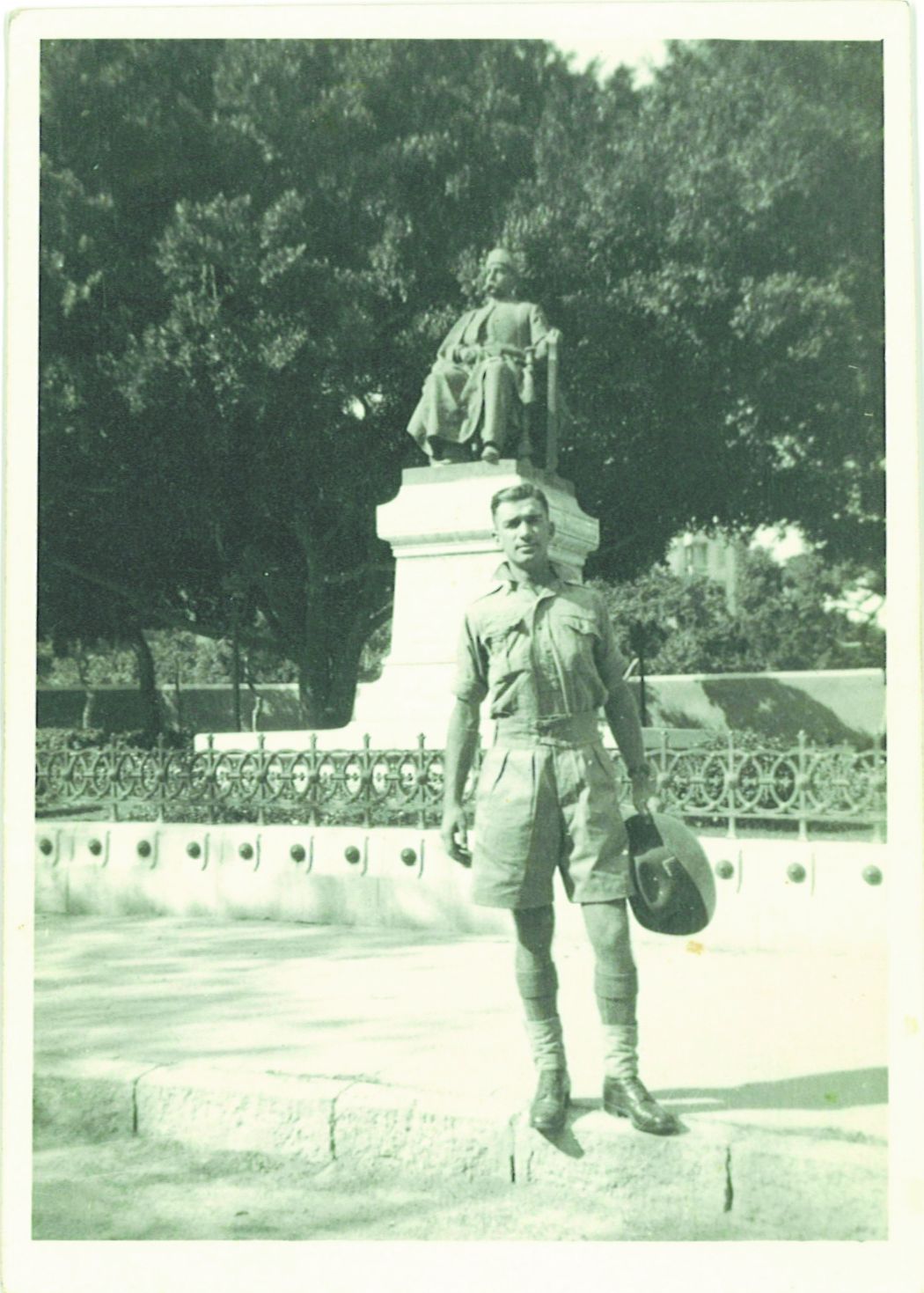 In the good old days Max Schubert (right) would flog his horny Rambler coupe – “she’ll sit on 140 MPH”, he’d say with a grin – from Penfolds at Magill to check the vintage at Penfolds’ Dalwood winery in the Hunter. Within years of his death, the Oatleys, founders of the mercurial Rosemount in the Upper Hunter, had raided Southcorp’s Penfolds, and flew regularly the other way in their private jet.
 Fosters soon butchered this prime wine business with further “rationalization”, confusing its management, marketing and sales with its beer sector, an entirely destructive process which it now professes to have successfully reversed in its disentanglement of both sides of the firm for sale.
 The late Tyrrell (left), “The Mouth Of The Hunter”, once told a gathering of wine writers that with two other prominent Hunter winemakers, he visited Premier Neville Wran, slapped their sugar invoices on the table, and complained that the pollution had become so bad that some years they were forced to illegally chaptalise their wine to get to the point of “ripeness” the market demanded.
 ‘‘There were many vines planted in the wrong place, for the wrong reasons and they will all have to come out.’’
 She has just converted her wine grape vineyards to Sultana production for table grapes.
 And I mean the brands, not the booze. The booze is worth almost nothing. But I suppose that because there’s such an ocean of it still to sell, Fosters’ attempt to outstare Wine Australia could be a last-gasp attempt to flog more grog at any price.