“Sod the wine, I want to suck on the writing. This man White is an instinctive writer, bloody rare to find one who actually pulls it off, as in still gets a meaning across with concision. Sharp arbitrage of speed and risk, closest thing I can think of to Cicero’s ‘motus continuum animi.’

Probably takes a drink or two to connect like that: he literally paints his senses on the page.”


DBC Pierre (Vernon God Little, Ludmila’s Broken English, Lights Out In Wonderland ... Winner: Booker prize; Whitbread prize; Bollinger Wodehouse Everyman prize; James Joyce Award from the Literary & Historical Society of University College Dublin)


.

.

.

.
Showing posts with label Brian Croser. Show all posts

06 December 2010

CAB MAC v COKE - AUSTRALIA v FRANCE


STEPHEN HICKINBOTHAM 1983 - photo WHITELIGHT

Making A Pause Refreshing Having Bought Jacob's Creek France Copies It
by PHILIP WHITE - two recent additions to the archive

2 July 2010

In the early ’eighties a brilliant young winemaker, Stephen Hickinbotham, decided Australia needed a bottled red wine that would fight off the dodgy French Beaujolais Nouveau which was threatening to catch Australian attention.

An early adherent to the notion of premium wines having a sense of place, a home base, and a distinctive terroir, Hick was also aware that the irrigated Murray-Darling was about to start producing a lot more amorphous red than Australia could drink.

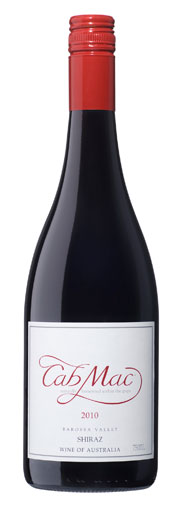
To make the most of this, he modified the Beaujolais winemaking technique called maceration carbonique, invented and sought patents for the simple, cheap equipment his new technique required, and registered the name Cab Mac. His elegant script logo was deliberately designed to look like Coca Cola.

But like Beaujolais Nouveau, which vanished in an international currency shift, Cab Mac only threatened to catch Australian attention: after a few exciting vintages, Hick was killed in a plane crash, and the whole exercise fizzled out, in spite of it being sold for expansion to John Valmorbida, who then owned Mitchelton winery.

It was a great pity, because Cab Mac was reliably a much better wine than the baby Beaujolais, and was vastly superior to the bladder pack reds which now make up a great deal of our red output (last year we drank 96.7 megalitres of bottled red vs. 56 megalitres of bladder pack).

Last week, Valérie Pajotin, the diva directrice générale of the Association Nationale Interprofessionelle du Vin de France, or ANIVIN, announced that France should now approach its wine manufacture in a totally new way. She even named that great French-owned product, Jacob’s Creek, and triggered an international frisson when she said “It’s like creating a well-known brand name, like Apple or Coca-Cola”.

After interminable Gallic wrangling, this new ANIVIN body has the job of promoting France’s new Australian-style refinery-made wine. In a sense, Pajotin has replicated the young Hick’s dream, and even dared to mention the C-C-words.

Most of Australia’s grapes go into amorphous bottom-shelf blends which sell in the vulnerable nether regions, where the tiny profits are at the mercy of endless currency fluctuations, and the whims of new rival countries which can produce similar products at lower costs than we can manage.

Their labour is cheaper; they usually have much more water than us, and their environmental awareness and controls are nowhere near as restrictive as Australia’s.

Add a flash of critical discontent like our plonk has attracted in the USA and UK in recent years, and a great degree of the Australian wine business suddenly looks a lot more rickety than anyone seems ready to admit.

And just when we thought we had France licked, Mme. Pajotin has lurched it back into the picture, big time.

There are 861,075 hectares of wine grapes in France. Australia has 162,550 hectares.

While the pointy end of Australia’s premium wine business is finally beginning to understand the importance of local geologies and terroir, which the best of the French have understood for centuries, the rest of the French have finally legislated to make possible enormous inter-regional refinery blends, just like the dud end of our business.

This new megabulk appellation is called Vin de France. And while it appears, on the face of it, to be more along the lines of your baby Beaujolais than Cab Mac in quality, Mme. Pajotin’s threatening to very quickly rattle the trendy end of Australia’s cage.


She’s taking the great Ocker wine refinery doctrine, demolishing France’s inter-regional blending restrictions, and is about to replace France’s knowledge of wine regions with a new knowledge of varieties.

She’s determined first to teach French lasses whether they’re Pinot grigio girls, Sauvignon blanc girls or Chardonnay girls – she’s a Chardonnay girl – but is already challenging the vast grapeyards of France to open their floodgates with giant blends that Australia simply cannot match.

While Colombard/Chardonnay and Carignan/Shiraz sound uncannily workaday Ocker, this country simply could not mount a counter-attack with Chardonnay/Gros manseng, Terret/Sauvignon blanc or Gamay/Shiraz, which Mme. Pajotin’s right onto.

And she’s looking way past the borders of France: she’s determined to win back the shelves of the UK, the USA, and Germany, with fewer brands of more consistent varietally-labelled mega-blends than ever before.

In the same week that every Australian politician with a propensity for travel and red teeth was leading a delegation of their favourite Australian winemakers into China, Mme. Pajotin uttered that C-word, too.

One thing about the Chinese. Their wine business has been inextricably entwined with France since the days the English poured them a Cognac as they paid for their tea with shiploads of opium. French wines were the only grape-based alcohol in the courts of Beijing and Shanghai long before Mao took his walk, and China still proudly thrusts forward bottles of Dynasty, the Remy-Martin joint venture that commenced with Frenchmen teaching China how to plant and manage vineyards right when Hick was working on his first Cab Mac.

JACOB'S CREEK IS NOW AN INTERNATIONAL TORRENT: PERNOD-RICARD CONSULTANT AND FORMER BOSS WINEMAKER FOR JACOB'S CREEK, PHIL LAFFER, NOW WORKING ON BIG NEW PERNOD-RICARD VINEYARDS IN NORTH CHINA

Now we see Pernod-Ricard, the giant French pastis empire which owns Jacob's Creek, busy establishing vast vineyards in China. Who knows - If the history of the Pernod and Ricard families' attitude to such important terroir as Steingarten is any indicator, we may soon see a Chinese Jacob's Creek.

The Chinese prefer long-term relationships.

Winemaker Of The Year Dutschke Resurrects Cab Mac At St. Jacobi The Perfect Sunshine Slurp

1 October 2010

Wayne Dutschke, Barons of Barossa Winemaker of the Year 2010, slunk a slinky blast from the past onto the market during the winter. He’s rekindled Stephen Hickinbotham’s early ’eighties invention, Cab Mac.

The ingenious Hickie had been infuriated by Australia’s infatuation with Beaujolais. The macho Aussie Dollar bought many Francs in those days, and to quote John Cale, “the Beaujolais was raining”.

Beaujolais is the impossibly cute vignoble south of Burgundy en route to the Rhone. It grows Gamay, an audacious juicy red which the vignerons traditionally vinify by carbonic maceration, where bunches are fermented whole in small containers so the wines can be sold quick and fruity.

The most obscene marketing perversion of this was the annual Beaujolais Nouveau release, when vignerons hired helicopters or whatever it took to get the first wine from the new vintage to market. I recall wine-bearing paras leaping into the Thames to get it into London gullets one year, and distributors doing very silly things to be the first into Sydney with the barely-fermented folly.


Eternally scheming of ways of outdoing the French, Hickie reached into his winemaking father Ian’s vast knowledge and theories about collapsible plastic wine containers. In the ’sixties Ian had worked hard on the adaption of the Italian vinegar bladder pack for use as a fine wine container – the wine “cask” - with David Wynn and Penfolds, and had also played with the idea of using bag liners in concrete wine tanks to minimise oxidation during the industry’s post-war conversion from sticky fortifieds to premium dry wines.

Shipping containers fitted with such liners are the standard bulk export containers now: giant oxygen-free bladder packs.


Instead of tanks, Hickie used potato pallets, those wooden pallet-sized boxes of about a metre deep, designed to be shoved about and stacked by forklifts. He patented a plastic bag liner which could be sealed to prevent oxygen ingress, but was fitted with a valve, so the normal CO2 of ferment could escape under its own pressure.

You simply picked grapes directly into these big bags in boxes, zipped them shut, and left the grapes to ferment within their own skins. Sometimes, to preclude oxygen and cool the fruit, he’d put big chunks of dry ice – frozen CO2 – in the bottom of each bag.

The shallow nature of the pallet ensured there was insufficient pressure on the bottom bunches to squash the berries, so there was absolutely minimal free juice running in absolutely minimal oxygen.

WAYNE DUTSCHKE

If you wanted to hurry the ferment, you left the pallets in the sun. To slow it down, you put them in the cellar.

Each berry is its own little sealed tank in this technology. As the wild yeasts of the vineyard begin to ferment the juice within each grape anaerobically, they extract a different spectrum of phenolics – tannins and colour - to those that would be exctracted from the same grapes submerged in juice in a normal whole bunch ferment.

Once the average alcohol reaches, say, six percent, the bags are tipped into the crusher and the ferment continues normally in tank. No oak is required, and largely regardless of the red variety used, the wine displays an intense cherries, nuts and berries freshness with a sort of gentle spiciness that normal ferments rarely produce.

While it’s dry, and not sweet, the result is a little like the effect of botrytis on sweet whites: this peculiar method naturally produces a smoothed-out flavour of its own, which can be more pronounced than the normal varietal indicators.

Hick registered the name Cab Mac, had a logo drawn that matched the cool breeziness of the Coca Cola calligraphy, and released a string of reds that were immediately noted for their vivacity and unabashed freshness of fruit.

JENNY REGAN AND STEPHEN HICKINBOTHAM. MID-EIGHTIES


John Valmorbida, owner then of Mitchelton in the Goulburn Valley, bought the system and the brand and continued with it for years, with the input of winemakers Don Lewis and Wayne Dutschke.

Hickie was killed with his partner Jenny Regan and five other close friends in a plane crash at Cairns, and Cab Mac became another of his brilliant ideas and inventions that were never fully extended.

Remembering this at a time when Australia is blamed with making wines too strong and too thick for easy refreshment, Wayne Dutschke took a look around the internet, and discovered the Cab Mac name was available for a song. The product had been let languish when Brian Croser bought Mitchelton, and since he sold his empire to Lion Nathan, now part of Kirin, the giant Japanese brewer, Cab Mac simply and stupidly slid into oblivion.

Dutschke couldn't believe his luck.

WORKING DUTSCHKE'S St. JACOBI VINEYARD, Ca. 1900


His wine is from old vine Shiraz from his home block at Lyndoch. He used small airtight tanks, where the berries sat for nearly a fortnight before crushing. The ferment was finished normally, and the wine bottled and released.

The resulting Cab Mac 2010 is a modest 13.2% alcohol and is the perfect sunshine slurp for spring or summer weather. The normally floral nature of Lyndoch Shiraz, reminiscent of the best of Beaujolais anyway, has an extra layer of bright maraschino and marello cherry, and a subtle nutmeg spiciness that looks all the world like good oak.

So, we have a spunky 2010 dry red that slots neatly between Grenache and Pinot in style, at a cool $20, and an easy 92 points. You should be into it by the time your patio vine casts a proper shadow.

03 June 2010

AUSSIE TERROIR: A GIFT FROM OLD BLIGHTY

Croser Imports Own Thinker
England Spain And Portugal
Tell Us What We Should Learn


by PHILIP WHITE

Andrew Jefford (left), the noted English wine writer and poet, has returned to the old country after a year in Australia, researching our terroir. His book should be more than interesting: the thought of somebody unravelling the terroir of Australia in one short year is a big rock to lick.

There are two ways of looking at this: the larrikin might suggest the Poms should understand said terroir. They’ve known about it for two hundred years. They wouldn’t have sent us convicts to a place with good terroir, would they?

The other aspect is a lot more serious and a little sad. Australian winemakers have tugged their forelocks into oblivion, kow-towing to great white hopes from foreign shores. While the blogosphere has severely eroded his influence, the overt power exercised by the likes of Robert Parker Jr. is a perfect example. He also came here once or twice.

No wine show is complete without a star guest from afar, a sort of a missionary, really, to justify the enormous budgets allocated, and the countless hours of winemakers’ time squandered arranging and judging the competition. The winemakers’ employers permit this in the hope, of course, that they return from said show with a trunk brimming with bling for wines they have made themselves.

The thought of anybody unused to such competitions ploughing through miles of wines foreign to them, and coming up with opinions that extend beyond rhetoric is bemusing. Their scores are always mangled by the two other judges in their tasting team, anyway. The points awarded any wine are the average of the scores of the three judges in each panel.

Any winemaker judge who doesn’t recognize their own wine should not be judging; any winemaker judge who doesn’t then award high points to their wine or wines like them should withdraw them from the market, or at least cease expecting the consumer to buy them. Inevitably, when faced with a dangerous self-opinionated foreigner, the two locals work together against him, pointing low wines they imagine he will prefer, and pointing impossibly high wines they think either of them may have made.

Winemaking judges therefore severely cramp the arguments and scores of the glamour ring-in from Blighty. But eventually the star is wheeled up to the lecturn to vent their point of view at the awards banquet, everybody claps, the visitor climbs aboard the rocket, and things quickly return to normal.

A local critic might have touted the glories of a certain wine or style until their credibility expires; when the star visitor says the same thing, delighted winemakers copy out their comments and send them as triumphant press releases to the first bloke.

On the other hand, a writer like myself may, say, argue against the use of inferior cork for decades, which I did, promoting instead the vastly superior screw cap, only to find the winemakers of Clare suggesting they changed to screws only in response to a writer from England, whose writing they obviously regarded as heavier. Bigger pictures. More rock star in England.

Bull shit.

This also occurred with my decades of complaining about Australia’s addiction to cheap, overt American oak, which is mercifully dwindling.

Sour grapes? Absolutely.

The word terroir itself is interesting: the EU language stormtroopers seem to have overlooked the possibility of outlawing our use of this unique French term. If we, the guardians of the indigenous Tawny Frogmouth Owl, are no longer permitted to use the word tawny, and claret, port, sherry, champagne and hermitage are out, even methode traditionelle, then the miracle of our continued permission to use terroir is surprising.

In any case, it is a brave human that would take on a task the size of Andrew’s. But he’s done brave things before. Bravely, John Armit, Jancis Robinson, and chairman of judges Stephen Fry over-ruled Auberon Waugh’s dissenting vote to hand him The Bunch award for wine journalism in 1994. It was the youngish Jefford’s first such gong. Bron thought Stephen Spurrier’s writing, and that of Harry Eyres and Charlotte Lessing were better efforts, as he felt Andrew’s piece on his visit to Serge Hochar’s Chateau Musar in Lebanon was not really wine writing.

“Drinking wine is an experience of the senses”, Bron (below left) pondered.

“To describe the taste of wine in terms of other tastes or smells … is bound to be an affectation. Every wine tastes of itself and nothing else. Yet in order to sell the stuff, one has to do one’s best. The wine writer’s job is to help sell the stuff by communicating his own entirely genuine enthusiasm for whichever wines please him.”

Andrew had “visited at the time of some Middle-Eastern war or another”, Bron recalled, “when the grapes were being driven over the mountains from the Bekaa Valley to the winery in Ghazir were regularly strafed by Syrian fighters ... wine writing is not about dodging Syrian fighter planes in the Bekaa Valley.”

Bron’s opinion stands worthy in itself, but may well have been influenced by his concern that in this instance, one wolf had broken bravely from the pack: one winewriter was trafficking dangerously in an ethereal field which was highly unlikely to result in the filling of his cellar. Bron was more of a bottle man than an ideas man when it came to his wine efforts.

A few years later, Serge politely laughed off my query about this wartime vintage when I took him to Adelaide’s famous Exeter for a few quiet ones. Looking rather anxiously at its artistic clientele, this elegantly besuited Lebanese suggested The Ex was a more dangerous place than his winery. He also pointed out that as that grape delivery trip across the Bekaa took so long, the fruit was flyblown and rotten before it arrived, and was distilled into an arak he refused to recommend.

This fact was not exactly advertised loudly when Andrew’s journalistic efforts put Serge on the front cover of Decanter as Wine Man Of The Year. It could have been that sage journal’s first Maronite Pastis Man Of The Year, but never mind.

I think the disgusting thing was the Decanter illustrator, typically, drew Serge as black man. Serge is not black. Australians are lucky the same dumb crew does not draw us as black: they certainly fail to get other basics facts right, and are capable of breath-taking fuck-ups in sub-editing and in naming photographs, and failing to credit the photographers where credit is due.

I wonder how they'll deal with black Australian winemakers, when we finally get blokes who'll fill the gap left by winemakers like David Uniapon, the only aboriginal to get on our money.

Perhaps this reckless background programmed Andrew to make a list of Australia’s ten bravest winemakers in the May Decanter.

Bron felt one of his bravest moments in wine writing was at a party for an edition of The Adelaide Review at Carrick Hill. This was then an independent paper whose every publication was considered such a miracle that it deserved an extravagant launch party, sponsored by generous wineries which were supposed to be sold on the idea by the wine writer. Which had been, for many years, me. As we stood talking on the mansion’s parched lawn, near the parched maze, I imagined Bron’s strange wincing and twitching was an eccentric Englishman’s tic, or perhaps some involuntary neurological result of his war injury, incurred when he accidentally blew his chest to shreds with his own machine gun in Cyprus in 1958.

“Excuse me old chap,” he interrupted, waving his Croser fizz, “do you happen to know that woman?” I turned to spy a waiter hurling champagne flutes at my back, and while these were falling well short on the dead grass, I realized he had been dodging her incoming ordnance. “She was aiming at me,” I explained, “not you. You’re the guest of honour.”

Bron went back to write in The Spectator of what fine and lucky lives the derelict urban aboriginals of Australia lived, lounging on the manicured lawns outside the Adelaide Hilton, enjoying endless masked tastings of Australia’s beautiful fortified wines.

It was Brian Croser who got the funding for Andrew’s Australian sojourn: some from my dear friends at Amorim, the world’s largest rubber and cork company, for whom Croser wisely works; some, I believe, from Xavier Moll, the Spanish media magnate who owns the limp Adelaide Review, as well as some vineyards near Greenock, which have remained unpicked in recent years. And some from the University of Adelaide, of which Brian was deputy chancellor and which awarded him an honorary doctorate for his efforts.

Nick Stock, long-serving wine critic at The Adelaide Review, lost his job when Andrew fronted with orders from above. Lawyers were employed.

This matter of importing Thinkers In Residence is a strange South Australian quirk which extends well beyond the arcane world of wine writing. Whilst blithely ignoring very smart humans who have lived their entire lives here, thinking about which errant behaviours are unsustainable and what should replace them, Premier Mike Rann (right) and his government pays enormous amounts of money to selected foreigners, who come for a few months, write a report on this topic or that, take their bucket of money and go.

The first of these soon discovered the best place for ideal suggestions was The Ex, where the permanent thinkers rested their rubbing strakes against that mighty bar. He passed this knowledge to the next temporary Thinker In Residence, and so on.

THE AUTHOR PULLS INTO THE EXETER FOR A THINK

That lovely thirst emporium was responsible for some great local thoughts finding their way onto the Premier’s desk, if not to the innards of his haughty brain. He put a quick stop to this by banning the smoking of cigarettes in bars, immediately disbanding what was obviously a dangerous cadre indeed. Now only smokers who want to quit drink in The Ex, but they’re dead boring dissatisfied and dissolute bastards, every damned one of them. The Ex is still the best, especially for lunch and great rare reds, and hot indie bands in the evenings, but the good old days are gone.

Anyway, Brian thought he’d import his own Thinker In Residence to tell us about terroir, and sensibly chose Andrew. But only the passage of time, and the eventual book, will reveal whether or not this admits our English friend to the rare category Brian used in the past to classify an approved acolyte as “a Croser animal”.

In his usual astute avoidance of any conflict of interest, Andrew precludes Brian from his Ten Bravest, so I should immediately nominate the former deputy chancellor as The Bravest Of Them All, especially with respect of terroir.

On the other hand, he will also deserve the award should Andrew remain truly independent, making up his very own mind. He may indeed have precluded Brian from his ten most brave believing he’s not brave at all. In other words, Andrew may not be a Croser animal. Making Brian very brave indeed. That's him looking at a drink, above, left.

Brian had a crash course in the nature of geology during the drawn-out legal tangle over his insistence that his Sharefarmers Vineyard should be included in Coonawarra. I think he was still deputy chancellor of the University and chairman of the Australian Winemakers Federation at the time, positions which provided some push. This interminable wrangle ended (2001) in the boundaries of Coonawarra being drawn so widely to include his patch that any attempt to give it a consistent terroir is, in my opinion, futile. The disparity between Sharefarmers geology and that of the original Coonawarra terra rossa strip was so great that I wonder that he doesn’t now attempt to have the boundary extended another thirty or forty kays to include the Koppamurra Vineyard he bought near Naracoorte. That would make space for much healthy expansion. But perhaps he thinks Coonawarra has lost some of its clarity, so he shall start another.

Now called Whalebone Vineyard after the whale bones in the limestone beneath, Koppamurra provides fruit for Brian’s Tapanappa outfit, which is backed by the Bollinger family and the Cazes of Lynch Bages. I believe his beautiful daughters have married away up into these exotic tribes.

LIMESTONES IN THE WHALEBONE VINEYARD, PASA ROBLES, ADELAIDA, CALIFORNIA

“The erosion of the limestone continued underground” the Tapanappa propaganda enthuses, “and has formed a large cave complex exposing the bones of the 800,000 year old whale in its walls below the vineyard. Such is the stuff that makes a unique ‘terroir’.”

In reality, Tapanappa is a dead boring micaceous schist rock formation about half a billion years older than the Whalebone limestone. It lies hundreds of kilometres to the north-west, along the eastern border of the South Mount Lofty Ranges in the Kanmantoo Group and the Adelaide Wine Zone. It contains no fossils. But Brian’s propaganda says that he has used the name because of his insistence that he should “stick to the path of the best possible wine quality from unique Australia terroirs”.

“In the language of the aboriginal people of the Fleurieu Peninsula of South Australia” he writes, “Tapanappa is probably a variation on the aboriginal words that translate as ‘stick to the path’.”


It must be a fluke that the word includes the vaguest insinuation of the Napa Valley, just as Brian’s previous Adelaide Hills company, Petaluma, has little to do with the chicken farming capital of California, prominent there on the road to the Napa. While he was studying at Davis and drinking in the Napa, Brian drove straight past the stripjoints, whorehouses and arm-wrestling bars of this broke town. He stuck to the path. Only the sweet-sounding name stayed with him.

Neither does Tapanappa have anything to do with California’s Whalebone Vineyard “In the heart of Adelaida, west of Paso Robles [which] derives its name from the many whale and marine fossils trapped in the vineyards’ broken shale and limestone (above). Calcareous treasures were left behind after the underwater canyons and basins retreated, and when the earth shifted and folded during the Miocene, some six million years ago.”

That quote comes from the original Whalebone Vineyard website.

Confused? You should be. NEVER forget that “Tapanappa is probably a variation on the aboriginal words that translate as ‘stick to the path’.” The keen reader will recognise the italics are mine; the keen scholar of terroir will realise the easiest path to stick to is the one that probably varies according to what is translated as what and by whom. Especially if it's you.

Brian’s intellectual precision surely displays determination, nay, bravery much more intense, than, say, Andrew’s first Decanter nomination, who turns out to be another Brian. And this is where Brian Croser really loses control of his dead fish. The ocean is still full of lost fish.

As knows Brian Franklin, the former abalone diver who makes audaciously delicious wines at Apsley Gorge (below), at Bicheno, in Tasmania.

Of course ab diving can be regarded as brave; but another ex-diver-cum-vigneron, Graham Ford (below right), of Boston Bay Wines at Port Lincoln, suggests it’s “like picking up $50 notes from the bottom of the ocean and putting them in a string bag”. Which is a joke, considering the white pointers Fordie and his boys have spent their days dodging. They extend this humour with their Sauvignon blanc, which is called Boston Bay Great White.

If you ever get to visit Boston Bay, ask them to tell you about the bloke who stuck his head up out of the seagrass to see a white pointer with the girth of a Volkswagen cruising, mouth agape, towards him.

In bravely jamming his bag of abs in its mouth, he lost the end of his little finger, which leaked blood into the water. Sharks like blood. The only thing he could do was push aside his breathing mask and stick the finger into his own mouthto remove the blood streak from the water, and try to get back to his safety cage, and then away back up to the boat. The shark harassed him every inch of that long journey. He said the worst bit was finally trying to get his legs out of the sharks’ terroir and into his own, when his weight belt caught on the gunwhale.

It’s interesting how this marine theme recurs. The great white that harassed that poor ab diver will no doubt reappear beneath somebody’s vineyard millions of years hence, its fossilised carcase celebrated on dainty brochures and pernickety back labels. They’ll probably give the wine a stage name, too. Little Finger would be nice.

In fact Little Finger will by then have probably varied in translation to become aboriginal for 'somewhere'.

Look at Stefano Lubiana, Andrew’s second brave bloke. When he told his proud Italian father the vineyards - which he’d spent his life developing in the Riverland for Steve to inherit - were in the wrong place, and that he’d be selling out and moving to Tasmania, maybe that was brave. But it was nothing on Brian telling his stern teetotalling beefer dad he wasn’t gonna be a stockie after all, but a plonkie. One can only go so far into animal husbandry.

I could go through the whole ten of ’em, but I’ll bore you shitless, and it’s better that you read Andrew’s crisp prose.

Maybe other than a mention of Roman Bratasiuk, yet another animal husbandry dropout, whose inclusion is perhaps the bravest fissure in Andrew’s seamless organoleptic theorising. Roman is not what I would call brave. He’s Serbian, which is something different. His grail is Astralis, which always brings to mind Australis, a name owned by whoever owns whatever’s left of Remi Martin, and arose from an early ’eighties night on the Krug with Francois Henri and Dennis de Muth.

Australis? Talk about a name that encompasses terroir! It was given to the first Shiraz from Blue Pyrenees Estate, Remy’s Victorian vineyard away back when Roman was just starting at the Institute of Medical and Veterinary Science, enjoying the opportunity to learn about wine over intense lunches in The Ex. He obviously doesn’t drink there any more: there are three bottles of his expensive Grenache there, heavily discounted. They’ve been there for years.

I suppose, on second thought, that like Brian, and Remy Martin, Roman (above) has a determinedly brave attitude to place. It seems to depend on his translation of a varying sort of a path. Like, you’d think his winery is on the hills of Clarendon, but it’s away across the river at Blewett Springs. He’s also kinda vague about his aboriginal linguistic skills: of the vineyard he calls Onkaparinga, he says its “name comes from the indigenous people of the area, and means ‘local region’.” Onkaparinga is in fact a European mis-spelling of the Kaurna ponkepurringa, which means, very specifically “women’s camp on the river”. In place of listening to the women, Roman bravely preaches terroir.

I live in the midst of the vineyards from which Roman buys his fruit. It’s easy to find this stuff out. Prices, owners, nomenclature. I walk over and ask a neighbour or two. The last time I saw him was five years ago, at an Adelaide restaurant. Gary Steel, who sold pallets of Bordeaux and Burgundy to Roman, and happily distributed his wine, back when Robert Parker still had sway in constantly issuing Clarendon Hills high nineties, asked me to attend in order to make peace with his favourite Adelaide son. I was descending a staircase when the giant Steel arrived: he picked me up for a hug, and fell on me. My already cactus spine became a sockful of smashed windscreen glass. I cowered over a walking frame for months, and have never fully recovered.

So you may regard this writing as responsive. Let me assure you it is: on that conciliatory night, Roman told me I did not understand the great wines of France, and therefore could not begin to comprehend his.

Andrew’s second piece in the May Decanter concerns Tim Kirk, the former Roman Catholic priest who makes exquisite wines at Clonakilla, near Canberra. In this, he agrees with my belief that humans are an essential part of terroir, although I wouldn’t stretch quite so far in my God-bothering as Tim. I’m sure it’s another co-incidence that Andrew’s principal sponsor, Brian, was nicknamed God by his workers at Petaluma. As both of us are preacher’s kids, I share a deep understanding of the power of God with Andrew.

Then he quotes Doug Neal, another brave from Geelong. Andrew was probably unaware that Doug’s suggestion that the winemaking taught in Australian institutes which “promotes fear … it tells you that nature is the enemy”, is precisely the sort of dry technical science that Brian introduced and dug into both winemaking universities. Students have been brutally taught for decades that science over-rules terroir. There was one interminable WineResearch Institute experiment that lasted years and absorbed lots of seminal terroir budget: it was designed to prove there was no difference in flavour between Coonwarra Cabernet grown on the precious terra rossa and that grown on the mucky black dirt that surrounded it.

In decrying this philosophy, Doug is very very brave. Maybe Andrew should have put Doug in his Ten Bravest list, and mentioned Brian in his piece on God.

What he failed to add was Doug’s suggestion that a vital part of Australian terroir is its old alkaline terroir, which tends to make acid additions necessary, as opposed to France, where the lack of warm sunshine makes sugar additions necessary.

“Why is he so adamant that we fight against our terroir by adding acid?” Doug asked me yesterday. “Is it any different to the great Frenchmen adding sugar?”

So there. Doug and Andrew, and perhaps even Brian, would agree with my longstanding theory that natural acidity, if it can be achieved, will always trounce shoveled acid as far as beautiful balanced wine goes.

But then we must also admit that in many Australian wines, the most prominent aspect of their aroma and flavour comes from the terroir of an oak forest somewhere in Europe or America - the Old World. Which, after all, is where the vines came from. And Andrew.

Even Brian John Croser is an introduced species.

So let’s be reasonable, eh?

I look forward to Andrew’s book.

JOHN LIVINGSTONE-LEARMONTH HAS A GRENACHE IN McLAREN VALE

P.S.

On matters of terroir, the same issue of Decanter contains a piece titled “Rhone Flair, Aussie Finesse”, by the erudite and passionate Rhone terroir expert, John Livingstone-Learmonth. He came here to McLaren Vale as the star guest international judge at last year’s wine show. As I had only a brief moment with him to summarise this district’s confoundingly complex geology, it is easy to imagine his prolific notes misquoting me.

This involved a classic example of truly dumb colonial hamfistedness. Because I had been studying the geology of McLaren Vale for years, the winemakers budgeted to cover a twenty-minute helicopter tour of the Vales, so I could introduce their guest to this district unknown to him by pointing out the basic tenets of its geological history from above. Wise! But at the last minute the local PR blomo told me I could not take the ride, as the seat was now going to a writer from a glossy magazine, whose coverage would be rated more highly by the winemakers who paid for the chopper. The fact that he knew nothing of the local geology was neither here nor there.

In the end, of course, John and Decanter got it badly wrong, and credited me with stuff I did not say. Nothing new in this. Andrew Jefford gets McLaren Vale geological history wrong, too, in his accompanying piece The Land Down Under. But not nearly as wrong as David Sly, the bloke who took my guiding chair in the chopper.

“The hills of Willunga, near the fault line”, Livingston-Learmoth writes, “are said by South Australian wine writer and geologist Philip White to have some of the region’s most promising sites. ‘The vineyard area is moving toward the Willunga Hills, which are more than 1,000 billion years old …’.”

This means those old hills were there 986.3 billion years before the universe appeared, which is a claim not even I would be brave enough to make. Their various formations stretch from 520 million years to 1.6 billion years of age.

Furthermore, while I have a background in geology and the mining business, I am not a qualified geologist. I have, however, been delighted to help convene the creation of the official geological map of the McLaren Vale Wine Region, which will be published next week.

In the mid ’seventies, when I worked in the South Australian Geological Survey in the Department of Mines, we would ponder, the great W. A. “Bill” Fairburn and me, about producing geological maps of South Australia’s wine regions. With the passage of time, I went off to pursue a career writing TV news, while Bill quietly got on with his geological work, part of which was his mapping of the McLaren Vale district.

It was a great pleasure some years ago to re-engage Bill, and two other revered geologists who worked on the same floor of the Mines Department all those years ago: Jeff Olliver and Wolfgang Preiss.

The four of us have now completed Bill’s map, certainly the first of its kind in Australia, and perhaps the world: it is much finer in detail, for example, than the Charles Pomerol’s essential book The Wines And Winelands Of France – Geological Journeys. The McLaren Vale map shows the complex geology of the district with exacting precision, indicating the location of each winery, overlaid with the vineyards and roads.

Published by the Department of Primary Industries and Resources South Australia, which now contains the Geological Survey, this publication, Geology Of The McLaren Vale Wine Region, will be available from PIRSA and the wineries of McLaren Vale next week.

If you want to learn about the terroir of South Australia, consult publications like this, not Decanter.

09 May 2010

AUSSIE PLONKMONGERS LOSE THE PLOT

Ethanol Floggers Flog On ... Oz Pollies Taken For Suckers Again ... Forensic Enquiry May Shake These Dangerous Tendenciesby PHILIP WHITE - a shorter version of this appeared in The Independent Weekly


There is no better metaphor for the Australian wine industry than its National Wine Centre, which has finally become a busy pavilion for weddings. It lies there, ribs poking skyward, its drying gizzards wriggling with brides.

I have no statistical evidence to suggest the success of these marriages is any different to the national average: one in three generally ends in divorce.

It's all tiresomely suburban.

The Wine Centre’s biggest publicity – ever - followed the incident when Rick Phillips went in there and whacked our Premier, Mike Rann, about the face with a rolled-up Winestate magazine.

Phillips pled guilty, while his ex-wife, Michelle Chantelois, who’d been a barmaid in Parliament House, repeatedly claimed she’d maintained a sexual affair with Rann who repeatedly denies this, while publicly apologising for any distress it has caused her or her family.

And now, as if to complete its transformation from National Wine Centre to wedding and celebrity divorce factory this troubled facility is even flogging its wine collection.

Smart observers knew, when $50+ million of taxpayers’ money snuck that corpse into our sacred Botanic Garden a decade back, that this industry, its august councils, and the politicians it seduced, all deserved forensic scrutiny.

Who are these people? The hairdos have gone from Brylcreem combovers to spiky and shooshed, but the mentality is as constant as the suits.

They cannot halt the wine industry holocaust. For their shareholders, they encouraged it to fester, at the expense of our water, our environment and civic amenity, the salinity of our soils and aquifers, our public health, and our economies: national, town-sized, familial and individual.

The glittering refineries they inflicted on our rural vistas frankly reflect the chrome pillows blowing like leaves about aboriginal lands.

They built an industry that - by vast chemo-mono grapeyards - mines the arid Mallee for sugar, which is used to make ethanol, a highly-dangerous depressant and recreational drug. Over half the Australian business depends on this formula, and in bladder packs or cleanskins sells sweetened ethanol - which is three times the strength of your average beer - at about the price of bottled water. Or less.


They built an industry in the Australian desert which depends upon endless supplies of virtually free water, an international clientele with a constantly-intensifying addiction, and a pathetic Aussie dollar.

It also lacks basic gastronomic intelligence, expects the same of its clients, and presumes the absence of any smart competition from other countries.

Like, say the countries adjacent to the Andes, which happen to be full of snow which melts to make irrigation water. These grape regions are populated by peasants who work for almost nothing, and whose laws lack the scant environmental restrictions which somehow survive in Australia.

A telling gauge of how this industry’s authorities are respected is the advent of the Family First Winemakers. As this new coalition of the great wine families – Peter Barry, Hill Smith, Taylors, Tyrrells, Brown Brothers, d’Arenberg, McWilliams et cetera – barges forth to promote the “heart and soul” of the Australian business internationally, they attempt a task which the bodies they were implicit in creating have obviously failed to perform.

Who else gets a gong? Oh yes. On February 7th, Dr. Brian Croser AO (left) made a hissy speech blaming the big companies for mucking everything up. This was reported widely.

The Australian Winemakers Federation Croser established helped shove the Wine Center upon us, only to see it slide two years later, virtually bankrupt, into University of Adelaide hands for $1 a year.

When he was determinedly pushing the Wine Centre into the Garden, I questioned Ian Sutton, then Chief Executive of the Winemakers’ Federation of Australia, Wine Australia Pty. Ltd., Australian Wine Foundation and the Australian Wine and Brandy Producers' Association. I asked about the strangely optimistic business plan, and just how much consulting had been done to get the true feeling of the industry, much of which seemed a tad embarrassed about the whole thing.

"My job's not to consult the wine industry”, Sutton snarled. “My job is to represent the wine industry".

Croser was the University’s deputy chancellor at the time, determinedly pushing his agenda to have what was the fusty old winemaking school at Roseworthy fully absorbed by the glittering Adelaide campus. "Technologising", I heard one boffin describe it at the time.

Big companies? To the tune of hundreds of millions, it was Croser’s Petaluma group that slid through Lion Nathan into the hands of the mighty Japanese Kirin Brewery under the caress of his Petaluma accountant Andrew Cheeseman (right), who now heads the Australian Wine And Brandy Corporation.

Just days after his spray at the Big Guys, Croser made another speech: he’d suddenly discovered that Jacob’s Creek Chardonnay was much better than he’d previously considered.

His initial blast at the big companies would have infuriated people like Phil Laffer of Pernod-Ricard, the French families who own Jacob’s Creek, whose company secretary, Kate Thompson, sits on the board of the Australian Wine And Brandy Corporation. Along with Dr. Tony Jordan, antipodean lieutenant of Louis Vuitton Moet Hennessey.

Croser made the Adelaide Hills wine region. He planted the Piccadilly Valley with Jordan, and set forth preaching his gospel for decades, adding great value to his Petaluma. Over endless lunches at his Bridgewater Mill, he encouraged Dr. Ed Tweddell of Fauldings to invest massively in the hills, by setting up the Nepenthe viticulture company that planted vast swathes of vineyard whose fruit ends up now in Jacobs Creek or the carcass of McGuigan’s Australian Vintage. If Kirin doesn’t want it.

The latest top yarn concerning this lot is the Rabobank report of senior analyst Marc Soccio (left). It says the industry’s crook, although he thinks it’s not so much the buggered Riverlands, but cool places like the Adelaide Hills which are far too slow to uproot.

Like the river grapeyards, too much of this upland planting was committed by the wrong people in the wrong places for all the wrong reasons, like tax advantage, or fashion. Many of these doctors, lawyers, and wealthy retirees who dared, with the persuasion of people like Croser, to compete directly with seasoned generational growers in McLaren Vale and the Barossa, should never have entered the industry.

Tragically, we can't ask my good friend Dr. Ed Tweddell about this, as he committed suicide in 1995 (CORRECTION : 2005; not 1995). His son James, who ran the vineyard development company, now runs a nightclub in Queensland.

Rabobank seems confused about gradings of wine quality. Like the freshly-re-enlightened Croser, it obviously regards Jacobs Creek as premium. You can’t blame them: as Croser and his Petaluma chairman, Len Evans, ran the Australian wine show system for decades, megabulk brands like Jacobs Creek won bounteous bling.

Croser would never enter Petaluma in the wine shows. There are still people who remember his rage when he discovered his marketing manager, Bob McLean, had quietly entered Petaluma red in the Melbourne show. While the Petal was notably failing to win the Jimmy Watson Trophy inside, where Croser vented his feelings, ace Wolf Blass red man, John Glaetzer, was crawling around the bushes out the front, yelling “Where’s the dummy? Where’s the dummy?”

Glaetzer could afford to joke: he’d already won a record three Jimmies, and went on to win a fourth.

Individuals aside, this crazy amalgam of savagely competitive ethanol dealers needs a new sheriff. Those responsible for the current carnage should be forced to withdraw, never to play with such power again.

But the blithe refusal of the Rudd government to accept treasury official Ken Henry’s perfectly logical and fair excise regime for all alcohol taxation is crisp evidence that the ancien regime still rules: its lobbyists have been very hard at work reinforcing the constipating inertia extant. Henry’s proposal would have finally and sensibly rendered most of the unsustainable arid land grapeyards unprofitable, but bolstered the chances of small, premium producers.

The frisson of delight at the dribble now oozing down the big rivers proves there is no change, and no change likely. The same old suits sniff a new wave of dirt cheap Riverland premium. Maybe the piddly prices the National Wine Centre gets for its wine collection will best reflect just how premium all this premium really is.

While they’re saying twenty per cent of the national vineyard must go, it’s time somebody admitted the figure should be more like thirty or forty per cent. In lieu of any smarter method of devising the number, they could follow the success rate of the weddings in their National Wine Centre, loaded with an index locked to the tumbling prices of that premium wine collection.

But with all dread seriousness, the vine pull formula should be based on the number of jobs and dollars each litre of irrigation water creates. In places like Barossa and McLaren Vale, this ratio is normally exponentially ahead of any part of the Murray-Darling Basin, which now seems to extend to include the Limestone Coast. Not to mention the Adelaide Hills.

The glut these industrialists created sees professional growers, some four to six generations strong, suddenly being paid $300 a tonne instead of $3000. You don’t need so much premium fruit at $3000 now that you’ve decided the desert produces premium at $300.

Anybody taking water from the Murray-Darling should be forced to pay real prices for it. A litre of water should have a price. Period. Irrigators should pay a price a helluva lot closer to the amount that an Adelaide resident is expected to pay for what manages to ooze from the mains.

If you’re growing truly premium grapes in a unique place like McLaren Vale, where much of the irrigation water is recycled waste from coastal housing estates, you should be encouraged to remain in the business.

But the percentage of vineyard currently for sale in the Vale simply serves to prove that in the eyes of these industrialists, true quality, continuity and professionalism, let alone the environment, simply do not matter. The casual investor, the shareholder, is king.

The politicians are simply inept in addressing this. The only one to poke his head up with a sensible suggestion was Leon Bignell, the Labor member for Mawson, which includes McLaren Vale. The great Rudd/Wong/Rann triumvirate has failed to convince anybody. Tellingly, against all the pundits’ great wisdoms, after his statement, Bignell actually increased his margin in the recent South Australian election. Much greater egos saw their margins shrivel, and seats disappear.

When the wool business, the miners, or the wheat board makes a mess like this, there’s a very prompt independent enquiry. Heads roll. People are stood up and expected to explain their actions. Heros emerge.

Before Croser comes back to save the wine industry, there should be an independent judicial enquiry.

06 February 2010

EXCISE IDEA COULD DESTROY BLADDER BIZ

AN EXCISE WOULD SEE THE PRICE OF EXPENSIVE WINES LIKE THESE TUMBLE WHILE BLADDER PACKS WOULD DOUBLE. photo LEO DAVIS

Rudd Money Man Wants Excise WET Rebate May Dry Up Lobbied Pollies In Abject Panic

by PHILIP WHITE - a shorter version of this story appeared in The Independent Weekly

Treasury wallah Ken Henry has thrown a very tricky handful of marbles under the feet of the wine industry with his recommendation that the current scramble of alcohol taxes be replaced with a simple excise. For seasoning, he’s thrown another handful under the political dries who want to tax kiddylikker - and spirits - to oblivion. With state and federal elections brewing, we’re in for a spat of extreme panic in Pollyville, as the mighty grog lobbies get to their nefarious work.

Henry is a favoured apparatchik of Labour Prime Minster Kevin Rudd, who faces an election soon, in the midst of insurmountable difficulties in attempting to manage the dimishing waters of the Murray Darling Basin. Two Australian states also face elections, six quick weeks from now. One of these, Tasmania, which is sinking in good water, has a premium wine industry but no discount bin plonk production; South Australia produces the most of both types of wine, with much of the business dependent on Murray River water, of which there is none.

Although general political commentators have so far failed to realise the full implications of Henry's proposal, State Labour leaders like South Australia's Mick Rann will soon be forced to announce the attitude they'll take when lobbying their federal counterpart.

WHILE THE TAX WOULD BE A NATIONAL IMPOST, SOUTH AUSTRALIAN PREMIER MICK RAM HAS ONLY DAYS TO MAKE A STAND ON THE EXCISE WHICH HIS FEDERAL COUNTERPARTS ARE CONSIDERING.


Wine is currently taxed on the value of the unit sold, be it bottle or bladder. Under an excise,
which is a tax on the total alcohol each unit contains, the cost of a $14 bladder pack would double, to $31.07, while a $30 bottle would fall to $27.53. These KPMG figures would see your favourite boutiques boom, and the Murray-Darling Basin wine industry collapse.

HARD LIQUOR PRICES WILL TUMBLE UNDER THE EXCISE PROPOSAL

Never before has the gap between the polarised wings of the wine business looked wider. But industry bodies, like the Australian Wine And Brandy Corporation, which is partly funded by the taxpayer, are obliged to represent everybody in the business, so will have to protect the bladder boyos, who produce half the wine consumed, if not made, in Australia.

These two ends of the business have always been at war. It was Brian Croser who went to
Canberra at the onset of the GST and current messy regime and organised the Wine Equalisation Tax, which offered newly disadvantaged small producers an annual rebate.

This writer argued contentiously at that time that an excise was the only clean, logical manner of taxing alcohol. It was a classic Aries vs. Virgo reposte. Croser came home touting his deal as a great victory for the entire industry. I argued that it was terribly messy, and would only postpone the inevitable collapse of the discount bin business.

WINE AND BRANDY CORPORATION BOSS ANDREW CHEESEMAN WAS BRIAN CROSER'S ACCOUNTANT AT PETALUMA

Croser’s band-aid would simply keep the huge irrigating industrialists on side with the
tax-dodging doctors and lawyers with ill-conceived hobby vineyards. No doubt he had discussed this at great length over many Bridgewater Mill lunches with the likes of Alexander Downer, the former Liberal government's Minister of Foreign Affairs. Not to mention folks like Amanda Vanstone (Immigration Minister under the same conservative regime) and Robert Hill (Defence Minister who became Ambassador to the United Nations), who co-owned the relatively tiny Amicus brand with Walter Clappis. These guys had a very heavy pull on John Howard’s wine taxation philosophy.

An open, far-sighted mind might see Henry’s proposal as the perfect opportunity to cleanse the big rivers of the scourge of an industry which is in such gross, nay, grotesque, oversupply to the extent that it’s collapsing anyway. This would release water to the Murray Mouth, and remove the source of much of the grog consumed as an alternative to sniffed petrol in aboriginal
communities.

HENRY'S EXCISE WOULD SEE A BLADDER PACK SOAR FROM $14 TO $31, AND THE COLLAPSE OF THE IRRIGATING DISCOUNT WINE BUSINESS, LEAVING A LOT MORE WATER TO RUN DOWN THE MURRAY. GOOLWA IMAGE BELOW BY KATE ELMES.

It would also, according to the Winemakers’ Federation of Australia, result in the loss of 12,000 jobs.

Whilst the cynic might argue that these jobs are going anyway, the idea of the new tax will fill many country electorates with even more fear and depression. The milder sceptic could suggest that the discount wine industry is in permanently deep merde as long as the
international wine glut continues, and that any movement which might lead to its dimunition is something healthy which much be addressed.

Apparently Henry has stepped his excise numbers: the brackets would be 3.5 per cent alcohol and below, then up to 5 per cent, 7 per cent, 10 per cent, 15 per cent, and above 22 per cent.

This would also favour the premium wine lover who has spectacularly, internationally, turned
away from the sorts of dead-head alcohol bombs we’ve been rotely making in the twelve years since one American critic, Robert Parker Junior, began to tout them. While the wine blog explosion has seen Parker lose some power, the notion of an increased tax on wines above 15 per cent would surely be a strong incentive to Australian winemakers to return to healthier alcohols. Sales of more modestly balanced alcoholic wines should increase internationally.

In the meantime, a relaxing of the stifling tax laws and regulations on distillation could see a great deal of the wine glut converted to industrial alcohol, the income from which could perhaps be devoted to funding the next vine-pull scheme, which seems increasingly imminent, and would be likely to see a permanent cessation of irrigating to produce wines which sell for less than the price of bottled water.

As for the price of alcopops falling from $3.30 per unit to $2.42, well. At the risk of adding complexity to Mr. Henry’s pristine simplicity, perhaps the excise should be extended in the case of premixed drinks to include an extra charge on sugar and other sweeteners when mixed with alcohol. If caffeine was also included in this kiddylikker, another hike could be imposed. Banning such cocktails is futile: anybody can whup down three or four stiff short blacks between sessions in the boozer.


11 May 2009

KEVIN JUDD GOES BLUE SKY AFTER CLOUDY

BANG THE FORKY TAKES A SPELL AFTER VINTAGE

Cloudy Bay Co-founder Announces New Venture
Greywacker Gets Big Rock Star Relaunch

by PHILIP WHITE

Kevin Judd, who co-founded Cloudy Bay - and therefore the New Zealand sauvignon blanc explosion - with David Hohnen twenty five years ago, this morning announced the completion of his first vintage at Greywacke, his new winemaking adventure.

Juddy has named the new brand after the layered grey sand and mudstones that form most of the highest mountain ranges of New Zealand, and therefore contribute greatly to its soils. Securing the name is a coup: the equivalent of somebody using Ayers Rock or Terra Rossa as a trade mark in Australia, where Brian Croser is likely to be the only winemaker who uses the name of a geological group for his brand, Tapanappa. While Croser’s major vineyard at Wrattonbully, Naracoorte, has geology as far removed as one could get from the tapanappa group, at least Jud’s new business and fruit sources are in Greywacke up to their chins.

Juddy’s first solo Marlborough harvest began on 3 April when his crew hand-picked pinot noir from the Yarrum Vineyard, on the ridge between Brancott and Ben Morven Valleys in the south of Marlborough. The last fruit was botrytised gewurztraminer from the Brancott Valley floor.


“I am primarily sourcing fruit from Ivan and Margaret Sutherland’s vineyards in and around Marlborough’s Southern Valleys” Judd said this morning. “They are prime viticultural sites with mature vineyards that contain a mixture of the best possible clones grown under yield restricted vineyard management regimes.

“Ripe fruit and relatively hands-off winemaking techniques will be used to create concentrated wines with personalities that express the incredible varietal intensity typically enjoyed in New Zealand’s Marlborough region.”

Judd statement explained that he feels “very privileged” to have been with Cloudy Bay from its inception.

“It has been a unique, rewarding and thoroughly enjoyable journey. Nevertheless, it has been fantastic fun pulling on the gumboots again.

JUDDY GOES MONO: IS IT SO WE CAN'T SEE JUST HOW GREY HE IS?

The first Greywacke wine, a sauvignon blanc, will be released through Negociants in September. It will be followed by pinots gris and noir, obviously a botrytic gewurz, and a more feral, barrel-aged Te Koko style savvy-B in due course.

To view Juddy’s phenomenal photographic site, click on any of these photographs. They're all his.