“Sod the wine, I want to suck on the writing. This man White is an instinctive writer, bloody rare to find one who actually pulls it off, as in still gets a meaning across with concision. Sharp arbitrage of speed and risk, closest thing I can think of to Cicero’s ‘motus continuum animi.’

Probably takes a drink or two to connect like that: he literally paints his senses on the page.”


DBC Pierre (Vernon God Little, Ludmila’s Broken English, Lights Out In Wonderland ... Winner: Booker prize; Whitbread prize; Bollinger Wodehouse Everyman prize; James Joyce Award from the Literary & Historical Society of University College Dublin)


.

.

.

.
Showing posts with label Murray-Darling. Show all posts

07 April 2011

2011: 2ND BEST WORST WETTEST VINTAGE

STOP PRESS:  
Mollydooker Wines FaceBook 15 April 2011 posted two images on their wall: one a vineyard which had been harvested, across the road from their block, which means nothing, and another of their own block, with the following caption: "Both of these photos were taken yesterday:one is our vineyard and the picked vineyard is over the road. We are watering to keep the sugar levels down and the canopy flourishing so that the Mollydooker grapes can continue to bask in the beautiful Indian summer sun. The vines are maturing and sending ripe tannin signals to the grapes, which gain extra flavour and richness every day. Exciting news - we have already got argh- cut me off...should read- Exciting news - we have already got two blocks at VELVET GLOVE level!"

Well, they sure look velvety. A close look at this image shows grey, velvety, botrytis-and-mould-riddled berries. So what is Mollydooker doing? They're watering? The vines are sending ripe tannin signals to the grapes? Which gain extra flavour and richness every day? If the silly buggers up the River had only called Sparky Marquis for advice there would now be hundreds of thousands of tonnes of grapes making the Velvet Glove grading, no? Not to mention the Barossa, Clare, the Adelaide Hills and McLaren Vale, no? Watering? Those leaves are falling off, for Bacchus' sake!

So is it, or isn't it Aussie's best year ever? Select your preferred degree of propagandist bullshit!
 
by PHILIP WHITE - a version of this was published on INDAILY, and the shorter version published here previously has been deleted


This is a bad time to be a wine writer.

There’s far too much competition.

At the climax of a vintage as horrid as 2011 there’s a parallel peak of nonsense spoken by those who know their wines will not be as good as usual.

The astute observer will have already recognized the formation of little twists of spin which look promising to those who somehow utter them. By the time the wine is clarified and packaged, these seminal stutterings will have bloomed into gushing back label texts and blurbs that can be cut and pasted by idiots for centuries.

My opinion of vintage 2011 is largely formed. The vintage is well over half way through. I have toured vineyards and tasted grapes, ferments and wine in enough places to get a fair idea of what happens when you have the wettest vintage in thirty-seven years.

EDEN VALLEY RIESLING KING, COLIN FORBES, WHO HAD BEEN CONTRACTED TO MAKE THE DRY-GROWN BUSH VINE KARRA YERTA RIESLING FOR MARIE LINKE LINKE, RIGHT, WON'T BE PICKING A GRAPE SINCE THE CROP WAS BUTCHERED BY BOTRYTIS AND OTHER MOULDS photo MILTON WORDLEY
 

There are those, of course, who are disarming in their honesty. The tiny-scale Barossa Ranges Riesling aces, Bob McLean (McLean’s Farm) and Marie Linke (Karra Yerta) have stated quite simply that their heavily-Botrytised Riesling is not worth picking. But while their write-offs are symptomatic of the year, their frankness is not indicative, unfortunately, of the general industry spin.

EVEN THE FASTIDIOUSLY HAND-TENDED ORGANIC NEVER-IRRIGATED RIESLING BUSH VINES AT McLEAN'S FARM ARE SUFFICIENTLY DAMAGED BY BOTRYTIS AND OTHER MOULDS TO PROHIBIT PICKING

The summer of 2010-11 was, in fact, the second wettest on record for Australia.

"Nationally we averaged 354.7mm, 70 per cent above normal and second only behind the infamous summer of 1973-74 when 419.8mm was recorded," said Tom Saunders, meteorologist at The Weather Channel.

“Victoria’s had its wettest summer on record,” he continued. “Western Australia recorded its second wettest summer. South Australia recorded its third wettest summer. New South Wales recorded its fifth wettest summer. Queensland recorded its sixth wettest summer. Northern Territory recorded its eighth wettest summer, and Tasmania recorded its seventeenth wettest summer.

THE RAIN AND FLOODS CAME VERY EARLY IN THE VINE CYCLE, AND PERSISTED UNTIL A GREAT VINTAGE WAS UTTERLY IMPOSSIBLE ... THIS IS A NORTHERN VICTORIAN VINEYARD

"And after a decade of drought, The Murray Darling Basin also recorded its third wettest summer," he concluded.

Just as a perfect vintage, ideally dry, slow and cool, deserves recognition in the odd chance that it may occasionally occur, so do record numbers like these. These are not matters of opinion.

Neither are the simple facts evident to anybody who knows vines well enough to jump over the odd fence and identify Downy Mildew, Powdery Mildew, and Botryitis cinerea. Botrytis not only rots the skins of grapes, but it also attacks the stems of the bunches. When you stand in highly regarded vineyards and watch the vibrations of the mechanical harvesters shaking bunches onto the ground before they even reach those vines, you know something’s wrong. When you watch bins of mouldy slurry, rather than your actual grapes, arrive at winery hoppers, you know this is not what the wineries would like their drinkers to see.

BOTRYTIS CINEREA ON SHIRAZ BERRIES photos by JAMES HOOK, CONSULTING VINE SCIENTIST AND PROPRIETOR OF LAZY BALLERINA WINES, McLAREN VALE.

The need to recognize and identify mere opinions intensifies once frightened winemakers wheel out their most trustworthy employees to tell us that everything’s much better than it is. Such phenomena are not determined by the size of the business, other than in the sense that little guys can bullshit more convincingly than big guys because they’re little.

Troy Elliker, viticulturer for the big McLaren Vale vineyard management company, The Terraces, may feel a little sheepish about calling it too early when on February 19th he said “We've had a very good season and it looks like we are going to have a good year … There will be some really good quality fruit, hence quality wines, coming out of McLaren Vale for the 2011 vintage ... It's a bit later this season because of the weather conditions ... This summer we had cool nights and warm days, which was great for growing grapes down here."

Baron of Barossa, Louisa Rose (below), chief winemaker at Yalumba, warned against calling it early. This Barossa winery takes vast tonnages of fruit from the Riverland, and lesser amounts from the more premium vignobles in the ranges and interstate. At 31,600 tonnes, it is ninth on the list of the biggest Australian wineries measured by winegrape intake.

I could feel poor Louisa squirming when she told The Advertiser "The wines that are going to be made for the 2011 vintage are going to made from very good grapes and those wines are going to be very good drinks."

See the back label forming?

“Ideally cool conditions produced beautiful fruit of good natural acidity and elegance,” a good spindrifter could write, more or less along the lines of what winescribe Max Allen wrote in The Australian. You could easily stretch this to insinuate that 2011 was the closest Australia gets to the general vintage conditions of, say, Bordeaux, strangely reflecting what Clare Riesling hero Jeffrey Grosset told the same paper, about a fortnight after I’d facetiously suggested it on DRINKSTER.

Not to suggest the astute Ms Rose would extend her spin so far. She had already stated "Too many people assume that the whole vintage has been ruined and that's not the case … It's far too early to make bold claims as to what the vintage is really going to look like. Making big claims about the success or failure of a vintage while grapes were still being picked was a foolish exercise … While there had been some sad individual cases of growers with disappointing harvests, that did not tell the story of the whole vintage.”

From a winemaking family famous as champions of positivism at all costs, Neil McGuigan (below) of Australian Vintage (157,000 tonnes) told the influential industry business e-mail newsletter, The Key Report:

“Vintage has been very challenging across Australia with the Hunter and WA both having excellent vintages. The irrigated districts were ‘under the pump’ but those vineyards that were managed correctly and had a bit of luck were able to harvest most of their fruit. Some rejections did occur, and some varieties were adversely affected by Downy Mildew. Barossa looks good but the SE of South Australia has been adversely affected by the weather as well.”

So you have a choice in the Barossa. Either you believe that it “looks good”, or you give ear to the champion grapegrowers’ representative, Baron of Barossa Leo Pech, who said this was the worst vintage he’d seen in 61 years, as reported here at the beginning of vintage.

Judson Barry, of Brian Barry Wines (less than 100 tonnes) more recently told DRINKSTER “I can speak first hand for the Clare district. The Riesling and Shiraz grapes that I have crushed and seen crushed thus far are 1st class quality. A higher than usual amount of fruit has indeed been left on the vine however, due to poor quality arrived from disease. Harvest is approximately 1/2 complete. One must take into account that it is not just fruit quality that determines the final result of the wine quality. This depends heavily on the particular winemaking method that the fruit is subject to. Winemaking techniques or methods are infinite!”

THE GREAT CLARE RIESLING ACE AND MASTER WINE JUDGE, BRIAN BARRY, THE AUTHOR, AND JUDSON BARRY AT BRIAN'S RECENT 84TH BIRTHDAY CELEBRATIONS

In the Murray Valley, organic wine grower Michael O’Donohue of Tom’s Drop (less than 20 tonnes) insists he has very good fruit ripening calmly. Another organic Berri company, 919 Wines (less than 100 tonnes), was slightly more specific when Jenny Semmler reflected Judson Barry’s opinion.

“Quality has been marvellous when the fruit comes in clean,” she said. “This vintage will be a test of the winemaker - his or her skill at working closely with the viticulturalist to ensure the fruit is picked at the appropriate time.

“We’re generally finding the fruit is ripe at lower Baumés than usual this year, but with delightful flavour/sugar/acid/tannin balance. Then of course, a good winemaker will be able to be a good custodian of the fruit ... there are traps for unwary players, however.”

TOP-QUALITY EARLY-PICKED SHIRAZ FROM OLIVER'S TARANGA, McLAREN VALE

Closer to home, Inkwell (under 20 tonnes) proprietor Dudley Brown, of McLaren Vale, reports ideal ferments. His neighbour, Paul Petagna (under 10 tonnes) has a winery full of calm, clean ferments. These tiny super-premium local heroes are joined by Roger Pike, of Marius (under 20 tonnes), who says one of his ferments is a bit tricky, but the other two are more or less ideal. Oliver’s Taranga, which picked early, has magnificent wine.

In the Barossa, Tim Smith (right), who will soon be the former winemaker of Chateau Tanunda as he pursues his own revered brand, insists there are some very fine parcels of fruit in that district, while admitting it has not been ideal for many.

So take these claims as you wish, and prepare to see them reflected, or not, on the back labels of the 2011 bottles, if not the bladder packs.

But if it’s forensic accuracy you want, you can’t go past Louisa Rose’s forerunner at the winemaking helm at Yalumba. Brian Walsh, now director of strategy and business management there, wrote a vintage report that is blistering in its honesty and precision.

“The wettest growing season [of the post WWII period]” he stated “being the second wettest year on record. The rain and cold conditions extended right through vintage leading to big losses from disease and produced mostly thin wines from unripe grapes … growers suffered severe losses (as high as 40%) from Downy Mildew due to the wet season – in fact Peter Lehmann did not make any red wine suitable to bottle … ”

Trouble is, Walshie was talking about 1974*.


FOOTNOTES

1. *This quote is from BAROSSA (Barossa Valley – Eden Valley) Vintage Classification 1947 – 1998 (authors: Peter Fuller and Brian Walsh; publisher: Barossa Wine And Tourism Association 1999).

2. A much shorter version of this story first appeared here. I have deleted it, but saved the comments already posted.

Marie Linke from Karra Yerta said...

“About to catch up on your latest posts, Philip. I lapsed into a coma last night for eleven hours which was probably a good thing. Bad thing was, when I woke up, it was still vintage.” April 5, 2011 5:15 PM

Anonymous said...

“There is Barossa Shiraz that has already been graded Grange by the Penfolds team!!

“Both Barossa Merlot and Cabernet are the best we have seen in years.” April 5, 2011 5:31 PM

Jenny said...

“Quality has been marvellous when the fruit comes in clean. This vintage will be a test of the winemkaer - his or her skill at working closely with the viticulturalist to ensure the fruit is picked at the appropriate time. Generally finding the fruit is ripe at lower baumes than usual this year, but with delightful flavour/sugar/acid/tannin balance. Then of course, a good winemaker will be able to be a good custodian of the fruit.

“Traps for unwary players, however.” April 6, 2011 5:33 PM

Cam Haskell said...

“Great stuff Whitey.

“A few points. McGuigan thinks some of it's going to be alright. Which begs the question as to why so much of their wine will be so boring.

“The rainfall in WA figures are a tad misleading. Sure, we got a shedload up north, but down here (in Margaret River) we've only just got some yesterday after super tinder-box-dry conditions since Jan, when we had one day of rain. The fruit I've seen has looked AMAZING, and I think this will be a breakout year for Margaret River shiraz, in particular.

“Your point about trumpeting every vintage is bang on the mark. Vintage variation is real, and it's foolish to suggest that, no matter how judicious, selective and pernickety a producer is that it might match up to a better year. It's irritating and largely mendacious in my opinion to go around treating climate as though it is something that can be overcome in the winery. Absolute bobbins.

“As for fruit being graded as grange, given they make this wine every year, what does that mean? Anything?

“In any case, keep up the good work. Best of luck to the rest of yer still picking and crushing.” April 7, 2011 10:25 AM

Anonymous said...

“This vintage should not be the test of the winemaker, unless he is forced to take fruit with laccase problems. This growing season was surely the test of the viticulturist: his/ her sensitivity, forethought and diligence (and in all likelihood budget) in carrying out cultural operations proactively. This year, perhaps winemakers will actually be stewards of fruit for once, since the requirement for bags of acid and the old culebra negra is vastly dwindled?” April 7, 2011 12:36 PM

CLICK BELOW TO READ OTHER COMMENTS AND ADD YOUR OWN

05 February 2011

VINEPULL FOLLOWS THE OZ FLOODS SOUTH

Symptomatic Week For Ozplonk
Hunter Vineyards Shrink By Half
Fosters Battles Wine Australia
 
by PHILIP WHITE


It’s been a symptomatic week in Australian wine.

The biggest end of the Australian wine industry has a long record of ignoring the symptoms of its ailments. This week leaves the callow observer wondering just how crook it’ll let itself get.

First came the news that half the vines in the Hunter Valley have been uprooted in the last eighteen months.

Compared to the Barossa and McLaren Vale, the Hunter has never been a great player, depending historically on fruit from both those regions, and the big rivers, for its bulk products. While its best producers – usually long-term family wineries - can grow and make truly wonderful Semillon and Shiraz, the Hunter’s hardly ideal for viticulture, being sub-tropical, and would probably not be there if there was no Sydney. Nevertheless, the removal of 3250 hectares of vines is a big deal.

In the good old days Max Schubert (right) would flog his horny Rambler coupe – “she’ll sit on 140 MPH”, he’d say with a grin – from Penfolds at Magill to check the vintage at Penfolds’ Dalwood winery in the Hunter. Within years of his death, the Oatleys, founders of the mercurial Rosemount in the Upper Hunter, had raided Southcorp’s Penfolds, and flew regularly the other way in their private jet.

Their audacious 2001 reverse takeover saw Bob “Wild Oats” Oatley (below) paid $1.4 billion - $881 million cash and 94.3 million shares – which swelled beautifully by the time the monolith was “rationalized” and sold to Fosters in 2005.

Fosters soon butchered this prime wine business with further “rationalization”, confusing its management, marketing and sales with its beer sector, an entirely destructive process which it now professes to have successfully reversed in its disentanglement of both sides of the firm for sale.

In ten years it spent AUS$6.7 billion building an empire with a current book value of $3 billion.

Clever operators, the Oatleys. They knew the difference between barley and grapes. And coffee. They made their first fortune running plantations in Papua New Guinea. Of all the coffee-producing countries, it was the closest to the International Date Line, making it easier to influence daily international coffee prices as the sunrise moved west.

Now Rosemount’s iconic Roxburgh Vineyard is part of a coal mine, like an increasing amount of the Hunter. When I visited the region last year, the chopper flew into a thin layer of brown gas the moment we crossed the crest of the Brokenback Range. This was the colour and aroma of hydrogen sulphide, or rotten egg gas, one of the things you tend to get when you scratch open great swathes of lignite and coal shale.

It seems strange that in recent years, the owners of the region’s many thoroughbred studs have complained more loudly about the resultant health of their nags than the locals have about their children.

The coal business is a big employer.

Patriarchal winemaker Murray Tyrrell complained regularly to me about the industrialisation of his beloved Hunter in the ’eighties. At one point he suggested the pollutants in the air were as corrupting of his business as the corruption of the NSW Labor government, and said it was becoming increasingly difficult to fully ripen grapes.

The late Tyrrell (left), “The Mouth Of The Hunter”, once told a gathering of wine writers that with two other prominent Hunter winemakers, he visited Premier Neville Wran, slapped their sugar invoices on the table, and complained that the pollution had become so bad that some years they were forced to illegally chaptalise their wine to get to the point of “ripeness” the market demanded.

Adding sugar to fermenting must is permitted in cold countries like France, but not in Australia, where ripening is sometimes too easily achieved, and acid additions are permitted to bring the wines back into balance.

It says something about the compliant nature of wine criticism that I was the only reporter on that junket who reported Tyrrell’s claim.

Since then, government claims consequent regulations have restricted Hunter pollution, and winemakers say ripening is no longer such a problem.

Newcomers, largely opportunist short-term investors driven by the government’s stupid tax incentives, planted most of the industrial grapeyards which have just been uprooted. If you can stomach their current claims, it is these types of vineyards, and not seriously profitable products like Grange, that keep giant exporters of bottom-end discount plonk, like Fosters, in business.

This leaves the Hunter in the hands of the old families who’ve always been there, stoically growing quality grapes for their old-style wines.

‘‘Fifteen to 20 years ago the dream was to retire from Sydney and live in the Hunter making a wine that was better than Grange and it just hasn’t happened,’’ Tyrrell’s son Bruce (below) said this week.

‘‘There were many vines planted in the wrong place, for the wrong reasons and they will all have to come out.’’

In the same week another small symptom of a huge change: psychologist Karen Hutchison was named NSW Rural Woman of the year at a posh dinner in parliament house. Formerly CEO of the Murrumbidgee Horticulture Council, she currently works for Murrumbidgee Irrigation, which has been responsible for watering enormous vineyards that supply the sorts of wine Fosters exports in shipping containers stuffed with giant bladder packs.

Fair dink. A huge rubber bag is laid into each container, then pumped full of wine which is pumped back out after its voyage.

The current ruin of much of the vast vignoble of the Murray-Darling, through fungal disease and flood in the short-term, and the sudden government-imposed cessation of unsustainable, profligate, environmentally-destructive irrigation in the longer view, must see great reductions in the amount of rock bottom fruit these exporting discounters say they depend upon.

The Hunter diminishing by half is nothing on what’s happening in the Murray-Darling. In the Murrumbidgee catchment alone the draft basin plans irrigation cuts of up to 45 per cent leaving more water to flow into the Murray.

"I've come from the Snowy Mountains, so I've seen first-hand the power of water to build communities and also to change landscapes,” Hutchinson (below) said at her award bash. "I now find myself working in the irrigation industry at a time of fundamental change around water policy so I'm seeing the power of water to both divide communities and galvanise them.”

She has just converted her wine grape vineyards to Sultana production for table grapes.

Which is almost funny. It wasn’t that long ago that highly-irrigated, obscenely high-yielding Sultana was Australia’s most used white wine grape, and Fosters, and the preceding owner/managers of its wine group were amongst its worst addicts. Like, they had to realize that Cabernet franc, watered to crop at 12 tonnes an acre, trucked across two states then bleached, was no longer ideal for making things they called Champagne. At least sultanas are already white - they don’t need bleaching. And you can get forty tonnes of sully to the acre, given enough water.

At the insistence of companies like Fosters, the Murray-Darling growers soon replaced their dual-purpose Sultana with Chardonnay, which yielded just as well, was of a similar quality, and at least had a name you could put on the bottle or bag.

But you couldn’t sell it as food.

Another symptom of panic in the boardrooms is this sudden changing of names. Like Fosters recently rebranded its huge wine group with the name of one of Tony Bilson’s grand old restaurants, Treasury. Constellation took a UAS$1.6 billion dive flogging its Australian business to the investment group Champ, which also delves in mining, media and other industries, and promptly changed the name of its new monster baby to Accolade.

These sound like the names of Korean cars, which is another symptom, given their resale value.

And now that the Australian Wine and Brandy Corporation has become Wine Australia, Foster’s Treasury has had a hissy fit and withdrawn its financial support for Wine Australia’s first big global promo push. Fosters says this campaign, called A+, fails to promote importer's “own labels”. These are the bottom-end Australian plonks exported and flogged under generic labels by supermarkets and the very same giant discounting retailers which have brought the Australian wine business to its knees.

Wine Australia was, in an unusually enlightened manner, attempting to promote the sorts of premium wines that have a home, a winery, a historic reputation, and a profit margin. Sustainable products. Like Grange, and its siblings at Penfolds, which may bear lesser appellations, but in both profit and quality are a serious step above the sort of plonk exported in those big bladders.

Which, incidentally, are bottled by foreign packagers with little of our wine quality control, but ridiculous complexities masquerading as occupational health safeguards.

Could it be that Fosters hasn’t really learned anything?

Or is its spat with Wine Australia a desperate grasp at increasing the value of the discount brands it expects to sell to another Champ in a bulk deal?

And I mean the brands, not the booze. The booze is worth almost nothing. But I suppose that because there’s such an ocean of it still to sell, Fosters’ attempt to outstare Wine Australia could be a last-gasp attempt to flog more grog at any price.

It must realise the Hunter uprooting is miniscule compared to the great vine pull which is working its way down the plagued river systems from the Murrumbidgee and Bourke to Blanchetown and beyond, and that the days are dying when they can pay less than cost price for grapes.

In the meantime, this ongoing devaluation of the once grand Brand Australia is of little consequence to a company which intends to be out of the business the minute it finds its Champ.

That’d leave it with lots of beer, a direct rival of cheap wine.

06 December 2010

CAB MAC v COKE - AUSTRALIA v FRANCE


STEPHEN HICKINBOTHAM 1983 - photo WHITELIGHT

Making A Pause Refreshing Having Bought Jacob's Creek France Copies It
by PHILIP WHITE - two recent additions to the archive

2 July 2010

In the early ’eighties a brilliant young winemaker, Stephen Hickinbotham, decided Australia needed a bottled red wine that would fight off the dodgy French Beaujolais Nouveau which was threatening to catch Australian attention.

An early adherent to the notion of premium wines having a sense of place, a home base, and a distinctive terroir, Hick was also aware that the irrigated Murray-Darling was about to start producing a lot more amorphous red than Australia could drink.

To make the most of this, he modified the Beaujolais winemaking technique called maceration carbonique, invented and sought patents for the simple, cheap equipment his new technique required, and registered the name Cab Mac. His elegant script logo was deliberately designed to look like Coca Cola.

But like Beaujolais Nouveau, which vanished in an international currency shift, Cab Mac only threatened to catch Australian attention: after a few exciting vintages, Hick was killed in a plane crash, and the whole exercise fizzled out, in spite of it being sold for expansion to John Valmorbida, who then owned Mitchelton winery.

It was a great pity, because Cab Mac was reliably a much better wine than the baby Beaujolais, and was vastly superior to the bladder pack reds which now make up a great deal of our red output (last year we drank 96.7 megalitres of bottled red vs. 56 megalitres of bladder pack).

Last week, Valérie Pajotin, the diva directrice générale of the Association Nationale Interprofessionelle du Vin de France, or ANIVIN, announced that France should now approach its wine manufacture in a totally new way. She even named that great French-owned product, Jacob’s Creek, and triggered an international frisson when she said “It’s like creating a well-known brand name, like Apple or Coca-Cola”.

After interminable Gallic wrangling, this new ANIVIN body has the job of promoting France’s new Australian-style refinery-made wine. In a sense, Pajotin has replicated the young Hick’s dream, and even dared to mention the C-C-words.

Most of Australia’s grapes go into amorphous bottom-shelf blends which sell in the vulnerable nether regions, where the tiny profits are at the mercy of endless currency fluctuations, and the whims of new rival countries which can produce similar products at lower costs than we can manage.

Their labour is cheaper; they usually have much more water than us, and their environmental awareness and controls are nowhere near as restrictive as Australia’s.

Add a flash of critical discontent like our plonk has attracted in the USA and UK in recent years, and a great degree of the Australian wine business suddenly looks a lot more rickety than anyone seems ready to admit.

And just when we thought we had France licked, Mme. Pajotin has lurched it back into the picture, big time.

There are 861,075 hectares of wine grapes in France. Australia has 162,550 hectares.

While the pointy end of Australia’s premium wine business is finally beginning to understand the importance of local geologies and terroir, which the best of the French have understood for centuries, the rest of the French have finally legislated to make possible enormous inter-regional refinery blends, just like the dud end of our business.

This new megabulk appellation is called Vin de France. And while it appears, on the face of it, to be more along the lines of your baby Beaujolais than Cab Mac in quality, Mme. Pajotin’s threatening to very quickly rattle the trendy end of Australia’s cage.


She’s taking the great Ocker wine refinery doctrine, demolishing France’s inter-regional blending restrictions, and is about to replace France’s knowledge of wine regions with a new knowledge of varieties.

She’s determined first to teach French lasses whether they’re Pinot grigio girls, Sauvignon blanc girls or Chardonnay girls – she’s a Chardonnay girl – but is already challenging the vast grapeyards of France to open their floodgates with giant blends that Australia simply cannot match.

While Colombard/Chardonnay and Carignan/Shiraz sound uncannily workaday Ocker, this country simply could not mount a counter-attack with Chardonnay/Gros manseng, Terret/Sauvignon blanc or Gamay/Shiraz, which Mme. Pajotin’s right onto.

And she’s looking way past the borders of France: she’s determined to win back the shelves of the UK, the USA, and Germany, with fewer brands of more consistent varietally-labelled mega-blends than ever before.

In the same week that every Australian politician with a propensity for travel and red teeth was leading a delegation of their favourite Australian winemakers into China, Mme. Pajotin uttered that C-word, too.

One thing about the Chinese. Their wine business has been inextricably entwined with France since the days the English poured them a Cognac as they paid for their tea with shiploads of opium. French wines were the only grape-based alcohol in the courts of Beijing and Shanghai long before Mao took his walk, and China still proudly thrusts forward bottles of Dynasty, the Remy-Martin joint venture that commenced with Frenchmen teaching China how to plant and manage vineyards right when Hick was working on his first Cab Mac.

JACOB'S CREEK IS NOW AN INTERNATIONAL TORRENT: PERNOD-RICARD CONSULTANT AND FORMER BOSS WINEMAKER FOR JACOB'S CREEK, PHIL LAFFER, NOW WORKING ON BIG NEW PERNOD-RICARD VINEYARDS IN NORTH CHINA

Now we see Pernod-Ricard, the giant French pastis empire which owns Jacob's Creek, busy establishing vast vineyards in China. Who knows - If the history of the Pernod and Ricard families' attitude to such important terroir as Steingarten is any indicator, we may soon see a Chinese Jacob's Creek.

The Chinese prefer long-term relationships.

Winemaker Of The Year Dutschke Resurrects Cab Mac At St. Jacobi The Perfect Sunshine Slurp

1 October 2010

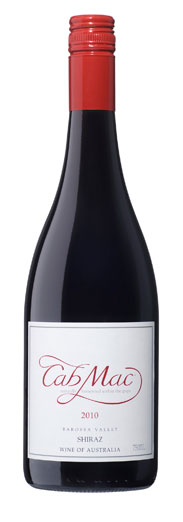
Wayne Dutschke, Barons of Barossa Winemaker of the Year 2010, slunk a slinky blast from the past onto the market during the winter. He’s rekindled Stephen Hickinbotham’s early ’eighties invention, Cab Mac.

The ingenious Hickie had been infuriated by Australia’s infatuation with Beaujolais. The macho Aussie Dollar bought many Francs in those days, and to quote John Cale, “the Beaujolais was raining”.

Beaujolais is the impossibly cute vignoble south of Burgundy en route to the Rhone. It grows Gamay, an audacious juicy red which the vignerons traditionally vinify by carbonic maceration, where bunches are fermented whole in small containers so the wines can be sold quick and fruity.

The most obscene marketing perversion of this was the annual Beaujolais Nouveau release, when vignerons hired helicopters or whatever it took to get the first wine from the new vintage to market. I recall wine-bearing paras leaping into the Thames to get it into London gullets one year, and distributors doing very silly things to be the first into Sydney with the barely-fermented folly.


Eternally scheming of ways of outdoing the French, Hickie reached into his winemaking father Ian’s vast knowledge and theories about collapsible plastic wine containers. In the ’sixties Ian had worked hard on the adaption of the Italian vinegar bladder pack for use as a fine wine container – the wine “cask” - with David Wynn and Penfolds, and had also played with the idea of using bag liners in concrete wine tanks to minimise oxidation during the industry’s post-war conversion from sticky fortifieds to premium dry wines.

Shipping containers fitted with such liners are the standard bulk export containers now: giant oxygen-free bladder packs.


Instead of tanks, Hickie used potato pallets, those wooden pallet-sized boxes of about a metre deep, designed to be shoved about and stacked by forklifts. He patented a plastic bag liner which could be sealed to prevent oxygen ingress, but was fitted with a valve, so the normal CO2 of ferment could escape under its own pressure.

You simply picked grapes directly into these big bags in boxes, zipped them shut, and left the grapes to ferment within their own skins. Sometimes, to preclude oxygen and cool the fruit, he’d put big chunks of dry ice – frozen CO2 – in the bottom of each bag.

The shallow nature of the pallet ensured there was insufficient pressure on the bottom bunches to squash the berries, so there was absolutely minimal free juice running in absolutely minimal oxygen.

WAYNE DUTSCHKE

If you wanted to hurry the ferment, you left the pallets in the sun. To slow it down, you put them in the cellar.

Each berry is its own little sealed tank in this technology. As the wild yeasts of the vineyard begin to ferment the juice within each grape anaerobically, they extract a different spectrum of phenolics – tannins and colour - to those that would be exctracted from the same grapes submerged in juice in a normal whole bunch ferment.

Once the average alcohol reaches, say, six percent, the bags are tipped into the crusher and the ferment continues normally in tank. No oak is required, and largely regardless of the red variety used, the wine displays an intense cherries, nuts and berries freshness with a sort of gentle spiciness that normal ferments rarely produce.

While it’s dry, and not sweet, the result is a little like the effect of botrytis on sweet whites: this peculiar method naturally produces a smoothed-out flavour of its own, which can be more pronounced than the normal varietal indicators.

Hick registered the name Cab Mac, had a logo drawn that matched the cool breeziness of the Coca Cola calligraphy, and released a string of reds that were immediately noted for their vivacity and unabashed freshness of fruit.

JENNY REGAN AND STEPHEN HICKINBOTHAM. MID-EIGHTIES


John Valmorbida, owner then of Mitchelton in the Goulburn Valley, bought the system and the brand and continued with it for years, with the input of winemakers Don Lewis and Wayne Dutschke.

Hickie was killed with his partner Jenny Regan and five other close friends in a plane crash at Cairns, and Cab Mac became another of his brilliant ideas and inventions that were never fully extended.

Remembering this at a time when Australia is blamed with making wines too strong and too thick for easy refreshment, Wayne Dutschke took a look around the internet, and discovered the Cab Mac name was available for a song. The product had been let languish when Brian Croser bought Mitchelton, and since he sold his empire to Lion Nathan, now part of Kirin, the giant Japanese brewer, Cab Mac simply and stupidly slid into oblivion.

Dutschke couldn't believe his luck.

WORKING DUTSCHKE'S St. JACOBI VINEYARD, Ca. 1900


His wine is from old vine Shiraz from his home block at Lyndoch. He used small airtight tanks, where the berries sat for nearly a fortnight before crushing. The ferment was finished normally, and the wine bottled and released.

The resulting Cab Mac 2010 is a modest 13.2% alcohol and is the perfect sunshine slurp for spring or summer weather. The normally floral nature of Lyndoch Shiraz, reminiscent of the best of Beaujolais anyway, has an extra layer of bright maraschino and marello cherry, and a subtle nutmeg spiciness that looks all the world like good oak.

So, we have a spunky 2010 dry red that slots neatly between Grenache and Pinot in style, at a cool $20, and an easy 92 points. You should be into it by the time your patio vine casts a proper shadow.

14 November 2010

OZPLONK WINEBIZ, DESERT PEOPLE: CACTUS

Urgent Need For Oz Overview Wine, Drugs, Water, People Desert Mess Needs Sharper Brains

by PHILIP WHITE ... bits of this have appeared in the independent weekly

Bacchus and Pan are on a bender.
They’re delighted that the ridiculous number of self-serving inquiries and committees investigating the dread realities of this country’s biggest river system show no sign of achieving needed change. They’re giggling drunkenly at a bar somewhere, delighted that of all the billions of dollars involved in the irrigation corrections proposed, and the millions of people affected, there is still no call for a full-scale public inquiry into what went wrong, and precisely which plonk the water goes into.

Those mischievous deities, and the ethanol dealers who worship them, are getting away with their deadly scam.
While the international wine
lake shows little sign of abating, the farmers of Australia’s arid centre are determined to keep adding to it.

Nobody seems willing to face the blatant reality: if you tip vast amounts of scarce, impossibly cheap water onto the desert to make wine which is three times the strength of your average beer but is sold for the price of bottled water, you have a business which is not in
any way sustainable, even if a good deal of the plonk you so make is guaranteed consumption by our shredded original peoples.

If you can absorb Damming the Rivers of Grog, Russell Goldflam’s new paper on alcohol problems in the Northern Territory, without feeling wretchedly ill at the sanctimonious deceit of the wine industry, you might just as well join this nefarious racket.


Goldflam is the Principal Legal Officer of the Alice Springs office of the Northern Territory Legal Aid Commission, and Damming the Rivers of Grog is an extended and updated version of his
presentation to the inaugural National Indigenous Drug and Alcohol Conference in June 2010 in Adelaide. It should be compulsory reading for all Australians.

But while most drug peddlers can be expected to traffic in lies and deceit, their financial models are breathtaking in their lucrative profitability. Not so our wine makers. The financial nous displayed in their exportation of irrigation-driven rotgut is even more dubious than their morality.

“Australia’s core business is cheap supermarket wines” my London colleague, Tim Atkin MW, wrote recently
in the UK Off License News, “many of them sold on meaningless promotions.”

“But it also needs to think strategically,” Atkin (below left) continued.

“The strength of the Australian dollar and the scarcity of water in the country’s irrigated vinous heartland make a change of tack unavoidable. To put it bluntly: Australia cannot continue to make and sell wine of decent quality under £5. Or rather it can, but only if it is prepared to do so at a loss.”

Nobody in this country seems ready to think like the astute Mr. Atkin, except, perhaps, for Paul Henry, who has contentiously abandoned his post of general manager for market development at the Australian Wine & Brandy Corporation. The departure of Wine Australia’s UK director, Lisa McGovern, and of Paul Henry, within weeks of one another prompted Atkin to quote Oscar Wilde: “To lose one parent may be regarded as a misfortune; to lose both looks like carelessness.”

Paul Henry always seemed to me to be far too pleasant and intelligent a man to be touting the Australian wine lake as an ongoing, sustainable concern. He saw the need to focus promotion on Australia’s better, more profitable wines: those reliable, respected luxury gastronomic products which have a
true home and a true story.

Sustainable products.


Atkin reported the vast gap between the philosophies of Henry, and the likes of Paul Schaafsma, UK and European G-M of the beleaguered bulk exporter, Australian Vintage. “92.6% of all Australian wine is sold below £6,” he paraphrased Schaafsma, “so for Wine Australia to be allocating the majority of its budget to regional wines over and above £7 or £8 seems to be slightly flawed.”

Atkin and Henry have one supporter in the parliamentary Member for Mawson, Leon Bignell, who took withering flak for his February report suggesting “the UK market seems more than a little schizophrenic with its approach to sustainability.

“There is a lot of talk about airmiles,” Bignell wrote, “and the need to eat food and drink wine that hasn’t travelled around the globe but, when that argument doesn’t suit them, they revert to selling cheap wine that has actually cost our country millions of litres of valuable water.


LEON BIGNELL, MP, MEMBER FOR THE McLAREN VALE SEAT OF MAWSON, WORKING IN DUDLEY BROWN'S INKWELL VINEYARD

“While UK newspapers fill their features, news and opinion pages with missives about sustainability they don’t mind peddling unsustainable goods when they are profiting from our environment.”

Always a fearless defender of his beloved McLaren Vale, Bignell suggested “growers along the river in NSW and Victoria use up to ten times the amount of water per hectare used by growers in McLaren Vale … it is simply not sustainable for a number of different reasons ... the water should be left where it is worth more to Australians and our iconic river than it is in a bottle being sold on a UK supermarket shelf for less than what the water is truly worth.

“Making ordinary wine in places grapes weren’t meant to grow does immeasurable harm to Australian regions that do produce top quality wines.”

In stark contrast to the Murray-Darling Basin and its products, McLaren Vale uses no Murray-Darling water on its vineyards. It recycles locally-caught water from the coastal suburbs for its irrigation, and returns many more jobs and dollars, per litre of water used, than the inland irrigators. It does this producing the sorts of profitable premium wines Mr. Henry preferred to promote, rather than the megaswill River blends which we ship in giant bladder packs to Britain and the USA, where they sell for the price of Evian or Perrier in the sorts of expensive “meaningless promotions” Atkin derided.

While the implications of all this are clear to my mind, they add ridiculous illogic to Bignell’s position, entrapped as he is between a winemaking electorate fighting to protect its best agricultural land from his own party’s addiction to malignant housing development, which, perversely, provides irrigation water for the McLaren Vale vineyards.

UNIRRIGATED 1946 GRENACHE BUSH VINES AT YANGARRA ESTATE, McLAREN VALE - STACEY POTHOVEN photo

Struggling new home-owners in Bignell’s suburbs are sore displeased; while they’ve already pai
d for expensive waste recycling plants in their own backyards, they are now getting $6000 bills for the pipes to carry their waste water along the street to the water wholesaler, and then they’re being hit for an extra grand or two to connect the tanks they’ve already paid for to the new pipe in the street.

The recent tractor rally against new housing in McLaren Vale was a polite, dignified, powerful
display of the rage the local farmers feel over proposals like Seaford Heights, where priceless high-profit viticulture land is about to be cemented over with a multi-storey ghetto. The SA Police were cool, there were no bad manners, the law was observed. The point was confidently made.

ONE OF THE EARLY ARRIVALS AT THE McLAREN VALE TRACTOR ACTION DEMO AGAINST THE SA GOVT - photo LEO DAVIS

And there was the very brave Bignel
l in attendance, fending the flack he gets for his own party’s lack of intellectual and moral clarity over this housing vs. sustainable agriculture argument.

Dudley Brown, chairman of the McLaren Vale Grape Wine and Tourism Association, summarized the situation thus: “Leon can work has arse off for this district”, he said. “We love him. But his party has to realise that if they keep this up they’ll lose the seat of Mawson for a decade, destroy the career of one of their brightest performers, and lose a brilliant potential leader in the meantime. I mean what other talent have they got?”

THE GREAT STRING OF TRACTORS TOOK THIRTY MINUTES TO GET FROM THE MAIN STREET TO THE EDGE OF THE PROPOSED SEAFORD HEIGHTS DEVELOPMENT - photo LEO DAVIS

They certainly have none of the analytical talent displayed by my London winewriting colleague Atkin, the disappearing Paul Henry, or indeed the tireless Bignell.

But it is the wine business as a whole that lacks the intellectual exactitude required to retain great operators like Henry.


A good measure of the depth of this glamourpuss industry’s capacity to address these tricky issues appeared in the September/October issue of The Australian And New Zealand Wine Industry Journal, a perfect-bound collection of the opinions of winebiz insiders, often masquerading as science.
This
magazine lives off the advertising of the designers of critter wine labels, transnational chemical companies, sawdust salesmen and other mongers of shonky oak products like corks, and features a regular page by somebody using the pseudonym PP [sic] Bradshaw.

“My childhood was spent in the Riverland”, PP anguished, “and I have maintained close ties with the region ever since. I tend to take it personally. My hackles rose, therefore, when I read Philip White’s comment at the South Australia Wine Press Club held earlier this year that ‘… the Riverland produces poor quality wine and should be shut down.’ This is wine snobbery at its worst and is typical of the twaddle that emanates from some wine scribes. I suppose that when you have rarely purchased a bottle of wine for the past 30 years, it is easy to be snobbish. We don’t all have access to free Greenock Creek and the like.
"

THE AUTHOR AND GEOLOGIST JEFF OLLIVER WORKING ON THE SA GOVERNMENT'S McLAREN VALE GEOLOGY MAP - photo KATE ELMES

"If Mr. White got his head out of the rocks of the Fleurieu and bothered to do some real research, he would soon discover that Riverland fruit ends up in many good quality wines that are successful in the international market ... for example, I recently tried a Vermentino and a Nero d’Avola from Sunraysia-grown fruit. These are very nice wines, with better quality than many other wines from the Barossa – or wherever it is that Mr. White gets his free samples.”

While PP quotes another anonymous genius who purports to have been sufficiently present to paraphrase my impassioned and lengthy speech,
whoever they are fail conspicuously to mention that I shared the lecturn with Bill Moularadelis, whose Kingston Estate was the plonk de jour, and whom I had busted in a front page newspaper story years earlier for doctoring his wines with illegal chemicals. That May 2000 piece in the only South Australian daily, The Advertiser, brought about the suspension of Moularadelis’s export license for using illegal silver nitrate to clean up his murkier plonks, resulting in an unseemly scramble to clear other Riverland wineries of illegal winemaking additives.

Unchallenged on any of this, Moularadelis preached at the Wine Press Club that no vineyards should be removed in the current glut because his company needed every grape it could get.

Nobody questioned the fact that the chairman of the SA Wine Press Club was Moularadelis’s newly-appointed distributor, with both gentlemen relishing the opportunity to display their wine to the many key industry folks, bankers, and media representatives that had come to the National Wine Centre to hear my address.

THE NATIONAL WINE CENTRE IN THE ADELAIDE BOTANIC GARDENS HAS COST THE TAXPAYER WELL OVER $50 MILLION - photo KATE ELMES

While they’re busy in their smoke-free rooms, sweating over their dying River, and their lack of profit, planning and vision, the wine industry’s plethora of councils, lobbies, and publications exude only a dumb silence while the opposing health lobby grinds determinedly on, demanding a rewrite of the taxes imposed on wine. Herein lies a problem even bigger than the tricky removal of water from those farmers addicted to the irrigation of arid land.

There was a certain degree of miffedness last week when the alcohol statisticians finally realised that one critical factor had slipped through their forensics: their supposition that Australia’s thirst for alcohol had stabilized in recent years failed to include the fact that Australian wines have been steadily growing in alcoholic content.
So in spite of an apparent slight decrease in total alcohol consumed, triggered by the higher alco-pop tax, once the burgeoning strength of our wine is included in the figures, it appears we actually drank more.

I reminded the Wine Press Club that regardless of their stature in the gastroporn world,
winemakers sell a dangerous depressive drug called ethanol. It makes people drunk. Drunks tend to bash each other and get killed on the roads. Over the last fifteen years, these ethanol dealers have steadily increased the strength of their product.

The cheapest way to get drunk in Australia is to drink bladder pack wine, which makes up about half of our total wine consumption, and comes from the irrigated riverlands.

Because wine is not taxed on the amount of ethanol it contains, like other alcohol, bladder pack plonk is a much, much cheaper route to the sort of oblivion sought by many.


How many percentage points are we talking?

“How much?” is the more pertinent question, and I don’t mean volume of alcohol. I mean the damage bill the taxpayer meets. One good measure, repeatedly cited by the health lobby, is the National Drug Strategy report of 2008, which found that the 2004-05 bill for “alcohol-related harm”, amounted to $15.3 billion.


When alcohol prices increase, consumption falls. But politicians can’t handle the next fact: people who feel the need to self-medicate into oblivion will choose another intoxicant, which will
probably be illicit, and therefore not taxable.

But when deserved public attention is paid Treasury boss Ken Henry’s logical proposal to tax wine like all other alcohol, on its gross amount of ethanol, there will be an instant decrease in the amount of irrigation water required by the bladder plonkmongers and their growers.

The price of a $12, four litre bladder will head quite logically and rightfully toward $30, and the most expensive wines will be cheaper. While this will diminish the ravaging of desert communities by alcohol, it will wreak more havoc on the grape growers of the irrigated inland than the most savage water restrictions.


Put simply, the river will flow again. And the poor deluded farmers will flow out of their beloved bush, into the cities and Centrelink and the arms of the shrinks and the pharmaceutical transnationals who dictate drug policy. Regardless of what it costs the taxpayer, these ripped-off folks may even move to the seaside suburbs near McLaren Vale, and contribute their waste water to the local recycling plant for profitable viticulture.


Add to this confusion the latest discoveries about the amount of public harm caused by alcohol relative to illicit drugs, and the logical mind would suggest that those
growing grapes would be better off growing marijuana on their arid, salty, sandy land. It would require less ground, much, much less water, would slow increasing soil salinity and incur a much lower health cost per user than the strong plonk currently produced. To be blithe, you can even make rope and fabric and insulation from hemp, and one recent report suggested that the dreaded opiates incur a much lower total public health cost than alcohol, measured per user.

So while all these inquirers and lobbyists and angry farmers foment and wave their pitchforks for the telly, while more skrillions are spent on more self-interested pow-wows, there is still no respected investigator combining these obvious issues.
It’s not just the amount of water we abuse. It’s not just the rural farming community hurt and the destruction brought on by the over-allocation of irrigation water. It’s not just the river running into the ocean like it should, the red gum forests surviving, the fi
sh, or even the votes in the electorates.

This whole mess is about our community’s yearning for oblivion, and its incredible capacity for self-deceit. This delusion expands exponentially once you enter the parliamentary bars or the sanctimonious halls of the wine business, where there is too much to lose.

It is essential that government should set up a well-funded inquirer to passionately yet forensically investigate all of this. If the wool board, the wheat board, or the mining industry made such a humungous stuff-up, there would be a dead serious inquiry, and those responsible would be denied their chance to repeat such destruction. Heads would roll. Changes would be made. Things would improve.

As for the illicit drugs industry … well, while Bacchus and Pan appear to be winning that one too, at least somebody actually declared war. I'd like to see the rules of engagement.

Moularadelis’s Kingston Estate, meanwhile, has failed spectacularly to buy all the grapes he promised he needed. He seemed sincere at the time.