“Sod the wine, I want to suck on the writing. This man White is an instinctive writer, bloody rare to find one who actually pulls it off, as in still gets a meaning across with concision. Sharp arbitrage of speed and risk, closest thing I can think of to Cicero’s ‘motus continuum animi.’

Probably takes a drink or two to connect like that: he literally paints his senses on the page.”


DBC Pierre (Vernon God Little, Ludmila’s Broken English, Lights Out In Wonderland ... Winner: Booker prize; Whitbread prize; Bollinger Wodehouse Everyman prize; James Joyce Award from the Literary & Historical Society of University College Dublin)


.

.

.

.
Showing posts with label Cab Mac. Show all posts

06 December 2010

CAB MAC v COKE - AUSTRALIA v FRANCE


STEPHEN HICKINBOTHAM 1983 - photo WHITELIGHT

Making A Pause Refreshing Having Bought Jacob's Creek France Copies It
by PHILIP WHITE - two recent additions to the archive

2 July 2010

In the early ’eighties a brilliant young winemaker, Stephen Hickinbotham, decided Australia needed a bottled red wine that would fight off the dodgy French Beaujolais Nouveau which was threatening to catch Australian attention.

An early adherent to the notion of premium wines having a sense of place, a home base, and a distinctive terroir, Hick was also aware that the irrigated Murray-Darling was about to start producing a lot more amorphous red than Australia could drink.

To make the most of this, he modified the Beaujolais winemaking technique called maceration carbonique, invented and sought patents for the simple, cheap equipment his new technique required, and registered the name Cab Mac. His elegant script logo was deliberately designed to look like Coca Cola.

But like Beaujolais Nouveau, which vanished in an international currency shift, Cab Mac only threatened to catch Australian attention: after a few exciting vintages, Hick was killed in a plane crash, and the whole exercise fizzled out, in spite of it being sold for expansion to John Valmorbida, who then owned Mitchelton winery.

It was a great pity, because Cab Mac was reliably a much better wine than the baby Beaujolais, and was vastly superior to the bladder pack reds which now make up a great deal of our red output (last year we drank 96.7 megalitres of bottled red vs. 56 megalitres of bladder pack).

Last week, Valérie Pajotin, the diva directrice générale of the Association Nationale Interprofessionelle du Vin de France, or ANIVIN, announced that France should now approach its wine manufacture in a totally new way. She even named that great French-owned product, Jacob’s Creek, and triggered an international frisson when she said “It’s like creating a well-known brand name, like Apple or Coca-Cola”.

After interminable Gallic wrangling, this new ANIVIN body has the job of promoting France’s new Australian-style refinery-made wine. In a sense, Pajotin has replicated the young Hick’s dream, and even dared to mention the C-C-words.

Most of Australia’s grapes go into amorphous bottom-shelf blends which sell in the vulnerable nether regions, where the tiny profits are at the mercy of endless currency fluctuations, and the whims of new rival countries which can produce similar products at lower costs than we can manage.

Their labour is cheaper; they usually have much more water than us, and their environmental awareness and controls are nowhere near as restrictive as Australia’s.

Add a flash of critical discontent like our plonk has attracted in the USA and UK in recent years, and a great degree of the Australian wine business suddenly looks a lot more rickety than anyone seems ready to admit.

And just when we thought we had France licked, Mme. Pajotin has lurched it back into the picture, big time.

There are 861,075 hectares of wine grapes in France. Australia has 162,550 hectares.

While the pointy end of Australia’s premium wine business is finally beginning to understand the importance of local geologies and terroir, which the best of the French have understood for centuries, the rest of the French have finally legislated to make possible enormous inter-regional refinery blends, just like the dud end of our business.

This new megabulk appellation is called Vin de France. And while it appears, on the face of it, to be more along the lines of your baby Beaujolais than Cab Mac in quality, Mme. Pajotin’s threatening to very quickly rattle the trendy end of Australia’s cage.


She’s taking the great Ocker wine refinery doctrine, demolishing France’s inter-regional blending restrictions, and is about to replace France’s knowledge of wine regions with a new knowledge of varieties.

She’s determined first to teach French lasses whether they’re Pinot grigio girls, Sauvignon blanc girls or Chardonnay girls – she’s a Chardonnay girl – but is already challenging the vast grapeyards of France to open their floodgates with giant blends that Australia simply cannot match.

While Colombard/Chardonnay and Carignan/Shiraz sound uncannily workaday Ocker, this country simply could not mount a counter-attack with Chardonnay/Gros manseng, Terret/Sauvignon blanc or Gamay/Shiraz, which Mme. Pajotin’s right onto.

And she’s looking way past the borders of France: she’s determined to win back the shelves of the UK, the USA, and Germany, with fewer brands of more consistent varietally-labelled mega-blends than ever before.

In the same week that every Australian politician with a propensity for travel and red teeth was leading a delegation of their favourite Australian winemakers into China, Mme. Pajotin uttered that C-word, too.

One thing about the Chinese. Their wine business has been inextricably entwined with France since the days the English poured them a Cognac as they paid for their tea with shiploads of opium. French wines were the only grape-based alcohol in the courts of Beijing and Shanghai long before Mao took his walk, and China still proudly thrusts forward bottles of Dynasty, the Remy-Martin joint venture that commenced with Frenchmen teaching China how to plant and manage vineyards right when Hick was working on his first Cab Mac.

JACOB'S CREEK IS NOW AN INTERNATIONAL TORRENT: PERNOD-RICARD CONSULTANT AND FORMER BOSS WINEMAKER FOR JACOB'S CREEK, PHIL LAFFER, NOW WORKING ON BIG NEW PERNOD-RICARD VINEYARDS IN NORTH CHINA

Now we see Pernod-Ricard, the giant French pastis empire which owns Jacob's Creek, busy establishing vast vineyards in China. Who knows - If the history of the Pernod and Ricard families' attitude to such important terroir as Steingarten is any indicator, we may soon see a Chinese Jacob's Creek.

The Chinese prefer long-term relationships.

Winemaker Of The Year Dutschke Resurrects Cab Mac At St. Jacobi The Perfect Sunshine Slurp

1 October 2010

Wayne Dutschke, Barons of Barossa Winemaker of the Year 2010, slunk a slinky blast from the past onto the market during the winter. He’s rekindled Stephen Hickinbotham’s early ’eighties invention, Cab Mac.
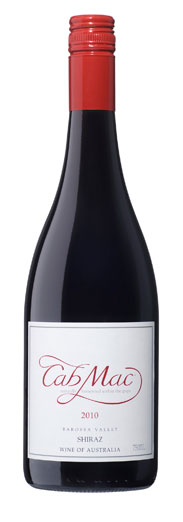
The ingenious Hickie had been infuriated by Australia’s infatuation with Beaujolais. The macho Aussie Dollar bought many Francs in those days, and to quote John Cale, “the Beaujolais was raining”.

Beaujolais is the impossibly cute vignoble south of Burgundy en route to the Rhone. It grows Gamay, an audacious juicy red which the vignerons traditionally vinify by carbonic maceration, where bunches are fermented whole in small containers so the wines can be sold quick and fruity.

The most obscene marketing perversion of this was the annual Beaujolais Nouveau release, when vignerons hired helicopters or whatever it took to get the first wine from the new vintage to market. I recall wine-bearing paras leaping into the Thames to get it into London gullets one year, and distributors doing very silly things to be the first into Sydney with the barely-fermented folly.


Eternally scheming of ways of outdoing the French, Hickie reached into his winemaking father Ian’s vast knowledge and theories about collapsible plastic wine containers. In the ’sixties Ian had worked hard on the adaption of the Italian vinegar bladder pack for use as a fine wine container – the wine “cask” - with David Wynn and Penfolds, and had also played with the idea of using bag liners in concrete wine tanks to minimise oxidation during the industry’s post-war conversion from sticky fortifieds to premium dry wines.

Shipping containers fitted with such liners are the standard bulk export containers now: giant oxygen-free bladder packs.


Instead of tanks, Hickie used potato pallets, those wooden pallet-sized boxes of about a metre deep, designed to be shoved about and stacked by forklifts. He patented a plastic bag liner which could be sealed to prevent oxygen ingress, but was fitted with a valve, so the normal CO2 of ferment could escape under its own pressure.

You simply picked grapes directly into these big bags in boxes, zipped them shut, and left the grapes to ferment within their own skins. Sometimes, to preclude oxygen and cool the fruit, he’d put big chunks of dry ice – frozen CO2 – in the bottom of each bag.

The shallow nature of the pallet ensured there was insufficient pressure on the bottom bunches to squash the berries, so there was absolutely minimal free juice running in absolutely minimal oxygen.

WAYNE DUTSCHKE

If you wanted to hurry the ferment, you left the pallets in the sun. To slow it down, you put them in the cellar.

Each berry is its own little sealed tank in this technology. As the wild yeasts of the vineyard begin to ferment the juice within each grape anaerobically, they extract a different spectrum of phenolics – tannins and colour - to those that would be exctracted from the same grapes submerged in juice in a normal whole bunch ferment.

Once the average alcohol reaches, say, six percent, the bags are tipped into the crusher and the ferment continues normally in tank. No oak is required, and largely regardless of the red variety used, the wine displays an intense cherries, nuts and berries freshness with a sort of gentle spiciness that normal ferments rarely produce.

While it’s dry, and not sweet, the result is a little like the effect of botrytis on sweet whites: this peculiar method naturally produces a smoothed-out flavour of its own, which can be more pronounced than the normal varietal indicators.

Hick registered the name Cab Mac, had a logo drawn that matched the cool breeziness of the Coca Cola calligraphy, and released a string of reds that were immediately noted for their vivacity and unabashed freshness of fruit.

JENNY REGAN AND STEPHEN HICKINBOTHAM. MID-EIGHTIES


John Valmorbida, owner then of Mitchelton in the Goulburn Valley, bought the system and the brand and continued with it for years, with the input of winemakers Don Lewis and Wayne Dutschke.

Hickie was killed with his partner Jenny Regan and five other close friends in a plane crash at Cairns, and Cab Mac became another of his brilliant ideas and inventions that were never fully extended.

Remembering this at a time when Australia is blamed with making wines too strong and too thick for easy refreshment, Wayne Dutschke took a look around the internet, and discovered the Cab Mac name was available for a song. The product had been let languish when Brian Croser bought Mitchelton, and since he sold his empire to Lion Nathan, now part of Kirin, the giant Japanese brewer, Cab Mac simply and stupidly slid into oblivion.

Dutschke couldn't believe his luck.

WORKING DUTSCHKE'S St. JACOBI VINEYARD, Ca. 1900


His wine is from old vine Shiraz from his home block at Lyndoch. He used small airtight tanks, where the berries sat for nearly a fortnight before crushing. The ferment was finished normally, and the wine bottled and released.

The resulting Cab Mac 2010 is a modest 13.2% alcohol and is the perfect sunshine slurp for spring or summer weather. The normally floral nature of Lyndoch Shiraz, reminiscent of the best of Beaujolais anyway, has an extra layer of bright maraschino and marello cherry, and a subtle nutmeg spiciness that looks all the world like good oak.

So, we have a spunky 2010 dry red that slots neatly between Grenache and Pinot in style, at a cool $20, and an easy 92 points. You should be into it by the time your patio vine casts a proper shadow.

07 December 2008

ATLANTA NO ATLANTIS FOR OZWINE ENTHUSIAST

.

The Non-existent Presence


Interview by PHILIP WHITE – Winestate June 1983


Frank Stone loves wine. A softly-drawling Georgian, he is headmaster of a body called the Wine Academy of USA, and is also president of the Society of Wine Educators in America.


While he talks, Stone pulls wine marketing and import/export statistics from his memory with an uncanny flair, and he pauses now and then to ensure his last gentle barrage of figures and ideas has properly settled on his listener.


Also a merchant, Frank owns Skinflints, a chain of six supermarket-sized bottle shops in and around Atlanta, Georgia. These shops specialise in quality wines, and they turn over $25 million each year. That’s quite a lot of wine. Frustrated with the difficult task of getting solid and up-to-date information about the Australian wine industry, Stone eventually made time to come and find out for himself.


Philip White intercepted him in the middle of Victoria, and found an interviewee fired with enthusiasm for what he had so far found, and similarly fired with criticism of Australia’s bumbling in the international marketplace.


How do you see the Australian wine presence in the USA?


There’s virtually not a presence. It’s a non-existent presence. Currently, Australian wines are usually put in the “all other wines” section. Perhaps merchandised along with wines from Jugloslavia; less prominently than Hungarian wines; next to Chile and Turkey.


Partially, my criticism is for the really piss-poor PR that your wine marketplace has generated for itself, both within and without the country.


Has anybody ever been to talk to you about it?


No. Not one. Nobody. Not one wine shipper has been to Atlanta Georgia and seen me. Let me tell you even worse than that – much worse than that: as the president of an international wine education association with 1,600 members who teach in universities and colleges, adult education and trade education course – get it: I am the clearing house for all wine information for that group, and have subsequently regurgitated a catalogue of every piece of information available on the subject of Australian wine, and every other wine – do you know how many times I’ve been contacted by anyone from Australia? Never.


Can you make some comparisons between what Australia’s doing and what other countries are doing?


Aw shit. As an example, let’s talk about France and Italy. For the last five years, the French wine imported marketplace has been taking it in the ass in America – at the expense of expanding market share for Italian wines, OK? The French are selling the same amount of wine, with proportionate increases each year, accounting for inflation. However, on the other side of the scale, the Italian wine-producers and importers are accelerating their rate of growth and their market-share percentage by tenfold extrapolated over the French.


Five years ago, 9% of the wine consumed in the United States was imported. The Italians’ share of those imports was less than 11%. Today, imports account for 24% of consumption, and the Italians’ share of that is 67% okay? From 11% of 9% to 67% of 24 – that’s quite a jump in four years! And you know how they’ve done that? First, a media program that’s second-to-none. Advertising, point-of-sale material, maps, charts, books ... they run five trips a year to Italy for wine writers, all expenses paid. All you gotta do is show up at the airport. Five trips a year for forty people apiece! That’s 200 writers a year, every year for the last five years, taken to Italy. OK?


Let’s take Marquis Antinori. You know him? He owns Villa Antinori. Seven years ago, he was shipping 40,000 cases of wine, total. Last year he shipped 2,500,000 cases of wine. Let’s talk about Villa Banfi. Seven years ago they didn’t exist. Last year they shipped 17,000,000 cases of wine. That’s just the States. 17,000,000 cases!


Could they have done that on the quality of the wine alone?


They didn’t do it on the quality at all. They did it by marketing. There’s this body of merchandisers who have been put in New York City. They opened a wine-tasting room, just for the media and the trade. They had an outreach and hand-holding program that went to every village and every city, starting at the population centres and working out like tentacles, making friends, giving tastings, holding seminars and holding classes; correspondence courses.


Last year, imported wine constituted 7% of America’s total balance of trade deficits. Now ponder on that.


The word is that Australia, and Australians, are all fairly popular in the USA at the moment. Is that true?


Absolutely. There’s a very strong kinship with things Australian right now. The phenomenal success of the films is evidence of this. Gallipoli, Breaker Morant, and The man From Snowy River – I’ve seen all three of those, and I think the reason Australia has some fascination for Americans is that’s it’s a resemblance of the old west tough-guy-strikes-out-against-all-evil mentality. It’s been so well-received over the years. But more than that: there’s a philosophical, maybe an emotional endearment to a people who speak the same language, and have the same developmental processes, as the Americans have had.


So in terms of potential adaptability to the marketplace, it couldn’t be better than it is right now.


Are there many similarities between the Australian and American wine marketplaces?


God, there are so many. It’s easier to talk about the differences!


To begin, the marketplace is relatively embryonic in terms of marketing positions and in terms of packaging. It’s fairly sophisticated in the sense of wine technology, and the development of new types and varietal characteristics.


I think the technology’s very high here. The experimental things I’ve seen here have been very interesting, but the really good wines I’ve seen here are really one step beyond experiments, and beyond the hobby – I call them gentlemen – winemakers.


Another thing is that Australian makers have a very introspective perception of the marketplace: they can barely see past their sales room or customer list. From what I’ve seen they don’t have much sensitivity to what’s happening outside their own region. They have very little sensitivity to the world marketplace other than for comparative analysis of their own product.


What are the differences in the customer’s approach to the wine store? Do Australians expect anything that Americans don’t?


Well, they’re telling me that the Australian consumer buys low-price, high-volume goods in great numbers and that you have no market for super-premiums. But see, then when I ask ‘OK, where are the super-premiums?’ they’ve sold completely out, and they’ve got a warehouse full of low quality – I’m sorry – low price, high volume goods left. So maybe it’s the numbers that on paper reflect an avalanche of consumption of high volume and low price, but the synergism in the marketplace is for the unique and the high quality, which supports my allegation that although they say there’s no place for it on the market, it keeps disappearing off the shelves.


What I have noticed with striking similarity is the polarisation of the elements: the consumer element; the retail element; and the wine-producing element. They seem to be at odds with one another about their common interests.


At the producer level, they seem to be hell-bent on distribution at all costs. “We want penetration. We want depletions”. And at the retail level they’re caught in the syndrome that more boxes beget greater market share. They prostitute profits.


At the wine consumer level you seem to have an element who are drinking wine as an alternative to beer, or soft drink, or water. Then you have another element who have developed a cognoscenti of wine snobbery. I don’t like to use the word “snob” though ... let’s say “enthusiasts”. You have these enthusiasts who support the expansion of the super-premium wine market. They do it by wine-tasting clubs, wine-buying schemes, wine-drinking organisations, and then, to a lesser extent, through the restaurant trade.


The most unique character I’ve seen so far is in the restaurants. The restaurants here have a better grip of what’s of what’s happening in the regional marketplace. Much better than the retailers I’ve seen. Now maybe it’s because the marketplace is structured differently here than it is the States, but almost every restaurant I’ve been in has had a pretty active wine-marketing program for that region.


Which Australian wine products would suit the American market?


I don’t think all the products that are made here could suitably be exported and marketed successfully in the United States. I came over here looking for very specific types and kinds and qualities. Specifically, premium reds. Cabernets and shiraz. Some very high quality ports, which is a surprise to everyone that I’ve talked to, and sherries. There is an absolutely insatiable market in the United States for quality port.


You can tell from the auction prices in London that there’s a world demand. Look at the Decanter index! The port index is up higher than the Bordeaux prices! The numbers speak for themselves.


Best of the things that I’ve seen, there are least a half-dozen that I’d be proud to sell, not as an Australian wine, not as a wine from another wine-producing region, but a god-damn good seven dollar bottle of red wine! That’s the crux of the thing: I’m dealing in goods that are international in scope. And I’m looking to supply our market with the best quality, within the price range, from anywhere in the world. I don’t give a shit where it comes from. And my customers don’t either. I used to think they were hung-up, but they’re not. They’re buying what I tell them is the best value for money. That’s how I built my business.


Here’s an example: a year ago I went to South Africa, and became enamoured with the Zeonnebloem cabernet. One particular vintage out of the eight I tried was outstanding. Stylistically, it’s a non-typical cabernet style for America. It’s got a good presence of colour, a good complexity of flavour, long in the mouth, with no astringency and no tannin – it’s as if somebody clipped off the bottom half of the glass.


Slippery, wonderful taste. And I also tasted the same wine-style that they’d been making over the last thirty years. They were that old, and they still had fruit in the glass! I couldn’t believe it! If I hadn’t tasted them myself, I would have thought that that wine would have been over the hill and in the salad dressing within five years. It has a structure unlike anything I’ve ever seen before. It’s because of the climatic growing conditions. You can read about it, but until you see it, it’s an absolute anomaly.


I took a shipment of some of these wines back, along with some Edelkeur, which is a botrytised dessert style white. I took 200 cases back to the States, and I sold it faster than a cat could lick its ass. You know why? Because it’s light, it’s got good colour, good fruit. People can drink it like a Beaujolais. Drink it chilled – not cold – as a complement to food: a wonderful food wine. We don’t have a wine made in America that’s like the wine I’ve just described.


Anyway, 200 cases was my first shipment last March. Before the end of December this year we’ll probably do 80,000 cases.


Have you seen any wine in Australia which excites you so much?


I don’t want to be patronising or partial, but so far the most unique thing is Hickinbotham’s Anakie Cab Mac. It’s exactly the type of wine I’m talking about. Forward, and fruit-like, with not a lot of complexity to it, and easy ... a fun wine to drink!


But that’s coming from one of the smallest wineries in the country!


Well, what can I tell you?


Well, what else can you tell me?


I don’t think the chardonnays I’ve seen have sorted themselves out in a way comparable or similar to the Californians.


But I’ve seen some cabernets and some reds from Coonawarra that are very nice. They’re wines that I have an interest in. I did see a couple of things in the Barossa that were interesting. The Hill Smith outfit has a couple of wines that I’m really partial to. In the McLaren Vale I found a couple that caught my attention. The most interesting thing I found there was Hardy’s Show Port.


We were hoping you’d never discover that! What about riesling? Are we ever going to sell it in the States?


No. We’ve got plenty of that now. The botrytised wines are a definite, although there are a lot of attempts at botrytised wines here – they don’t have the depth or the apricot flavours that I’m looking for yet, but they’re certainly getting there. You’ve certainly got the areas for it.


Can you make just a short comment on what Australia should be doing?


Australian wine products are not recognised in America. By and large, Americans don’t even know that Australia is a wine-producing nation, and that the wines that are being made here are serious efforts towards making universally-accepted wine products.


The way I propose to expediate the development of that awareness is through education.


Last year, the Society of Wine Educators provided wine education for over 600,000 people in America. OK? That body is currently in the process of developing a core educational program for every wine-producing country. This will be disseminated to the Society’s members on, say Italy, or it could be France, or Germany, South Africa, Australia, or Chile. Slides, transparencies, maps, production data, crop information and statistics, contact points, where you get tasting samples ... OK?


You take all that and you get it to 1,600 wine teachers and you start communication.


Another obvious thing would be for your wine-producing areas to collectively develop what I call educational tasting tours through the States. Hit the eight or nine major markets. Put on educational tastings. Invite the trade and the press. Get twenty wine producers to go through the United States on a ten-city tour. A goodwill media blitz. Tastings. A coupla lunches and some breakfasts, handing out maps and charts and photographs. God-damn, you’d get $500,000 worth of publicity out of a trip like that, and they don’t cost that much. Those are the things that are proven ingredients. They’ve worked very successfully for other producers. I’ve talked to dozens of people from here who say “we need a good export scheme”.


You don’t need a good export scheme. Shit, you don’t even export yet. Well?

.