“Sod the wine, I want to suck on the writing. This man White is an instinctive writer, bloody rare to find one who actually pulls it off, as in still gets a meaning across with concision. Sharp arbitrage of speed and risk, closest thing I can think of to Cicero’s ‘motus continuum animi.’

Probably takes a drink or two to connect like that: he literally paints his senses on the page.”


DBC Pierre (Vernon God Little, Ludmila’s Broken English, Lights Out In Wonderland ... Winner: Booker prize; Whitbread prize; Bollinger Wodehouse Everyman prize; James Joyce Award from the Literary & Historical Society of University College Dublin)


.

.

.

.

17 January 2011

KEVIN JUDD'S EMULSIONAL LIFE


KEVIN JUDD, WINEMAKER AND PHOTOGRAPHER, FOUNDING WINEMAKER AT CLOUDY BAY, NOW AT HIS OWN GREYWACKE, WAITS FOR THE LIGHT IN HIS BELOVED MARLBOROUGH, NEW ZEALAND - photo BOB CAMPBELL - THE VINEYARD PHOTOGRAPHS ARE ALL FROM KEVIN'S BEAUTIFUL BOOK, THE LANDSCAPE OF NEW ZEALAND WINE
From Australiana To Greywacke
Via Ch. Reynella And Cloudy Bay

Juddy Drags Kiwis Back On Track


Sittin' at home last Sunday mornin' with me mate Boomerang. Said he was havin' a few people around for a Barbie. Said he might Kookaburra or two.
I said, "Sounds great, will Wallaby there?" “He said "Yeah and Vegemite’ll come too". So I said to the wife "Do you wanna Goanna?" She said "I'll go if Dingos". So I said "Wattle we do about Nulla?" He said "Nullabors me to tears, leave him at home." We got to the party about two and walked straight out the kitchen to put some booze in the fridge. And you wouldn't believe it, there's Boomer's wife Warra sittin there tryin to Platypus! Now, I don't like to speak Illawarra, but I was shocked, I mean how much can a Koala bare. So I grabbed a beer, flashed me Wangarratta and went out and joined the party.

PHILIP WHITE WRITES:

So began Australiana, a piece of Ocker rapperel written by Billy Birmingham and performed by Sandy Gutman’s alter ego, Austen Tayshus. It contained a racist slur against an "Indian" girl. We didn't seem to notice.

Warner Brothers released this performance as a single in June 1983. It promptly sold over two hundred thousand copies, and remains Australia’s biggest-selling single. It even sold like mint sauce to our eternal rival, New Zealand.

Australians reckon New Zealanders wear mint sauce for after-shave.

All of which is a fitting start to a circuitous tale of these wild and wooly antipodes, and the wondrous things we offer the world.


GREYWACKE - PINOT TANK - photo KEVIN JUDD

In 1984, when Gutman was very hot property, I asked him if his Tayshus character would pose for a cover shot for Wine And Spirit Buying Guide. I’d just become managing editor of this glossy monthly journal, and wanted to make a serious splash. It would be the November issue, the Champagne and Aussie sparks special in the lead-up to Christmas. In return for me offering Tayshus this great free publicity, I would shout Gutman and his girlfriend lunch at Berowra Waters Inn.

I wanted to give the infant premium Australian sparkling business a shove by making a most Australian cover, rather than the usual simpering rollover to the Champenoise. We needed a friggin’ huge Australian flag. Susie Curtis, my off-sider at Wine And Spirit, happened to be the daughter of General Jack Kelly, head of the Australian Army, who lived in the beautiful Victoria Barracks in Paddington.

So. Through the big gates and all the machineguns and marching men we drove, us young punks, into that incredible 1840s historic mansion, where adjutants in full dress uniform, with all the braid and baubles, marched in their mighty boots about the polished floorboards, delivering hearty wallops of malt whisky and chips. The grand Jack laid back in his trackies and socks, with the casual air afforded only those with obscene power, chinking ice against his glass.

“Yep,” he assured us, “I can get you a flag. Shouldn’t be a problem. You want a really big one, do you?”

My secretary, Shazza, rounded up a forklift from somewhere. So we wrapped Austen (left) in the biggest Australian flag in the country, stood him on a pallet, and hoist him there beneath the Sydney Harbour Bridge, Opera House in the background, in a gentle Ocker piss-take of France’s gift to the USA: the Statue Of Liberty. In his trade-mark cowboy hat and wrap-arounds, Austen held aloft an open bottle of Aussie sparks bearing the Advance Australia logo; we published, and sold out.

Whitey had hit Sydney. The next job was to sack Len Evans, but that’s another story.

My heart fell when our car arrived at Gutman’s apartment in Bellevue Hill. The comedian emerged from the lift in character: rather than the surly, super-bright Gutman, I would be taking the outrageous Tayshus to Australia’s greatest, most dramatic, delicious restaurant.

The other guests included David Hohnen (right), the surfing hero of Margaret River winemaking, whose ’82 Cape Mentelle Cabernet had just won the Jimmy Watson trophy. He didn’t then know that the ’83 he had sitting in wood was set to win the next year’s award, too, but let it be said there was a fair frisson of young masculine confidence about that table.

Hohnen’s Sydney PR flak, Jane Adams, was there, and the Anakie winemaker Stephen Hickinbotham, with his new partner, Jenny Regan. Apart from Ray Beckwith, who's about to hit a hundred, Stephen was the only Australian winemaker I’ve known who pushes the word “genius’ to the tip of the tongue.

We were dropped at the Berowra boatshed, and caught the restaurant’s humble de Havilland river truck which slid us up the Hawkesbury to the Inn, which has no road access. The restaurant was fully booked, and the service, as always, impeccable, although for some reason sommelier Michael McMahon was shirty about the wines we ordered.

I mean we wouldn’t know what we wanted to drink, would we.

Austen, who never drank alcohol, came out of the toilet with the sniffles, and complained about the menu. Apart from his perfect steak not being sufficiently overcooked for his liking, its presentation annoyed him.

“See! See!” he hollered. “I toldja everything’d be covered in bone marrow!”

It was akin to asking Sir Anthony Hopkins to lunch, and finding Hannibal Lecter at the table, wearing wrap-arounds and a tattered cowboy hat. Not many people wore cowboy hats to Berowra in those days. Proprietor Gay Bilson was not amused. We winced at the attention we attracted, but noshed on.

“So what are you up to Hickie?” Hohnen asked Hickinbotham ... “You’re always ahead of everybody? What’s happening next?”

I knew Stephen (left) had been talking to the Indian government about assisting with the establishment of vineyards there, but he didn’t mention that. Instead, he said he’d found a place in New Zealand which would make great Sauvignon blanc. While he had Indian ambitions, simultæneously dreaming of building a new wine region on Mornington Peninsula, he also envisioned a wild new combination of variety and terroir: the top of the South Island of New Zealand, he said, contained a great valley at Marlborough, whose loose young alluvium and cool climate seemed perfectly suited to Sauvignon blanc.

Hohnen’s ears went up. He said Kevin Judd was working there somewhere, and that he’d give him a call. Which he later did. Judd found some Sauvignon blanc, which he made into wine after hours at Selaks.

Later that year, Juddy, probably the quietest man in the wine business other than Smoky Dawson, walked into my office grinning like a giant clam and said he was into this new thing with David Hohnen of Cape Mentelle. But New Zealand? Yep. A place called Marlborough.

“We’re gonna plant Sauvignon blanc”, he gurgled through his smoke. “Best place for it.”

Kevin Judd does not waste words. Because of this, and the fact that his mates will talk about him all night because they admire him, you won't get much of Kevin Judd talking about himself in a story about him.

The author then (right) liked two Australian Sauvignons blanc: one yellow softy made at Angle Vale by Rocky O’Callaghan in the late seventies; the other was Hardy’s tawny fortified made from Bob Hardy’s ancient vines at upper Tintara.

Wolf Blass had also been buggering about with some, blended with Riesling and aged in mostly American oak(!).

Then came the radical Vales blitzkriegs Iain Riggs made in ’81 and ’82, at Hazelmere Estate (now Serafino Maglieri’s). Riggs used fruit from the Edge Dennis vineyard that d’Arenberg bought about a year ago. He picked it into milk crates so the grapes wouldn’t squash and oxidise, chilled it, then gave it the Oenotech treatment devised by Dr. Tony Jordan and Brian Croser, using their distinctive R2 yeast.

The wine was a blast: crisp, grassy and fresh as a lemon, with all those alarming estery R2 whiffs of banana and passionfruit. It caused a feverish stir upon release, but fell stale rather quickly in the bottle. Was it the yeast?


WAIHEKE ISLAND - HAURAKI GULF - AUCKLAND - photo KEVIN JUDD

R2 had been isolated in Sauvignon blanc territory, by Croser, at Chateau Rahoul near Sauternes in Bordeaux, where Len Evans was spending Peter Fox’s money. But the financially-challenged Fox solved his Adelaide Holdings problems by driving his Ferrari flat out into a concrete wall, and Peter Vinding-Diers bought Rahoul, to make exquisitely fine, almost brittle Sauvignon blanc. The new Savvy-B explosion ignited, and soon Rob and his cousin Michael Hill Smith had a great lunch at Yalumba, where they served Vinding-Diers’ inspiration: “Y”, the dry Savvy-B from the mighty home of sticky, Chateau d’Yquem, in Sauternes.

Sometimes d’Yquem picks its Sauvignon early in the vintage to make a dry wine, dare I suggest like Graves, rather than letting it botrytise with the Semillon and go into the mighty sticky for which that Chateau is revered. Sometimes, I suspect, the botrytis doesn’t look sufficiently promising to risk waiting for its unlikely development. There have been only 23 vintages of “Y” since the first in 1959.

So we guzzled our “Y” while the Hill Smiths quizzed us over the chance of dry Savvy-B becoming the next Chardonnay. Rob eventually went in the Viognier direction, and while I have a tape recording of Michael deriding Savvy-B that day, he went on to make it a stalwart at Shaw and Smith, which he set up with some of the money he got when cousin Robert bought him out of the old family company.

The Adelaide Hills makes too much watery stuff from Sauvignon, and yet gain lavish publicity from my wine writing colleagues. I have a few favourites, but I'm sure a lot of the the Hills could be planted to varieties more appropriate.

Since those brazen cocky days, after much tedious and ignorant speculation, Australia drowned itself in awful Chardonnay. But fueled by that excited Savvy-B buzz, Hohnen and Judd gave Kiwi Sauvignon blanc such a kick that it has since almost drowned the whole Earth.

There was much discussion in those days of the cat’s piss grassiness of the variety, which comes from its natural methoxypyrazines (3-isobutyl-2-methoxypyrazine and 3-isopropyl-2-methoxypyrazine). These compounds are common to Cabernet sauvignon, soursob, rhubarb, tomato leaves, and grass. Hemp, and jute, or burlap, or hessian, is full of it, and sometimes austere Sauvignons smell rather like superphosphate sacks, which combine the remnant methoxypyrazine with the smell of guano, from whence the superphosphate comes, but which I reckon, in wine, comes from combinations of sulphur, soil, rocks and yeast.

Humans detect methoxypyrazine at around one part per trillion, which is like smelling one grape in the entire Australian crush. The grape manufactures it to deter predators, and only when the pip is ripe enough for germination does the vine suddenly cease its production and instead pumps sugar to attract said predators, which become incubators for those seeds.

Vignerons panic if they can’t get their Sauvignon off quick enough in heatwaves, as the plants quite abruptly cease manufacturing this compound. On a hot day, the value of a crop can plummet in hours. The winery wants the methoxypyrazine for its distinction, but suddenly it disappears, leaving the grower with a grapeyard full of sugar but devoid of character and smothered in birds. Something along the lines of flat Semillon mixed with worse Chardonnay.

The constant maritime cool of Marlborough makes this little drama a lot less likely.


DAWN FROST - BRANCOTT VALLEY - MARLBOROUGH - photo KEVIN JUDD

“I knew Stephen Hickinbotham was sniffing around Marlborough - he knew Sauvignon had a future there”, Hohnen told me many years later. “He was first into everything. Kiwi Sauvignon had the eyebrow factor: nose in the glass and up goes the eyebrows. But it was all too sweet and too acidic.

“When I asked him whether there was Sauvignon blanc fruit available for purchase in Marlborough, Juddy said yes, and I said buy it and make it dry. People loved the wine.

“Juddy instinctively knew what to do. He’d worked four vintages with Merrill at Reynella, then went to Selacks in New Zealand. We found three or four growers with 120 tonnes. They didn’t know what to do with it. Juddy made it after work. I borrowed an enormous amount of money and we built Cloudy Bay in ’86, and off it went.”

Austen Tayshus was consumed by the endless stand-up rock comic circuit after that lunch, and still tours hard. Stephen Hickinbotham was killed in a plane crash not long after, with his beloved Jenny, and five other mates. Hohnen’s businesses in the West and Marlborough flourished, and Juddie went on to lead Marlborough into its phenomenal Sauvignon blanc tsunami.

To the end of April 2010, Australia bought 21.3 million litres of Sauvignon blanc, from anywhere, in take-aways. In the financial year to June, we imported 40 million litres of white from New Zealand. Most of that, nearly all, would be Sauvignon blanc. The nineteen million litres unaccounted for must have been sold in restaurants.

Now, of course, the inevitable has occurred. The quality and price of Marlborough Sauvignon has plummeted as international oversupply inexorably butchers the business. The winemakers are gradually realizing that they’ve done their brand great damage with too much crook wine, grown and made cheaply for the sickening bottom of the discount market, where no profit lies.

A year ago, Dr. John Forrest, of the winery bearing his name, said Marlborough's wine image could be forever tarnished if the export market was flooded with cheap Sauvignon blanc.

“Marlborough's vintage size increased by 61 percent from last year to a record 194,639 tonnes this year which has caused talk of excess wine and oversupply within the industry”, he told The Express.

He said most wineries had taken in more fruit than they needed, of which he estimated about 20 per cent was “of compromised quality ... this compromised wine should not be blended with good wine,” he said.

"If you believe that by flogging cheap 2008 when the 2009 is available and waiting will not compromise the long term viability and profitability of the New Zealand wine industry then I think you are kidding yourself.

"How do we save the Marlborough and New Zealand wine industry from slipping down to produce bulk white wine like you can buy for around £3 to £5 in the UK from Chile? I feel like we are standing on the edge of a cliff and once we go down I don't see how we can come out of it."

He suggested the winemakers should begin tipping their plonk down the drain. They refrained.


VINEYARDS ON THE SHORE OF LAKE WANAKA - CENTRAL OTAGO - photo KEVIN JUDD

After much typically silent rumination, whilst enduring life there under Louis Vuitton Moet Hennessy, who finished buying the Hohnen empire in 2003, Juddy “suddenly” quit Cloudy Bay last year, to make a little wine for himself, and get on with his mistress, photography. Hohnen’s back in Margaret River, watching his grandchildren surf while together they build a new premium family wine business.

Judd called the new business Greywacke, after the layered grey sand and mudstones that form most of the highest mountain ranges of New Zealand, and therefore contribute greatly to its soils. Securing the name had been a coup: the equivalent of somebody using Ayers Rock or Terra Rossa as a trade mark in Australia, where Brian Croser is likely to be the only winemaker who uses the name of a geological group for his brand, Tapanappa. While Croser’s major vineyard at Wrattonbully, Naracoorte, has geology as far removed as one could get from the distinctive Tapanappa group, at least Judd’s new business and fruit sources are in Greywacke up to their chins.

It turns out he’d had his own Greywacke Vineyard since the first Cloudy Bay vintages, and in a visionary flash, registered its name for a trial wine from those vines in the early nineties.

I was rude enough to visit Cloudy Bay in Judd’s absence a decade back, and enjoyed tasting various tanks and bottlings of the famous Cloudy Bay Sauvignon. But mischievously I suggested the wine would be much more interesting and complex if some better respect was paid the traditional wooded versions of the grape’s home in the Loire Valley.

I reckoned this would have been in Hickinbotham’s mind.

“You know,” I said. “Some wild yeast, older oak, lees stirring … build some texture into it.”

There was a muffled meeting of winemakers in the corner, after which I was asked to promise not to say anything about an experimental wine if they showed it. The boss was not to know. Tight along the line of the style that had danced in my imagination, that bold thing, or its offspring, eventually became Te Koko, the expensive top-shelf Cloudy Bay.

Tim Atkin’s new blog reminds that the first of these experiments, years earlier, was released as a Greywacke Vineyard wine, from the block of that name. It wore the 'standard Cloudy Bay Sauvignon 1992 label, without the word Blanc but with Greywacke Vineyard in small type on the front.

"Seeing the label - it was seeing it on the label that made me think I should register it," Juddy just now said. From Dublin. From Tim to Dublin. The Sins Of The Wicked.


HILLSIDE PINOT NOIR VINEYARDS - WAIPARA - CANTERBURY - photo KEVIN JUDDSince the Judds called by for a schluck before Christmas, away back near the beginning of the current tour, I have tasted both the current Cloudy Bay Te Koko (2007), and the forthcoming Greywacke Wild Sauvignon Blanc 09, and I must suggest that whilst the former seems to have strayed a long way from its ancestor’s track, and seemed broad, blowsy, and too much like hard-worked Semillon/Chardonnay, Judd’s new wild child (due for release any minute), is a feisty, lively, gunpowder, ricotta and gooseberry delight, tighter and yes, wilder.

His standard 2010 Sauvignon, meanwhile, stands as a staunch reminder of what entry-level Marlborough Sauvignon blanc was supposed to be like: complex, yet retaining the freshness and zest expected of the best of this unique variety matched to unique geology. And it shows how quickly the copyists forget what they’re copying. There are few this beautiful. Bitter melon, honeydew, strawberry pith and gooseberry zing round with the methoxypyrazines, snowpeas and lime juice in the fruit division; the stony alluvium of the valley floor gives an acrid reek somewhere between chalk and guano. While it’s neatly, naturally acidulous, it has gentle, comforting unction.

Judd has also released a Riesling, after the style the Barossa called spatlese until Germany had our law changed. It meant just slightly sweet, rather than late-picked. While Australia seems unlikely to regard this forgotten style with the same delirium it showed the early Cloudy Bay Sauvignons, the wine is better than the gradually-swelling pool of “off-dry” Rieslings various Australians have recently attempted.

I really enjoyed the Greywacke 09 Pinot Gris. Although it’s a touch on the alcoholic side, it’s also more accomplished and confident than many Australian versions of this grape, the Mornington Peninsula wines of Sandro Mosel and Kath Quealy aside. Judd has played a little here with wild yeast and old oak, but not to the extent shown in the Wild Sauvignon Blanc. Maybe he’ll go further.


FIRST LIGHT ON Mt TAPUAE-O-UENUKU - MARLBOROUGH - photo KEVIN JUDD
The 09 Greywacke Chardonnay is another big mutha, miraculously balanced with natural acidity - a much better Chardonnay than the 07 Cloudy Bay Te Koko Sauvignon blanc, as one would expect. Its oak, its cream-and-honey have much more immediacy and life, which makes me suspect the Te Koko would have been much better sold and drunk a year or two earlier, before it lost its Savvy.

Maybe Juddy learned his lesson there.

Despite his teetotalling, Austen Tayshus didn’t ever seem to learn his. In his search for that unique Sauvignon blanc grassiness, sans alcohol, he’d already played his prophetic hand before we had that lunch at Berowra, finishing Australiana thus:

Barry pulls a joint out of his pocket. Bill says "Great, Barry, a reefer. What is it mate?" "Noosa Heads of course. Me mate Adda laid 'em on me." And it was a great joint too, blew Mountains away and his three sisters. Well I thought I'd roll one meself, I said "Chuck us the Tally Ho Bart". He said "They're out on the Lawn, Ceston, can you get em for us?" Burnie says "It's okay mate, she's apples, I'll get em for ya" Just then Alice springs into action, starts to pack Bill a bong. And you wouldn't believe it, the bong’s broken. I said "Lord, How?" "Hay-man" somebody said "Will a Didgeridoo?" I said "Hummmmm mummmm mummmmm mummmmm maybe it'll have ta." I look in the corner and there's Bass sittin there, not getting into it, not getting out of it, I said "What, is Bass straight or somethin?" Boomer said "As a matter a fact mate, he's a cop" I said "Ya jokin mate, a cop, I'm getting outta here, let's go Anna." She said "No way, I'm hangin round till Gum leaves. Besides, I don't wanna leave Jack around a party on his own. Have you seen him? I think he's trying to crack on to Woomba, he's already tried to mount Isa. And he'll definitely try to lead you astray Liana!"

Apples, fresh sea air, hemp, lawn, the leading of a nation, astray … the gastronomic inferences here seem to have been the source of the back labels of too many Kiwi Savvys-B. Maybe it had something to do with that masterly PR propagandist sitting, listening, at that lunch. Jane now looks after Greywacke.

Juddy, meanwhile, is leading nobody astray. After months on the marketing promo trail, he’s peeved that he hasn’t had much chance to work at his photography. But it looks like he’ll sell out of his first release of Greywacke wine before vintage 2011 starts, so there might be a slender chance there for him get a little emulsional with his old Bronica roll film camera.


KEVIN JUDD'S BEAUTIFUL 30x30 CM BOOK, PUBLISHED LAST YEAR - CLICK IMAGE FOR CONNECTION TO KEVIN JUDD PHOTOGRAPHY

09 January 2011

CONSTELLATION STARS CRASH IN OZPLONK

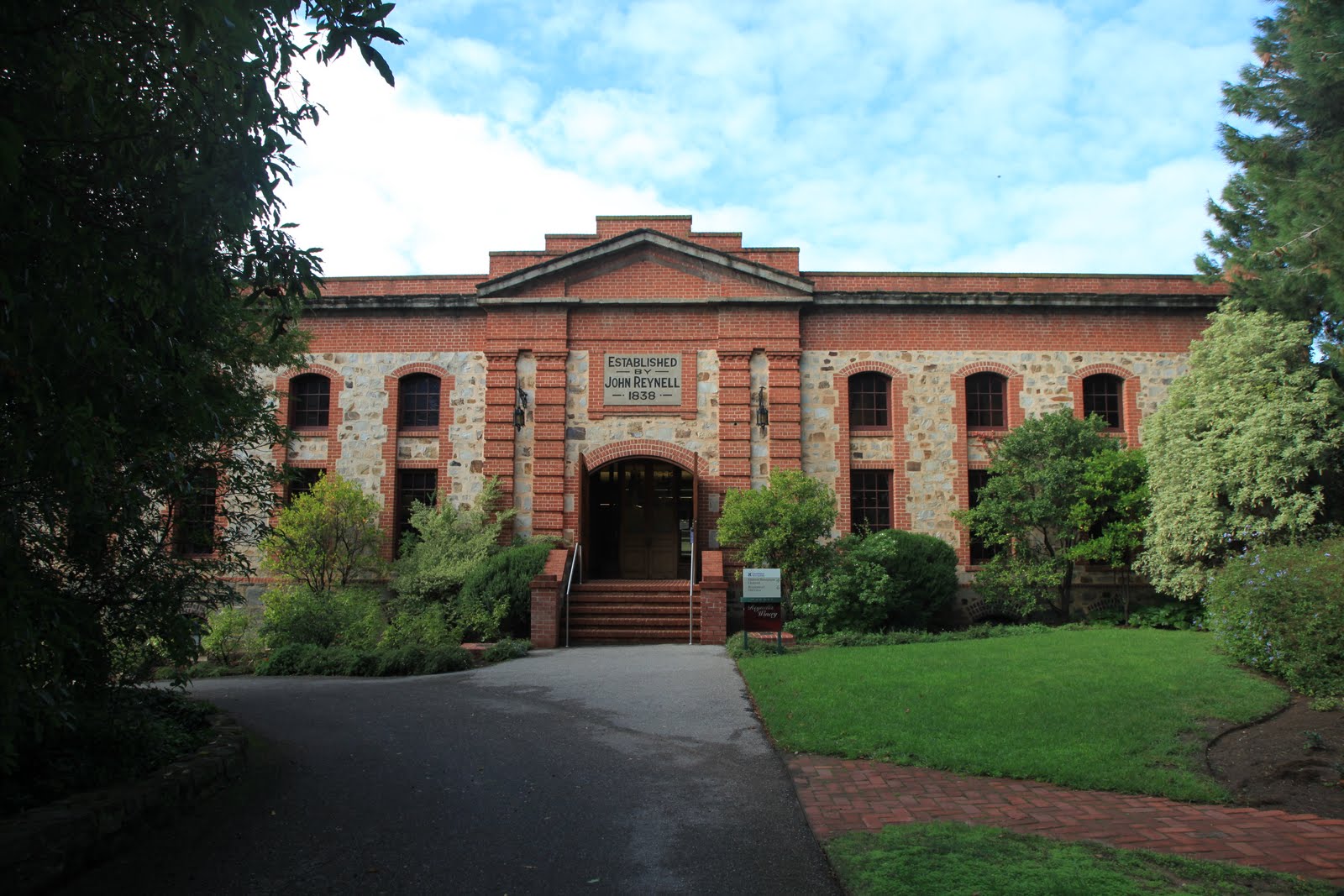
THE GRAND OLD CHATEAU REYNELLA WINERY IN McLAREN VALE; FORMER HQ OF NEW YORK MARAUDERS THE SANDS BROTHERS, UPSTATE NEW YORK RUBES WHO NEVER GRASPED THE HARD REALITIES OF WINEMAKING IN AUSTRALIA'S WILD FRONTIER, WHERE ONLY THE SMART AND THE TRUE SURVIVE PROFITABLY - photo KATE ELMES


Bad Business Butchers Bush Wrong Sands In Our Wineglass Fosters Faces Devalued Assets
by PHILIP WHITE

This is a story of how changing climate, political skulduggery, disastrous public relations and general business ineptitude is destroying what many have long seen to be Australia's greatest agricultural export success.

There has never been a vintage quite like 2011. The calamitous matter of international oversupply aside, Australia’s wine business is a sodden, mouldy husk of its old budding beauty, with great swathes of its traditional lifeblood rotting on the vine because our mightiest ethanol peddlers (read transnational winemakers) refuse to pay the cost price for grapes.

This is coincident with the big chemical manufacturers and importers deciding that nobody could afford to pay for their fungicides because atop the insulting prices offered for fruit, the lack of irrigation water had broken the growers' financial backs. So these chemical traders neither imported or manufactured sufficient fungicide spray to deal with the country's current plague of moulds and mildews.

To help ease this crisis, the irrigated wine business, through the Winemakers Federation of Australia, has even negotiated a temporary relaxation of Canada’s severe restrictions on Australia’s use of phosphorous acid as a fungicide, so the mildew which too much rain and flood has set blooming all the way from Blanchetown to Burke can perhaps be limited and wine exports to Canada will remain unimpeded.

If they're lucky.

China has also been approached for a similar deal, but, perhaps wisely, refuses to respond. China has its own burgeoning wine business, and will soon be exporting cheap wine to Australia.

However you see it in the meantime, that rather vainglorious appellation which some genius, for want of a more precise term, called “South Eastern Australia”, is cactus. At a time of the most destructive irrigation restrictions ever, a deadly percentage of the vineyard in this vast appellation, equal in size to Portugal, Spain, France, Germany and Italy combined, is wet, mouldy and rotting.

The current disastrous floods are only the latest derisive insult to the many thousands of struggling bush families the wine industry is in the business of wrecking.

Otherwise, the season is nearly perfect: the cool wet start has set the better regions up beautifully; ongoing moderate breezy weather ensures the smart cookies who’ve done everything right will get some exemplary fruit. Only the jaundiced take joy suggesting the rotten side of the crop will assist clear the welling lake of unsold swill: only the idiot suggests the sweaty hands steering the industry’s confounding array of governing councils have solved the problem by their own cunning design.

Two of the most inelegant words in the history of English summarise the situation perfectly.

The first, “premiumise”, is the creation of the propaganda unit of the Sands brothers of upstate New York, the men who run Constellation, the world’s biggest wine company until a few minutes ago. They have been “premiumising” their ethanol mongery for a couple of years now, trimming it in the hope it will look better.

The wise observer (barely seen in the international business pages), the comfortably jaundiced, and even the idiot, must agree that “premiumise” seems to mean “hope to charge more for the same old same old”.

The second word, “demerger”, is the new form of “dismantle”, “dismember”, “flay”, or “gut”. It is the creation of the propagandists at Fosters, which intends to rip apart the huge wine and beer businesses it had only just completed “merging”, which always seemed to mean “crash senselessly and illogically together”.

This closely followed the disastrous “merging” of Southcorp with Rosemount, where, disguised as a white knight, Bob “Wild Oats” Oatley walked away with one or two billion, leaving his punchdrunk monolith sitting pretty for Fosters to gobble and rename.

Both “premiumise” and “demerger” are rather quaint negligees for that haggard old whore we once called greed. But these current captains of the ethanol racket can’t even successfully commit greed.

Take Constellation. In 2003, it spent AUD$1.9 billion erecting the Australian winemaking and United Kingdom distribution show it has just dropped for AUD$290 million, although the Sands boys have thrown some snakes in the murky water by insisting they’ll retain a 20% slice of the action, which means they’ll pick up only AUD$230 million “subject to closing adjustments".

Having confidently predicted their determination to get the hell out of Australia two years ago, this writer sees no joy other than cruel ridicule in any of this: in their retreat they clumsily butchered the main bits of their “premium” involvement, the grand old wineries of Chateau Reynella and Tintara. At the former, they last year destroyed a heritage-listed vineyard (below) at least the historical equivalent of Grange or Hill of Grace to make a quick $5 million in a rude housing malignancy; the latter, Tintara, the last winery to survive in the main street of McLaren Vale, they mothballed.

DEPREMIUMISED: THE HERITAGE LISTED JOHN REYNELL VINEYARD DESTROYED BY CONSTELLATION LAST YEAR - photo KATE ELMES

These two deft actions alone cost them much much more than $5 million of goodwill.

After the Reynella destruction, few would dare to permit their interference with Tintara’s heritage status.

One could be forgiven for suspecting that these people have no idea of the common meaning of premium.

A particularly sickly exemplar was their involvement in the USA Merlot racket. Most Americans seemed to think Merlot meant “mellow sweet red” until a schmucky Hollywood film suddenly made Merrrllow soooo yesterday that everybody needed something else to drink, immediately. The movie suggested Pinot noir, so, with Gallo (suddenly the world’s biggest wine company, again), the Sands lads unwittingly got themselves entangled in a scam in which they bought Pinot noir made from south of France Merlot and Shiraz.

This was much easier than mastering the notoriously tricky red grape of Burgundy, but, until the French wine police picked the scab off the racket, America loved it. They were ignorantly drinking the same swill they thought they’d fashionably abandoned, indicating the incredible naïve vulnerability of ethanol addicts who imagine themselves to be epicures and gourmands. Sideways, see?

To rub all this in, the scrillion tonnes of salt the Murray-Darling floods are about to unsettle will be just dandy for curing the wounds Fosters has incurred in its parallel disaster.

Before he jumps ship (as promised), Fosters CEO Ian Johnston will settle David Dearie into the hot seat at Treasury (the new name their propagandists thought up for their wine division), and CUB CEO John Pollard into the beer biz (which should be a cruise, comparatively).

Apart from the brilliant success of Penfolds, the rest of the Treasury wine lake could do with some serious premiumising, but you wouldn’t follow the example set by the Sands brothers.
David Dearie starts his year looking down the backwards telescope of the Sands’ imposed evaluation of the very ordinary end of Treasury’s Noah’s Ark of brands. These stretch from Andrew Garrett (really) to Queen Adelaide (currently in a gay resurrection), and Kaiser Stuhl to Wolf Blass (both of which Fosters has for years listed as Mildura wineries in the Australian Wine Directory).

Mildura is sinking.

If these treasured assets were worth anything last vintage, all the above has seen their value plummet by about the same sickening lurch the Sands brothers have stupidly engineered themselves.

Both these demergers could use some retrospective premiumising. If it had occurred, it could have been called logical and moral propriety, or perhaps even good business, subject to closing adjustments.

SOME BACKGROUND

As through this life you ramble
You’ll meet some funny men

Some will rob you with a six gun

And some with a fountain pen.


- Woody Guthrie

The Sands brothers, of upstate New York, obviously enjoy being seen, on their home patch, as men who respect culture, heritage, and the arts. As well as promoting their awards for community service in these areas, they are proud to pay big money to have their name on the Constellation Brands Marvin Sands Performing Arts Center in their home town of Canandaigua, near the Finger Lakes.

Their propaganda boasts that “The Friends of the Constellation Brands-Marvin Sands Performing Arts Center, Inc (CMAC) is a New York not-for-profit, 501(c)(3) corporation that was formed to assume responsibility for financial operation of CMAC. CMAC supports the mission to improve the quality of life in our community through culture, education and the arts.”

Artists like Willie Nelson, the Levon Helm Band, Robert Cray, Maroon 5, Cheryl Crowe, George Thorogood, Ringo Starr, and the Fabulous Thunderbirds are regular headliners there.

Not to mention a group aptly named Shit Is Fucked.

These people are totally unaware of the cultural destruction the Sands boys have wrought on McLaren Vale, South Australia, the former home of the enormous Australian wine empire they bought, built and butchered in seven quick years.

Just a couple of years back, Constellation’s PR troops were working hard on their “premiumizing”. They boasted of having “defined three areas in which all of its Corporate Social Responsibility focus will take place: sustainable business practices, philanthropy and social responsibility. From these three focus areas flow specific categories of emphasis, including our environmental impact, corporate giving, marketing and advertising codes, community involvement and much more. All of Constellation's social responsibility efforts flow directly from its values and culture."

But, apart from sacking hundreds of faithful workers at their heritage wineries of Reynella and Tintara they last year destroyed one of South Australia’s oldest commercial vineyards, and one which historically was at least as important as the Grange vineyard at Magill Estate, Langmeil’s The Freedom at Tanunda (probabaly the wold's oldest producing Shiraz vineyard), Kalimna near Nuriootpa (the world's oldest producing Cabernet vineyard), and the Hill of Grace near Keyneton.

Constellation made a measly AUD$5 million with the sale.

Just how this occurred is a vivid example of how Australia’s Labor governments, whose leaders seem to yearn to display business acumen not usually evident in the left, are transfixed by flash Harries much more expert at taking money and property from weaker and more vulnerable others.

Constellation hired a little-known historian to contradict years of its own sales hype - and decades of it from BRL-Hardy and Chateau Reynella before they were purchased - which had promoted this vineyard as an invaluable and irreplaceable cornerstone of the history and heritage of the Australian wine story. Together with the master fudgers of the Onkaparinga Council (the local government) and the soft cocks of the State Heritage Branch (State government), they managed to use this expert’s cheaply-bought advice to have the vineyard’s Heritage listing expunged.

ARIEL VIEW OF THE FORMER CONSTELLATION JEWEL AND HEADQUARTERS AT CHATEAU REYNELLA. THIS DISTRICT, WITH ITS PRICELESS ANCIENT GEOLOGIES, WAS ONCE CARPETED WITH DRY-GROWN VINEYARDS.

The photograph above shows the Chateau Reynella complex, and its surrounding vineyards. The large stony vineyard on the slopes to the right is the inferior one, and has been so regarded since John Reynell’s day. The smaller one (2 hectares - marked with the ellipse) bordered the heritage village of Old Reynella, was sold to the developer, Pioneer Homes, to build 41 apartments there on blocks averaging 22 x 22 metres.

Ebenezer Ward was the wine critic on The Advertiser in South Australia in 1862, preceding me by 126 years. Having visited Reynell Farm in that year, he wrote “Thus his [John Reynell’s] vineyard on the hilly land is confined to the Clarendon sorts, The Rousillon, and the Verdeilho. The Carbonet – a variety which, for the quality of its produce, cannot be too highly valued – Mr. Reynell has planted in another vineyard which he formed in 1848 on the flat bordering the creek, and where the soil is a black alluvial deposit on the surface, with a red loam subsoil. In this vineyard there are also Malbec and Shiraz … we thought a wine made from an admixture of Malbec and Carbonet best of all.”

In spite of this published first-hand report, and those many years of praising the vineyard’s significant history, Constellation managed to have the vineyard’s heritage listing removed.

JOHN REYNELL'S OLD CHATEAU REYNELLA HOMESTEAD, THE FORMER HEAD OFFICE OF BRL-HARDY - CONSTELLATION STRIPPED IT OF ITS ANTIQUES A YEAR AGO AND SOLD THEM AT A PITTANCE - photo - KATE ELMES

This occurred when they convinced the powers that be that the hill vineyard was indeed the most significant.

Part of the decision seems to have been justified by confusing the lower vineyard’s name. Somewhere in its recent history, amidst a peculiarly Australian fashion of naming export wines after hills and ridges which usually did not exist (Australia is famously flat) somebody gave the lower site the misnomer, “Stony Hill”, a strange appellation considering its proximity to the adjacent hill, which is indeed stony.

The lower vineyard also had a highly-significant viticultural importance, being the source of what was for years erroneously called “the Reynella clone” of Cabernet sauvignon, a superior strain of the variety which has been favoured, even revered, and propagated all over Australia for its superior flavour.

When I asked Geoff Hardy, the last formidable viticulturist of the Hardy tribe, about this, he explained "Noel Chapman was the architect of the current Reynell selection (not clone) which he told me was a process of elimination through three generations of plantings and he told me it was most recently from about 7 separate mother vines. We know that at least one of these is quite virus affected but I suspect it is two, without having done the testing. I understand the ‘current’ Reynell selection is the older Stony Hill planting (1968?) and this is where I have sourced perhaps 400 acres of planting material from, propagated or distributed through my own nursery business and this is the tip of the iceberg in an Australian sense.

"As regards naming the Stony Hill block I think Noey told me this was his doing because of the limestone in the higher part but my memory is very vague on this. Apparently there’s no mention of Stony Hill’s existence in Margaret Hopton’s significant writings on the Reynell family.

"The block has produced some great wine that I know of but I lost contact with its quality ratings in the late eighties.

"It certainly has a lot of history and is in the wrong hands at the moment."


These comments were backed up by Andrew Hardy, another significent member of the great winemaking family, and managing winemaker of Petaluma.

Chris Hackett, a former Reynella winemaker said that in his day the Cabernet from that block was the best in the winery every vintage and that when he attempted to buy the vineyard the owner dared not let it go.

But subsequently, when Constellation was attempting to convince the diaspora of the Hardy family to buy Reynella and Tintara back, all significant members of the family suddenly clammed up, and withdrew support from the burgeoning movement to save the vineyard. This could simply have been at the urging of Bill Hardy, the last senior member of the tribe to remain employed by Constellation, and the person wheeled out internationally to give the company an air of history and continuing family involvement.

His famous mother, Barbara Hardy, a revered and highly-awarded conservationist, green activist, and heritage enthusiast, also remained silent.

The death knell came when the McLaren Vale Grape Wine and Tourism Association flatly refused to support the vineyard’s retention. This association had long enjoyed the major funding supplied by Hardy’s, BRL-Hardy, and then Constellation, and seemed blind to the reality that the world’s biggest wine company was determinedly pulling out of the district, to concentrate on buying much cheaper, inferior fruit from the irrigated arid lands of the Australia outback, which were even then under severe and ongoing threat due to the abuse and over-allocation of dwindling irrigation water.

Perversely, these areas are now facing freak floods the like of which have not been seen for a century.

In response to a letter from New Zealand journalist, Sally Marden, urging the retention of the Reynell vineyard, Dudley Brown, Chairman of the McLaren Vale Grape Wine And Tourism Association, and a grapegrower who had depended on Constellation’s contract for his fruit, wrote “as our Association represents the interests of multiple industries, we have long had a policy of not commenting on commercial matters of members or disputes between industry groups except to the extent that they violate the law.

“Constellation’s forerunner company, Hardy’s, has been a member of our association in good standing since the inception of our forerunner bodies.

“We have and continue to actively lobby on matters of urban encroachment in our region (including the recent Glenthorne Farm matter) where and when we can.”

Independent State parliamentarian David Winderlich told the Legislative Council “According to Onkaparinga council, the vineyard was removed from the state heritage list by the Department for Environment and Heritage. This is a very strange decision, because the vineyard clearly meets at least three of the seven criteria for listing under the state’s Heritage Places Act: it demonstrates important aspects of the evolution or pattern of the state’s history; it is an outstanding representative of a particular class of places of cultural significance; and it has a special association with the life or work of a person or organisation or an event of historical importance.

“To delist such an important part of our history for such a small gain, 41 homes—we are not talking about this vineyard blocking the development of Roxby [Roxby Downs, the world’s largest uranium mine], for example—raises the concern that nothing is safe. It also raises questions about the integrity of the heritage listing process.”

Local independent parliamentarian Kris Hanna, chairman of the Reynell Business and Tourism Association, said the development would “wreck the place ... The site has been used continuously as vineyards since about 1840 and we’d like to see it preserved as vineyards as a tribute to our early history ... there’s a growing feeling among residents that the senior management at Constellation aren’t concerned with the history of the area or the locals,” he said.

Leon Bignell, a highly-popular parliamentarian from the district, was even more overt in his rage.

"This vital historic vineyard is symbolic of the whole district", he said on ABC TV.

"Gutter to gutter housing is something that belongs in the inner city suburbs where people want to live like that, close to the parklands and the city amenities and the high-rise offices where they're happy to work.

THE AUTHOR AT THE GATE OF THE OLD VINEYARD, JUST WEEKS BEFOTRE ITS DESTRUCTION - photo KATE ELMES

"It's like sub-dividing The Grange," he said. "Putting this sort of development on John Reynell's old block is like putting multi-storey flats on the site of the Old Gum Tree at Glenelg, or like crushing the first FJ Holden for scrap. We've already lost too much beautiful grape-growing land to tupperware tuscany housing. And that's a special piece of soil, Reynell's last block: if you read your history you'll see that ground is perfect for premium vineyard and the unique flavours those soils give, which is why Reynell planted there in the first place. It's a dumb move, and while it's not in my electorate, I'll do whatever I can to stop it."

Bignell’s colleague, Planning and Development Minister Paul Holloway, had seemed in full support when he had earlier promised ABC radio “because the Barossa Valley and McLaren Vale are important economic areas of the state, because they’re wine regions, also significant tourism regions, it would not make sense to have urban encroachment to a significant extent into those areas. So we’ll avoid those areas and the areas that we’ll be looking at for future expansion are those areas where there’ll be less impact on the important tourism and economic areas. So yes we do recognise those areas but look it’s simple common sense: why would you want to encroach on areas that are important to the economy because of the significant contribution that they make to the state’s economy through the wine industry and the tourism industry? Clearly that would be put at threat if we allowed rampant urban development within those areas.”

But it was his government which overthrew the heritage listing, and saw the Pioneer Homes developers bulldoze the heritage left by Reynell, a true pioneer.

Now, at Reynella, since Constellation’s departure, the gate to more destruction swings dangerously open. All it will take is the new owner to suggest that the destroyed vineyard was erroneously removed from its heritage status, and was indeed the more significant, meaning the remaining hill vineyard can now be replaced with housing.

And the old ironstone Tintara winery in the main street of the McLaren Vale township is looking awfully like a nice place for more villa rash.

The best summary of all this is the name of that aforementioned rock band.

EBENEZER WARD'S 1862 REPORT

EBENEZER WARD


THE township of Reynella is about 13 miles from Adelaide, on the Great South-road. The section on which the Crown hostelrie, the Reynella Mills, store &c., now stand was originally taken up by Mr. Reynell in 1838, and he has resided in the locality ever since. His present residence is barely a quarter of mile south-east of the township, on a slight eminence rising from Peel’s Creek. He has now about 450 acres of land in his possession, and in its management he aims at a combination of vine-growing, grazing and farming. He has 15 acres of vines, 2 of orchard and garden, about 100 under crop, and the remainder of the estate is fenced off for grazing.

Mr. Reynell commenced planting 21 years ago, when a considerable portion of the present orchard was formed. A few vine-cuttings from Tasmania were planted at the same time, and three years afterwards wine was made from them. The vineyard proper dates from 1844, when half an acre was planted with cuttings from Mr. Anstey’s. In the following season four-and-a-half acres were planted with cuttings obtained from the Macarthurs, of New South Wales, and the sorts recommended in “Maro’s” letters – viz., the Verdielho, Carbonet, Malbec, Pineau Gris, and Gouais. The situation, however, was too dry, and the soil too light, for most of these varieties to bear largely there, and a number of them have been already superseded. One acre of Pineau Gris has been grubbed up, the Rousillon varieties have been previously planted alternately with the rows of Pineau, and the Rousillon have also been grafted on the Carbonet. In 1847 and 1848 Mr. Reynell obtained cuttings of the white sorts from the Clarendon Vineyard – viz., Pedro Ximines, Doradilla, Temprana, Palo-mino-blanco, &c.: and since then he has planted a considerable extent with the Rousillons.

JOHN REYNELL

Thus his vineyard on the hilly land is chiefly confined to the Clarendon sorts, the Rousillon, and the Verdielho. The Carbonet -- a variety which, from the quality of its produce, cannot be too highly valued – Mr. Reynell has planted in another vineyard which he formed in 1848 on the flat bordering the creek, and where the soil is a black alluvial deposit on the surface, with a red loam subsoil. In this vineyard there are also Malbec and Shiraz to mix with the Carbonet, the Rousillon sorts, and (planted in 1861) Frontignac, Verdeilho, and Riesling. None of Mr. Reynell’s vines are either staked or trellised, and the Rousillon sorts appear very well able to support themselves. The Verdielho have a more straggling growth, but Mr. Reynell thinks the cost of staking is greatly in excess of the advantage to be gained. Throughout the vineyard the rows are 6 feet apart, and the vines at from 4 to 5 feet in the rows. The vineyard has a northern to north-eastern aspect, and is well sheltered on the south and west. The ground between the rows is stirred with horse-hoe or plough two or three times every season, and is flanked with rows of almond trees planted for shelter. On the highest point of the hill the soil is very sandy; but on the lower slopes it is a good red loam on the surface, with a sprinkling of ironstone intermixed, and the subsoil is chiefly composed of friable limestone. Mr. Reynell has about 40 acres of this kind of land at a sufficient elevation above the creek to be secure from frosts, but he unwilling to increase his vineyard very largely until there is a prospect of our wines being admitted to the Melbourne markets without an import duty. We certainly hope the day is not far distant when our friends across the border will be wise and magnanimous enough to reduce very much, or altogether remove, the present impost. The apple- and pear-trees in the orchard are some of the largest we have seen in the colony. We noticed there a tree of the indiarubber variety, which was obtained from Sydney 20 years ago, and has grown to great size. It is an evergreen, and the foliage has an elegant appearance. A few orange-trees have been planted near the creek. Several years ago Mr. Reynell made a pure wine from the Pineau Gris. It is now perfectly matured, and has been highly spoken of by connoisseurs. His Verdielho is also remarkably good, but we thought a wine made from an admixture of Malbec and Carbonet best of all.

- from Ebenezer Ward’s Vineyards & Orchards Of South Australia 1862.

REYNELL'S OLD VINEYARD AS IT WAS, VIEWED THROUGH THE RAZOR WIRE FROM CONSTELLATION'S FORMER HEADQUARTERS - photo KATE ELMES

REYNELLA - by Ernest Whitington, The Register, 1903

The cellars here are the property of Mr. Walter Reynell, who has always taken a keen interest in the wine industry. I believe one of his missions on his present trip to England is to see if he cannot do something to find increased markets for our wine. All vignerons pray that he might be successful. Mr. Reynell’s oldest son was superintending vintage operations when I arrived. The make this year was expected to be between 80,000 and 85,000 gallons. In the winery there are 28 fermenting tanks, each of a capacity of 1,500 gallons. The water for cooling is run down from an underground tank on the top of the hill. After passing through the coils in the fermenting tanks the water is run over eight canvas trays, which have a fan playing on them, and then down into the well, the source whence it first came. The canvas cooling machine cools the water to 60 degrees. There are two gable-roofed storage cellars running parallel to one another, and when the occasion arises the space between will be covered in and converted into a cellar. In the first cellar there are 16 3,000 gallon jarrah vats, and in the second 20 similar receptacles, as well as 300-gallon casks and hogsheads. Altogether there is 170,000 gallons in store. The old cellar, which is 40 years old, is right under the ground. The roof is of logs and earth overgrown with grass, and presents a very picturesque appearance. M. Reynell has 150 acres in bearing at Reynella and 120 acres at Riverton and Magill. The grapes from these vineyards are treated at Reynella, while Mr. Reynell buys from 15 or 16 growers in the district.

- from The South Australian Vintage 1903, by Ernest Whitington

29 December 2010

HOW BLACKFULLAS CAN DRINK IN PARKS

DAVID UNAIPON PRIZEWINNING AUTHOR GAYLE KENNEDY

Kennedy's Ingenious Solution

Unaipon Gongster Drinksterises

Whitefullas Are Not The Enemy


DRINKSTER’s abiding concern for the damage caused by the ethanol, or drinking alcohol industry is at its most intense in the ravaged communities of original Australians.

This discussion triggers a predictable, repetitive range of responses, from dead silence (on behalf of the ethanol peddlers), through overt racism (from whites living in proximity to drinking black communities, and from black communities who claim their drinking habits are no worse than the whites’), to the pious and useless sanctimony of prohibitionist dries, whatever their hue.

To throw some fresh light on how some of these issues might be addressed, DRINKSTER is delighted to publish an esteemed guest author, Gayle Kennedy.

While she has lived mainly in Sydney since 1973, Gayle is a Wongaiibon woman of the Ngiyaampaa speaking nation of south-western New South Wales, in outback Australia. With members of the Barkindji and Mutthi Mutthi nations, she and members of her family are traditional owners and co-guardians of the Lake Mungo area, where 40,000 year-old human remains lie, along with archeological evidence of at least 50,000 years of human inhabition. A much more recent part of her bloodline is from the Pictish/Norse influence of the outer Hebridean isle of Harris.

Gayle is an important writer, celebrated broadcaster and commentator, and partly through her experience of suffering polio as a girl, is internationally-respected for her understanding of disability and culture. She was for years the indigenous affairs contributor and researcher at Streetwise Comics, the Australian non-profit communications agency responsible for “communicating social issues to young people, indigenous communities and people of a culturally and linguistically diverse background and other hard to reach groups ... on a range of issues including health, education, employment, the law and indigenous-specific issues”.

NGARRINDJERRI GENIUS DAVID UNAIPON - CLICK ON IMAGE FOR DETAILS

Gayle won the David Unaipon Award for indigenous Australian literature with her essential work of fiction, Me, Antman and Fleabag (University of Queensland Press, 2007).

She is also a formidable expert on country music. Her Sydney Morning Herald tribute to Australian country hero, Slim Dusty, is a profound piece of reflective grief, unequalled in Slim’s vast canon of obituaries for its feeling, depth of understanding and simplicity.

This is the first chapter of Me, Antman and Fleabag.


How ta drink in the park 
by GAYLE KENNEDY

 
Me, Antman and our mongrel, Fleabag, like partying outside. We both come from the bush. Me, I’m a NSW desert girl and Antman’s mob are river people. Cos we ain’t got no river or desert here in the city, we like sittin in the park yarnin, havin a charge, playin country music. We don’t cause no harm. Try telling that to the coppers. Soon as they see us they start growlin. They say, ‘No drinkin here’, ‘No music’ and ‘Git that dog registered’. Stuff like that. Then ya git sick of it and stay home and party in a yard the size of an old hanky with trains roarin by every time ya favourite song comes on.

We whinged bout it one day to Antman’s cuz, Damien. He’s a lawyer. Travelled round the world. He reckons we go about things the wrong way. Reckons we give up too easy. Says whitefullas aren’t the enemy. Says they love drinkin and partying outside too. He says they got it worked out so coppers don’t bother em. He showed us.

First he shouts Fleabag twelve months rego and a new collar in the Koori colours. Too deadly! Then he says the dog has to have a bath. Gawd Fleabag bunged on. Had to drag him out from under the house. He carried on like we was murderin him. Wouldn’t come near us for hours after. His guts got the better of him though and he come in for a feed. He got over it. Smelt good too.

Then we got an esky and a couple of fancy bottles of wine. Damien reckons no casks or flagons. Besides, the bottles got twist tops now, so once ya finished, ya fill em up with cheap stuff for next time. We pack a nice blanket and a picnic. Nothin fancy; bread, cold meat, tomatoes, a big ol lamb bone for Fleabag. We pile in Damien’s car and head to Balmain. Damien lives there.

We pull up at this deadly park right on the harbour. Antman and me are a bit nervous, but Fleabag’s outta the car and beltin cross the grass like there’s no tomorrow. There’s heaps of other dogs there, but that’s okay coz he got his nuts cut out a couple a years ago so he don’t go bluin no more.

We git the stuff outta the car, spread the blanket with the tucker, glasses and wine on the grass and sit down, still nervous. Then we see all these whitefullas. They’re all sittin round with wine, beer and tucker too! They’re havin a laugh. Kids and dogs are runnin around. There’s no trains, the harbour’s shinin, boats everywhere. We pour drinks; make sandwiches. People smile at us. They pat old Flea and fuss over his fancy collar. He laps it up.

And there’s no coppers in sight!

Antman grins. ‘Makes ya wanna sing, aye tidda?’

‘Sure does,’ I say, and whack old Slim in the CD player.

We know the drill and go every week now. Flea’s used to havin a tub too. Knows he’s goin to the park afterwards. Anyway, when we get sick of city life we go out bush, sometimes to visit my mob or sometimes Antman’s. Ant’s a builder so he goes whenever one job finishes. I do bar work or waitressin so I ain’t tied down either. Fleabag just comes along for the ride.


© 2006 Gayle Kennedy
To hear Gayle read selections from Me, Antman and Fleabag, download this segment from the ABC radio program, AWAYE.

27 December 2010

TEN STEPS TO THE PERFECT GIN AND TONIC


Ten Easy Steps To Paradise
First Select A Mighty Knife
Find
An Island With Limes

by PHILIP WHITE


This piece was written about twenty years ago, when Bombay gin wore a white label and resided in a squat bottle. It was a more viscous, rounded style of gin than the Sapphire which suddenly and brutally replaced it. The old model had less overt juniper, and was probably closer in style to some of the truly traditional gins of yore, like the lovely Plymouth gin still made in that sailors’ town. I preferred the old white label to the Sapphire, which seems tohave been designed to suit the American martini market.
The story was published in The Advertiser and The Sydney Review.


Over twenty years of studious application has finally seen your correspondent on things moist discover the recipe for the perfect gin and tonic. In ten easy steps, here lies the key to total gustatory and spiritual satisfaction and perhaps even to eternal life. It will take more time for me to prove the latter.


1. Find Max’s Island


Somewhere off the Northern territory coast, lapped by the impish Arafura Sea, lies Max’s Island. Here among the palms, the mangroves, and the giant man-eating lizards, live Max, Marie, Little Max and Croc Baumber, sans footwear. During the past 26 years, this family has created the ideal environment for the building of the perfect gin and tonic. You will need first to get there, by hardy sea craft or air, then spend three or four days preparing your thirst.

2. Sharpen The Knife

On the morning of the fourth day, you will be ready to slip into the routine. First, sharpen your knife. I have a monster blade recommended by the great Adelaide chef, Cheong Liew, which is most suitable for a place like this.
Whatever your choice, hone it fine and deadly, for once you have sliced your lime, you will need the weapon for bashing big fish on the head to discourage them from biting your feet on the boat, later for slitting their guts agape, and later still for more baroque forms of self-defence. I recommend a pocket diamond sharpener, fine grade. In the rough tropical conditions, it will hold together better than a stone, which may give you a more showy edge, but that’s not required on Max’s Island. A diamond sharpener will not let you down.

3. Walk To The Lime Tree


Taking care to avoid the nest of giant tropical tiger lice, head toward the lime tree. You will need to circumnavigate Max’s shed, easily recognised by life-saving rings hanging upon its southern wall, as if it were a ship. Having noticed these, do not fall prey to the usual puzzlement over just how high the tide rises here – that is a waste of concentration. Instead, be aware that within this building resides one of the grandest collections of gadgets, tools and trophies any connoisseur could hope to acquire, and that many of these hard, irregular objects have begun their escape from the shed, and have indeed established a significant beach-head out here in the world at large. Collision can be fatal. Avoid too treading in swarf – it takes ages to retrieve from the feet and leads quickly to tropical ulcers.
I recommend the smaller, harder, greener limes. Because this year’s dry has been particularly so, Max’s limes are of the finest, lowest-yielding quality. The smallest ones offer the most concentrated flavour.

4. Walk To The Ice Box


Having pocketed your lime, move carefully to the ice box. This is still in the south-eastern wing of Max’s shed. Smash off a few larger lumps, about golf ball size, with the handle of your knife. Do not waste any ice – it costs fuel money to feed the generators, and you have the choice of either making ice or freezing fish, because the gennies can only produce as much power as they can produce. Remember to shut the ice box tight.


5. Walk To The Wash House


It’s an easy stroll from the ice box to the wash house. You steer past the dead tree with the kitchen sink bolted to it, on past the beer fridge (from which you select a tin of tonic), past the new washing-machine (yet to be installed, but working perfectly well out here in the open), and make a left into the wash house. Here is where the gin lies, almost frozen, in the food freezer. It’s in here, with the chops and bread and snags, because it is neither ice nor fish. It is sort of special. I’ve been using Bombay, because not only is it one of the last gins made with full respect paid to the true Spirit of the Empire, even bearing a lovely likeness of Her Gracious Majesty, Queen Victoria, but it also incorporates only the finest ingredients, such as Moroccan coriander seeds, Indo-Chinese licorice root, Spanish lemon peel, angelica root from Saxony, and orris root and juniper berries from Italy. Most gins today use cheap essences, added after the base spirit distillation. Bombay incorporates these real ingredients in the distillation – in the traditional, expensive, most thorough, but gentle way. Between the still and the condenser the gin’s vapour passes through these herbs on racks. Remember to shut the freezer tight.

6. Slicing The Lime


If, like mine, your lime is about the size of a tom-bowler, you will be able to take three neat slices from its centre, keeping the ends to squeeze into your potage during assemblage. You will find a convenient bench for this operation bolted to the back of the same dead tree which bears the sink.


7. Preparing Your Container


Take a stubby cooler, the wetsuit rubber sponge type, wet it thoroughly, and select a tumbler which fits it quite snugly. The tumblers will be upside-down, on the sink. The evaporation of the water from the stubby holder will keep your ice frozen for much longer, and your drink colder and fresher overall.


8. Assemblage


Put your tumbler in your stubby holder, and your ice in the tumbler. Add a nip and a half of Bombay. It will be oily, because it is nearly frozen. If it has frozen, you know somebody has been adding water to it, in which case you’ll need your knife. Fill your tumbler to the brim with Schweppes Indian Tonic Water (a bit sweet, but still the best), and add your three slices of lime. Squeeze the juice from the ends of your lime into the tumbler, too.
Now you are ready for the intense, calming, and eventually soporific bit.

9. Select A Chair With A View

You may choose here to eye the mangroves, scanning their strange dank greenness for other eyes, looking back. They’re always in there, waiting.
You may prefer to gaze into the blue across the beach on the other side, and the deadly tidal flats, off into the wildness of the Arafura, a water chock-a-block with giant turtles, rays, sharks, stinging devices of all kinds, and millions of disco-hued fish. Hungry, vivacious, desperate fish. You may look across the hammock through the coconut palms to the crocodile graveyard, to where the troops are digging in for their big war games with Singapore and the Yanks. You may contemplate them, but you mustn’t be seen noticing them. Or the vertical view of the tropical canopy, taken from the hammock, may be your favourite, especially when the resident Brahminy kite sits there on the warm breeze, jealously eyeing your gin and tonic.

10. Drink The Bastard


After the first delicate sip, you will need no further instruction.
You may find it difficult to adopt a mildly temperate attitude, but such attitudes are best kept to temperate zones, and Max’s Island is not one of those. Max’s Island is tropical, especially cut out by Max and Marie and their boys, Little Max and Croc, and God, and possibly the Devil, for the consumption of the world’s best, The Perfect Gin And Tonic. Three or four days of this, and a person begins to understand why The Empire was built, why it collapsed, and why mad dogs and Englishmen are absolutely content to gather their news from seven-week-old copies of The Times.

23 December 2010

ETHANOL PEDDLING AT TOP EFFICIENCY

Rivers Of Booze Flood The Alice  
Horrifying Efficiencies In Pubs Grog-floggers Boost Coffin Trade

Katrina Bolton reported this story on ABC's Lateline on 18/08/2010.

The national emergency in the Northern Territory is still a reality in Alice Springs, where 'rivers of grog' still flow.

TONY JONES, PRESENTER: If there's one issue that hasn't had much attention in this election campaign, it's Indigenous affairs.

Five years ago the troubled lives and horrific deaths of Aboriginal people in the Northern Territory were described as a national emergency, but the rivers of grog are still flowing in Alice Springs.

Now the man who buries the victims of alcohol is demanding change from businesses he says are making a killing and says governments haven't done enough to stop them.

Katrina Bolton reports.

KATRINA BOLTON, REPORTER: Basil Schild is a pastor in Alice Springs. He's speaking out because he's tired of burying his friends.

BASIL SCHILD, LUTHERAN PASTOR: A mother was burying her son number five. All her sons, she'd buried. All of them were alcohol-related deaths.

KATRINA BOLTON: He says he's done nearly 80 funerals because of alcohol and it's not just the drinkers who are dying.

BASIL SCHILD: Some of the coffins that have travelled through this room in which we sit, a 13-year-old girl whose stepfather would come home and get drunk and touch her up; she took her own life. A 26-year-old young woman whose partner would come home and get drunk and smash her up; she took her own life.

KATRINA BOLTON: The rivers of grog are still flowing in Alice Springs, four years after a report on child sex abuse called for urgent action. The Territory Government has cut the availability of cask wine and banned takeaway alcohol before 2pm, but it still allows some of the town's bars to open at 10 in the morning and behind darkened windows, hundreds of people hit the grog before lunch.

BASIL SCHILD: It will be totally crowded, it's full. There are elderly people, some of them frail, sitting on the floor. There's hardly any air-conditioning. The air is thick, it's hard to breathe.

JOHN BOFFA, PEOPLE'S ALCOHOL ACTION COALITION: The bar in the Todd Tavern, which is well-known throughout the community as the Animal Bar, is that bar that's only open from 10 o'clock in the morning till 2 o'clock. It closes as soon as the takeaways open.

KATRINA BOLTON: So busy is the Todd's riverside bar that the Licensing Commission last month suspended it for a week after CCTV footage showed 236 people inside when it was licensed for 100.

GP and alcohol campaigner Dr John Boffa thinks bars like the Todd are targeting alcoholics.

JOHN BOFFA: The sort of people that need to start drinking at 10 o'clock in the morning in a public bar are likely to be alcohol dependent.

KATRINA BOLTON: The other two bars are hidden. The Heavitree Tavern is tucked behind the supermarket on the outskirts of town. It's allowed to serve close to 150 people. And at the Gap View Hotel, their bar is completely unmarked, but the drinkers know it's there.

Inside, the bar is open, but you can't buy food, even at lunch, and like the Heavitree and the Todd, even though it's allowed to stay open, it closes at 2pm right when the takeaways open.

JOHN BOFFA: It seems as if the publican only wants to make space available for very heavy drinkers until they can sell them takeaway and basically get rid of them.

KATRINA BOLTON: While drinkers are on site, licencees are obliged to make sure people don't get too drunk, but the businesses have no legal responsibility for what happens after the drinkers go on to buy large quantities of alcohol at the bottle shops.

BASIL SCHILD: If you do the figures, those major hotels must be making an absolute killing.

KATRINA BOLTON: Fosters acknowledges the Todd and the Gap View are among their biggest individual beer customers in the country. Lawyer Russell Goldflam says they also feature heavily in court. [read his report: Damming The Rivers Of Grog - it takes some time to download]

RUSSELL GOLDFLAM, DEFENCE LAWYER: The horrible fact is that in the majority of the homicide cases in which I've been involved, cases where a killing was literally made, the perpetrator, the victim, the witnesses, they all bought their grog at these pubs.

KATRINA BOLTON: Alcohol keeps Alice Springs police extremely busy with assaults, rapes and untimely deaths. The town's Indigenous people are 14 times more likely than other Australians to die from alcohol. Figures obtained by the ABC show that in 2008-'09 the hospital treated nearly a stabbing a day.

Russell Goldflam says the violence almost always involves enormous amounts of takeaway alcohol.

RUSSELL GOLDFLAM: The standard killing: the victim was very drunk, the person who did it was very drunk and the witnesses were all very drunk. The standard serious harm, the standard rape: also, victim, perpetrator, witnesses - everyone's drunk.

KATRINA BOLTON: He says the scientific literature is very clear about how alcohol consumption can be cut, but the solutions are politically unpopular.

RUSSELL GOLDFLAM: Higher prices, shorter trading hours, a grog free welfare pay day, less outlets, a volumetric tax. It's not rocket science.

MARGARET KAMERRE TURNER, EASTERN ARRERNTE WOMAN: A lot of people are getting sick, a lot of people are dying. All my family have died from alcohol. The place where they buy alcohol, they wouldn't care. They like their money.

KATRINA BOLTON: Senior Eastern Arrernte woman M K Turner says it's time the Government drastically cut the number of alcohol outlets.

MARGARET KAMERRE TURNER: Well in my family they just drank so much ... because alcohol was there.

KATRINA BOLTON: Basil Schild says all the companies selling alcohol in Alice Springs need to take a hard look at the damage their product is causing. He's calling on the supermarket bosses and the CEOs of the companies that make the alcohol to come and meet the people on the flipside of their profits.

BASIL SCHILD: They would surely begin a conversation regarding their corporate social responsibility to ensure that their products are not reaping such total chaos.

KATRINA BOLTON: The pubs we've mentioned all declined to be interviewed for this program, as did Coles and the two major liquor suppliers, Fosters and Lion Nathan.

Fosters said in a statement that it's extremely committed to promoting a culture of responsible alcohol consumption and Lion Nathan said in a statement that no responsible player in the industry wants to make a dollar from alcohol dependency.

The Territory's Alcohol Policy Minister was also unavailable for interview. The Government has announced it'll buy back three of the town's takeaway licences, but the Todd and the Gap View are not being touched.

The Government is preparing to make more changes to alcohol laws. Basil Schild and M K Turner hope it happens soon before the cemetery gets any fuller.

BASIL SCHILD: Over here we buried another dear friend of mine. Very recently was lying drunk on the road just outside Alice Springs, hit by a car. Over here, another dear friend of mine - renal failure at the age of 39.

Many still-born deaths just here behind the tractor. Recently, this side, two suicides. Over there further, a dear friend of mine, I said to him, "If you don't stop drinking, I'll bury you next year." We buried him next year.

MARGARET KAMERRE TURNER: You know, people have stopped - old people have stopped crying now. They got no more tears to cry.

21st CENTURY MIDDEN: WHEN TIME MAGAZINE PUBLISHED THIS PHOTOGRAPH IN AUGUST 2006, MANY ABORIGINAL GROUPS WERE OUTRAGED, SUGGESTING THAT WHITE PEOPLE WERE JUST AS LIKELY TO DRINK TO EXCESS

TONY JONES: Katrina Bolton with that report.

The World Today on Wednesday, December 22, 2010 12:30:00

ELIZABETH JACKSON: Hello I'm Elizabeth Jackson and this is a current affairs special.

Alice Springs is famous around the world. But the town in the very middle of Australia has a darker side. It has the nation's highest rate of alcohol-related death.

A few years ago the abuse and dysfunction that alcohol helped generate were thought to be so serious that a national emergency was declared.

But the rivers of grog are still flowing in Alice Springs.

Katrina Bolton reports.

KATRINA BOLTON: Basil Schild is a pastor of a small church in a town he says is drowning in grog.

He wants to stop burying his friends.

BASIL SCHILD: I was involved with a funeral for the fifth son, a mother was burying her son number five. All her sons she'd buried. All of them were alcohol related deaths.

KATRINA BOLTON: A recent Menzies School of Health report found Indigenous people in Alice Springs are 31 times more likely than other Australians to die of alcohol related causes.

Pastor Basil Schild say he's done more than 80 funerals for people who've died because of alcohol; in car crashes, being run over by road trains, murders and still births.

BASIL SCHILD: In one year we had three members of the parish were murdered, three women, all of them by their partners who were drunk.

KATRINA BOLTON: He says it's not just drinkers who are dying.

BASIL SCHILD: The bodies of people who have travelled though this room include a 13 year old girl whose stepfather would come home and get drunk and touch her up - she took her own life. A 26 year old young woman whose partner would come home and get drunk and smash her up - she took her own life.

KATRINA BOLTON: A landmark report on child sex abuse nearly four years ago described what it called "rivers of grog" in the Northern Territory and called for urgent action.

The Territory Government has cut the availability of cask wine in Alice Springs and banned takeaway alcohol before 2pm - moves it credits with reducing total alcohol sales and the murder rate.

But behind blackened windows places like the Todd Tavern are still allowed to run bars where hundreds of people hit the grog from 10 in the morning.

Inside it's packed. The Todd's liquor licence is valuable enough that it's held by six small companies.

Alice Springs GP and alcohol campaigner Dr John Boffa thinks this type of bar targets alcoholics.

JOHN BOFFA: The bar in the Todd Tavern which is well known throughout the community as the animal bar, is a bar that's only open from 10 o'clock in the morning till 2 o'clock. It closes as soon as the takeaway is open.

KATRINA BOLTON: At the Todd Tavern people passing by in the morning can sometimes see drinkers queuing outside.

But two other similar venues in Alice Springs are far more hidden.

The Heavitree Tavern is behind a small supermarket on the outskirts of town. Its widows are tinted almost black. It's impossible to see how many people are inside.

And at the Gap View Hotel at the foot of the town's famous mountain range the bar is completely unmarked. There is only a dirt track to the door. But inside it's licensed to serve close to 150 people.

Like the other two bars the clientele is almost exclusively Indigenous. Most of the drinkers will tell you they're unemployed.

The Gap View's bar is open over lunch but it doesn't serve food - only grog. And like the other two bars it closes at 2pm, right when the takeaway bottle shops open.

Dr John Boffa says while licensees are responsible for people while they're on site they have no legal responsibility for what happens after the drinkers go on to buy alcohol at the bottle shops.

JOHN BOFFA: For me it's a very cynical exercise. It seems as if the publican only wants to make space available for very heavy drinkers until they can sell them takeaway and basically get rid of them, get them off site.

KATRINA BOLTON: Lawyer Russell Goldflam has spent 15 years dealing with the assaults, rapes and murders that sometimes follow.

RUSSELL GOLDFLAM: The standard killing: the victim was very drunk, the person who did it was very drunk and the witnesses were all very drunk.

The standard serious harm the same, everyone was very drunk.

The standard rape also victim, perpetrator, witnesses, everyone's drunk. And when I say drunk I mean very drunk.

KATRINA BOLTON: He says anyone seeing the volume of alcohol sales that get described in court should be able to realise that harm is likely to come from it.

RUSSELL GOLDFLAM: It's not uncommon to say, well we bought one carton of VB and then we had a carton of Tooheys Extra Dry and then we had a carton of something else and then we drank a bottle of rum.

How many people are you talking about?

Oh, four or five.

KATRINA BOLTON: Outside the bars the 2pm rush is intense.

People aren't allowed to walk through the bottle shop so they pour out of the pub and battle for seats in the taxis and mini vans that appear to whisk them the few metres to the drive-through.

Lawyer Russell Goldflam says most of the Indigenous people buying the takeaway alcohol don't have a place where they can legally drink it.


RUSSELL GOLDFLAM: They're entitled to buy alcohol but they're not allowed to drink it either in a public place or in the privacy of their own home because the town camps in Alice Springs are all prescribed areas under the Northern Territory Emergency Response legislation of the Commonwealth.

So unless they've got a mate who lives in some other form of accommodation where it is legal to drink there is nowhere that they're allowed to legally drink within the town boundaries of Alice Springs.

KATRINA BOLTON: But at the Gap View Hotel with the bar closed the surge on the bottle shop is so intense it even creates a traffic jam.

Pastor Basil Schild believes this set-up fuels problem drinking because the bars allow people to start drinking early and then just before they're legally drunk kick them out and sell them large amounts of takeaway alcohol.

BASIL SCHILD: Dr Philip Nitschke the euthanasia advocate gets in trouble for supplying an elderly woman with a bottle of tablets that she might use to kill herself. But here we have like a mass euthanasia happening with people making huge profits, retailing to people substances that are killing them. So where's the outcry about that?

KATRINA BOLTON: Alice Springs is a small place and while the venues' profits are secret the liquor supplier Fosters acknowledges the Gap View Hotel and the Todd Tavern have been among its biggest individual beer customers in Australia.

BASIL SCHILD: If you do the figures those major hotels must be making an absolute killing.

KATRINA BOLTON: Lawyer Russell Goldflam agrees.

RUSSELL GOLDFLAM: It's a horribly apt expression. The horrible fact is that in the majority of the homicide cases in which I've been involved, cases where a killing was literally made, the perpetrator, the victim, the witnesses, they all bought their grog at these pubs.


KATRINA BOLTON: The ABC did approach the three pubs for interview but they declined.

So did the liquor suppliers Fosters and Lion Nathan although they issued statements saying they don't want to make money from alcohol dependency.

But Pastor Basil Schild believes that if the companies aren't happy with the way their products are being sold they could pressure the pubs and retailers to change.

BASIL SCHILD: Perhaps the company directors are just unaware of what a devastating and terrible impact their products are having in Central Australia. Because I think if they were aware they would surely begin a conversation regarding their corporate social responsibility to ensure that their products are not reaping such total chaos.

KATRINA BOLTON: He says companies should factor in the impact drinking has on children.

BASIL SCHILD: An Aboriginal child, on average they're attending 10 funerals a year. By the time they're 10 they've been to 100 funerals.

A 10 year old child is totally enmeshed and engaged with a never ending cycle of grief even though they are not yet consumers of alcohol.

KATRINA BOLTON: The only player in the alcohol industry willing to talk publicly was the organisation that represents the Territory's pubs - the Australian Hotels Association.

Its president is Mick Burns.

He says for the three Alice Springs pubs there is no easy solution.

MICK BURNS: I see that there are a large number of that clientele that would be problem drinkers.

KATRINA BOLTON: He says because they're problem drinkers they'd leave anyway as soon as cheaper takeaway drinks were available.

MICK BURNS: Those hotels don't choose to close at two o'clock. There's no good keeping a hotel open when you've got no clients inside.

KATRINA BOLTON: And he says all three bars operate within their licences.

MICK BURNS: And I think if people turn up to our pubs and they're sober, they're properly attired and there's no reason to exclude them from licensed premises. Unless there's a particular reason it opens up a Pandora's box of problems for licensees if we don't serve those people.

KATRINA BOLTON: Some of Alice Spring's Indigenous residents including drinkers think the pubs' licences need to change.

Kevin Wirri lives at Abbotts' Camp, a cluster of Aboriginal homes just opposite the town's dry Todd River bed.

In the 90s he and his wife fought to have alcohol banned from the camp despite opposition including from the police.

Today there's a big "no alcohol" sign at the entrance but the ground sparkles with empty cans. One house has more than 80 in the front yard.

Kevin Wirri tried to stay off the grog but he says so many people drink and there's a cultural obligation to share so the social pressure was overwhelming.

KEVIN WIRRI: Aboriginal people well you know they really want to drink you know more, more, more, just keep on drinking.

KATRINA BOLTON: He says when he refused to drink friends and relatives told him they'd never visit or speak to him again.

KEVIN WIRRI: Well they'll turn around and say you know he trying to be like a white man. They'll say he's a white man. He doesn't want to live with us you know, our way.

KATRINA BOLTON: Grandmother Christobel Swan feels like she's fighting a losing battle trying to stop her relatives from drinking themselves to death.

CHRISTOBEL SWAN: I try, I talk to people, "Hey come on lass," you know. I talk to my families, "You've got to stop drinking you know? Stop drinking!"

KATRINA BOLTON: She says she's already lost a lot of her family to alcohol in suicides, car crashes and stabbings.

But she says while the pubs open at 10 every morning the drinkers keep rolling out of bed and heading straight there, leaving children behind.

CHRISTOBEL SWAN: They got no food you know, kids they're walking round asking somebody else for $2 or something like that you know.

KATRINA BOLTON: Fellow grandmother and Eastern Arrernte woman MK Turner says the all-day drinking culture needs to be broken.

MK TURNER: All my family have died from alcohol and I'm just talking from my heart.

KATRINA BOLTON: She says the non-drinkers want to help people get off the grog. But it's impossible while there are so many takeaway outlets in town.

MK TURNER: In my family they just drank so much because alcohol was there. Why is the Government letting people to have so many outlets? The place where they buy alcohol, they wouldn't care. They like their money. People like money. They follow money.

KATRINA BOLTON: Lawyer Russell Goldflam has spent years researching alcohol policy.

RUSSELL GOLDFLAM: What's popular generally doesn't work very well and what works very well generally isn't popular when it comes to alcohol harm reduction.

KATRINA BOLTON: He says the scientific literature is very clear about what works and it requires measures that affect the whole population.


RUSSELL GOLDFLAM: We need to make grog less readily available. It may not be popular but it'll work. Higher prices, shorter trading hours, a grog free welfare payday, less outlets, a volumetric tax - it's not rocket science.

KATRINA BOLTON: It's an assessment backed up by alcohol policy researchers in other states.

But the Northern Territory's Alcohol Policy Minister Delia Lawrie is planning something quite different.

DELIA LAWRIE: The biggest thing we're going to do, the thing that hasn't been tried anywhere in Australia or indeed the world is automatic banning on the problem drinker.

What the health lobby is saying to me is that that, that is going to be the most crucial change that hasn't occurred because no-one's legislated in that way in the past.

KATRINA BOLTON: Delia Lawrie says problem drinkers who breach the bans could be forced into rehabilitation.

DELIA LAWRIE: We also want to bring in a tribunal where people who've got serious drinking problems can be referred to the tribunal, clinically assessed, mandating treatment.

(Extract from government campaign ad):

MALE VOICEOVER: Enough is enough. Alcohol abuse causes crime. That's why the Territory Government is taking tough action to turn off the tap for...

KATRINA BOLTON: While the Territory Government rolls out an advertising campaign about the new measures the conservative Country Liberal Opposition is also drawing up its own policy, one that relies almost exclusively on the rehabilitation of problem drunks.

The party's alcohol spokesman Peter Styles says his party would allow Alice Springs' takeaway bottle shops to open earlier, at 10am instead of 2pm.

The rationale is that people who want to drink are going to. They may as well get drunk early so the violence starts before dark.

PETER STYLES: When five o'clock comes police officers are dealing with other issues. There's statements to be taken. There's meal breaks that police officers have to have.

KATRINA BOLTON: Peter Styles used to be a policeman and he says officers hate hearing screams and not being able to see what's happening.

PETER STYLES: Now I've had police officers tell me that at night time they can hear women wailing in the Todd but they can't find them because once they go looking for them there are people there who are obviously perpetrating the violence who then threaten if they open their mouth they will suffer.

So everything goes quiet for a while and the police officers don't find them. So when the police officers leave the violence starts again.

Then what happens is we find someone's got to go to a telephone box, call an ambulance and then we go through those entire health issues because police officers can't look down the Todd in the day time for 300 or 400 metres and say there's a problem, let's go and fix it.

KATRINA BOLTON: The prospect of increased takeaway hours and the reliance of both parties on rehabilitating individual drinkers concerns Blair McFarland who's worked for years to stop petrol sniffing in Central Australia.

He says that experience shows that even with intensive rehabilitation people rarely stop unless the environment around them changes.

BLAIR MCFARLAND: They'd seem to be on top of their habits and they'd talk the right way and want to stop sniffing. But as soon as they went back to the environment that was full of sniffable substances they'd inevitably relapse.

It was only once the supply reduction side kicked in that rehab made any sense at all.

KATRINA BOLTON: He says alcohol rehabilitation is a very blunt tool to rely on given the rate that people are dying.

BLAIR MCFARLAND: Ninety-five per cent of people don't stop once they've gone to rehab. On their first entrance to rehab they've got a 95 per cent chance of relapsing. You know it takes multiple, multiple, multiple goes to go into rehab.

You multiply that factor like three months rehab times four or five, times the number of people in Alice Springs who have got drinking problems and you factor into that population growth and basically you're looking at a sort of perpetual motion machine.

KATRINA BOLTON: Alice Springs GP Dr John Boffa also doubts whether individual drunks can be expected to change if the hours of alcohol availability don't.

JOHN BOFFA: There are changes occurring in the brains of people who are dependent on alcohol. And new neural circuits open up in the brain which means the impulse that these people have to drink is incredibly powerful and very difficult to resist once those changes have taken place. It is very difficult to walk past an alcohol outlet and not have a drink.

KATRINA BOLTON: But politicians are acutely aware that in some parts of Alice Springs the idea of restricting alcohol availability or opening hours doesn't go down too well.

VOX POP 1: Yeah the price of beer will go up and then you know we come in and we have to spend more money on grog. And like yeah, why should we get disadvantaged because some people don't know how to drink?

VOX POP 2: I think they're punishing us very badly just to try and sort out the alcohol problem with the Indigenous species. But the people that haven't really got a problem are the ones that are suffering and I think it's wrong.

KATRINA BOLTON: It's not just Indigenous Territorians who drink too much. Research published in the Medical Journal of Australia found non-Indigenous Territorians are twice as likely as other Australians to die of alcohol-related causes.

But the liquor industry is an important player. Pubs and clubs were among the largest donors to the Territory Government before the last election.

And the hotels association president Mick Burns doesn't think pub opening hours should change.

MICK BURNS: Fundamentally we're after any initiatives and we're supportive of any initiatives that we see as specifically targeting the problem.

KATRINA BOLTON: He thinks measures that affect all drinkers would be unfair.

MICK BURNS: The problem is all the unintended consequences. You know like if we want to make Alice Springs a less attractive place to live, a less attractive place to visit, a less attractive place to work, we're going down the right path.

Rivers of grog flow on in Alice Springs

Katrina Bolton reported this story on Wednesday, December 22, 2010 12:30:00

KATRINA BOLTON: The Government is in the process of buying back three of Alice Springs' 32 takeaway alcohol licences although the Todd Tavern and the Gap View Hotel are not being touched.

The Government has also decided to review the way the town's bars operate and it's considering requiring them to only sell light beer before two unless it's with a meal.

The Minister Delia Lawrie says decisions should be made by February.

DELIA LAWRIE: That's something that's in front of the Licensing Commission. You know it's on the table with all the other matters that have been put into the mix in terms of that hearing. And I don't want to pre-empt the outcome of the commission's work.

KATRINA BOLTON: Back at the town's Lutheran Church, Alice Springs Pastor Basil Schild and grandmother Christobel Swan hope any changes will be meaningful.

They say they don't want to bury so many people.

BASIL SCHILD: This town has an alcohol nightmare happening and Government and leaders, captains of industry have to have both the compassion and the courage now to throw everything at this.

Now is the time. We cannot wait any more for this. We may as well sit down in front of the church yard and build coffins.

CHRISTOBEL SWAN: I hope with all my heart this grog thing changes. We have lost so many of our family, young and old. Please listen to us when we ask for this like morning time you know to keep the pubs shut.

KATRINA BOLTON: Until decisions are made there's every sign Alice Springs' river of grog will keep on flowing.

ELIZABETH JACKSON: Katrina Bolton with that report.

You've been listening to a current affairs special.


Some of the following comments have been redirected to DRINKSTER from a discussion of this article on FaceBook.