


07 July 2016

06 July 2016
ORIGINAL AUSTRALIANS INVENTED BREAD

Bruce Pascoe, Bunurong and Yuin man, author, historian, editor and essayist, has trawled the diaries and notepads of the earliest European explorers and surveyors to walk the vast Australian hinterland. His research completely overthrows the white notion that ancient black Australians were merely nomadic hunters and gatherers.
Bruce reports those first white wanderers discovered cultures that had Venice-like villages with canals and irrigation systems. The original 'Australians' grew crops and made flour, bread and cake at least 15,000 years before the earliest incidences of this sophistication in the northern hemisphere.
To hear a remarkable interview with Bruce, click here.
Thanks to the wonderful Richard
Fidler and the Australian Broadcasting Corporation for this brilliant and
essential work. Photo courtesy of ABC radio.
 This map estimates the boundaries of the original Australian nations. Each had its own language and sub-dialects. To zoom and swoop to explore it in greater detail, click here.

To read Chris Sarra's speech on his 8/7/16 acceptance of the NAIDOC Person of the Year Award, click here.

BULGHERONI HITS BAROSSA PAYDIRT
 While he rarely drinks - his wife doesn't like the smell of alcohol on his breath - Alejandro Bulgheroni certainly has a very fine nose for the wine business ... photo supplied
New adventure with old bones: Argentinian billionaire buys into the best of the ancient Barossa
by PHILIP WHITE
Alejandro Bulgheroni is worth around US$5 billion, according to Forbes; other pundits put it closer to six. With his brother, Carlos, he built on the fortune his father made through Bridas, Argentina's biggest private oil and gas company.
As if to add some yang to this yin, Mr. Bulgheroni also professes a deep commitment to what is fashionably called 'sustainable' viticulture. He has vineyards at home in Argentina as well as more recent additions in California's Napa Valley, Chianti, and Bordeaux. Since 2011, he's added new vineyard estates to his portfolio at the rate of about two per year.

Even more adventurous is his dream of a new place in Patagonia, where he intends to make ice wine after many successful years there in the petroleum game. That'll be the world's southernmost vineyard, thankyou.
Not to stretch the yin-yang cold-warm deal too far, last year he also purchased 40 hectares on the north edge of Greenock. John Russell, founder of the defunct Barossa Music Festival, sold it for $1.95 million, which makes me wish I'd sent an invoice for helping him get that festival off the ground as a favour for David Wynn a lifetime ago.
Russell named the property Greenock Farm. This baked hard alluvial country is hardly a cool site unless you think the very words Greenock Creek are cool. Many obviously do: since Robert Parker began handing perfect scores to Michael and Annabelle Waugh's Greenock Creek Vineyards and Cellars we have seen BRL-Hardy, Torbreck, Two Hands, Warren Randall and numerous littlies cram in around the Waughs and the other originals at Seppeltsfield/Maranaga until the only bits without vineyards are the palm avenues and the roadways.
While the beginnings of the actual Greenock Creek wander south through the gently-sloping Bulgheroni site, the geology there appears quite different to the clunky old rock outcrops south of the town - the ones that made the Seppeltsfield/Marananga/Greenock Creek wines special in the first place.

Which is not to decry the Bulgheroni endeavour; his purchase includes 12 hectares of run-down century-or-so old Kalleske family Shiraz, Grenache, Mataro and Semillon. This is being rejuvenated by McLaren Vale biodynamic viticulturer David Paxton to biodynamic specifications, a regime also being applied to the 18 hectares of extra vineyard under development.

In contrast, the vast part of the Valley 'floor' is recent alluvium from the last 10,000 years. During this geologically infant period, all the little waterways and creeklines, including Greenock Creek, formed in these alluvial clays, wind-blown and alluvial sands and ferruginous loams.
Detail from some of W. A. "Bill" Fairburn's initial (unfinished) work on the geology of the Barossa. The new Bulgheroni development is north of the Greenock township, and not mapped here. Note Bill's location of Waugh's Greenock Creek Vineyards and Cellars is now out of date: their new headquarters is in Marananga
But let's talk old. In the North Finders Ranges the youngest formations of the Neoproterozoic, like the Rawnsley Quartzite, contain the remnants of early multi-cellular life; the first large beasties: the history-changing, world-famous Ediacara fossil beds, which Premier Weatherill and Tourism Minister Leon Bignell are wisely planning to open to tourists in a controlled manner.

Go further into the Neoproterozoic, beyond 650 million years, and you hit the siltstones and limestones - more ancient sea beds - of the Umberatana Group, which stretches back to about 750 million years.

In McLaren Vale, the youngest of these layers of muddy old ocean floors is the Reynella Formation. Great for vines, but all under villa rash. Jump further back in time and you hit the Tapley Hill Formation, which stretches, mainly well beneath the surface, from Willunga to the North Flinders. It rears up here and there along the Mount Lofty and Flinders Ranges like a giant ridgebacked serpent.

This Tapley Hill stuff is where many of South Australia's oldest buildings came from: soon after Edward Loud first mined slate at Willunga in 1840 he was supplying roofing slate and flooring for thousands of buildings whose walls were made from its associated 'bluestone' and siltstone.

I see Willunga slate in the grand old buildings of Melbourne and Sydney; it became a huge export item for the young colony and indeed was a major reason for the establishment of the Port of Willunga, ten kilometres from the quarry as the ox-cart crawls ... thirsty work ... might as well start a wine region, eh?

If it's not been squashed so hard by the earth's continual upheavals and foldings that it forms perfectly flat, fairly waterproof slates like we still quarry at Mintaro, this old mudstone remains quite porous, and retains good rainwater for vineyards if it's a bit broken and rubbly, as it is beneath the Waugh's Alice's Block behind the mausoleum at Seppeltsfield (below).


When Bulgheroni's winemaker, the famous Italian globetrotting consultant, Alberto Antonini told a press gathering in Orana last week he had limestone on Greenock Farm, I was suspicious.
Much of what winemakers call limestone is in fact calcrete. Limestone is old calcereous seabed with fossils, while calcrete occurs in a crusty manner on the surface when acid rain falls on calcereous soil to pull the calcium out of solution.
Put simply, I imagined the property they'd bought was further north, closer to Kapunda, where it's hotter and drier and nowhere near as attractive for vines. The fruit from up those parts always seems kinda fried. I suspected Mr Bulgheroni had not finished his homework.
Scepticism wasted.
David Paxton gurgled with delight at what the bulldozer has revealed as it carves through the young clay and alluviums of the last 10,000 years.

Whilst excavating for their new dam, the dozer has hit not only the true limestone capping of the Tapley Hill Formation, but indeed boundless amounts of that very good siltstone stuff below. In one scrape, that blade jumped 700 million years.
Which will begin to explain why the fruit of those poor old Kalleske vines has been so sought after by very famous Barossa winemakers for so many decades. Consider those grapes now removed from the bulk market. Next time we taste them they'll have their own brand, they'll be ironically free of industrial petrochem vineyard sprays and whatnot, and they'll be made in a brand new winery by a highly intelligent and dead honest winemaker with a wider international oenological understanding than anybody I've met.
I can't wait to see this endeavour grow to its next fruition. As Mr Antonini said, "This will be a new adventure with old bones."
Jeez it'd be good to have some money, wouldn't it.


05 July 2016

29 June 2016
ONE OF THE VERY BEST FROM BEST'S

photo©Milton Wordley
Best's Great Western Concongella Vineyard F.H.T. Shiraz 1999 (14.5% alcohol; cork; from the owner's cellar)
I'd look really stupid if I didn't say this is the best
west Victoria Shiraz I can recall in recent decades. Some real old Colin Preece wines come to mind. It's like shivers right royalty
of that rare sort which triggers rumours of low yields making better and
therefore more expensive red wines. And vice-versa.
But Blossoms, let me
guarantee you can have buggered old low-yield vines from here to the horizon
and not get within a lap of this glory.
In structure, it reminds me very much of that other great
house with joyous and hopeful Federation label art, Wendouree. Nothing
coincidental in that. I don't get to say anything like that in many decades,
either. But I know enough of both to be so bold. In flavour, form and optimism - humble but confident, well-historied optimism - both wines are as graphical as
their labels.
It delivered an evil gunblue glint during decanting. And then come those amazing olfactory folds of silks and velvets. Mattes and sheens. Black and purple brocades and satins.
Ink for pens.
Ink for pens.
After frost and drought most of the Best's 1999 Shiraz worth
a sniff ended up in one barrel. You probly can't get much lower yielding than
that. Viv Thomson labelled it after his father FHT.
Milton brought a bottle back from Viv. We had it decanted
at Elbow Room and drank nearly all of it. The last two glasses were tipped back into the
bottle and left without a cork all night. Next day I breathed them from my glass
for an hour or two and sent them on down. The mob belowdecks go nuts. They do like a
packers' Archibald prize with true blue shit like this.
The old CNS went so AC/DC zappo I nearly lost the hold of my glass and dropped it. Instead I'm still
sitting here, reveling with what I've dropped within.
Limonene, linalool and the pinenes are some of its most
prominent dream triggers, with the caramels of Shiraz in the sun. The deep soft greens and the gooeys. Grrrr.
A true rarity; a luxurious marvel; a holiday in swoon.
With it, I toast Mick Morris. And Viv, a survivor. Thankyou good friend.
The feeling such mighty wines evoke is written of in my obituary for Ian MacDonald. And here in a 1991 visit to Morris of Rutherglen, just closed by Pernod Ricard, the French owners of Jacobs Creek. Here's Milton Wordley's interview with Viv: People of Wine: Ten Questions.
The feeling such mighty wines evoke is written of in my obituary for Ian MacDonald. And here in a 1991 visit to Morris of Rutherglen, just closed by Pernod Ricard, the French owners of Jacobs Creek. Here's Milton Wordley's interview with Viv: People of Wine: Ten Questions.
BREXIT SNUCK UP ON SNOOZIN AUSSIES

Brexit dumps huge Oz wine exports to UK in utter chaos - winemakers seem surprised
by PHILIPWHITE
Jeez. Everyone's shocked. But over the weekend, Marc Soccio of the wine and agriculture industry finance house, Rabobank, worked out a statement. He thought a lower pound would send whatever was left of the United Kingdom out looking for suppliers of cheaper meat and wine.
"All of a sudden
those products start to look a hell of a lot more expensive and there would be
a demand impact from that if it lasts long enough ... We all expected if they
did choose to leave the EU that the pound would be negatively impacted and the
pound will be lower for longer as a consequence and it means the value of our
key agri exports will be impacted," he told The Weekly Times.
Duh. While this came as
not much of a shock to some, it coincided with whispers from a growing number
of small wine producers. "Well Whitey," is the mantra, "that
sure explains why my Brit agent hasn't called back to confirm that order they
placed a month back."
Put simply, as far as the
ethanol business goes, Brexit looked like it could bring a good-sized drop in whisky
prices - it there's any good whisky left in the mountains of barrel stacks in
Scotland - and an expectation that if we are to hold our tenuous acres of the UK
discount shelves, our wine would have be considerably cheaper.
Of course there's nothing
new in this line. They've been throwing that at their prison-camp/colony for
two hundred years, Land of Hope and Glory
playing while the churchbells chime.
.
.

But it's still not quite
what the entire communities of technically bankrupt growers along our big
rivers hoped to hear.
Soccio's explanation of
the shenanigans in Britain and the EU were remarkable only in their solitude:
if anybody else had anything to say in consolation or warning they certainly
didn't manage to raise their bleat above all that shocked-and-disgusted white
noise that filled the media.
Not to use my name too
lightly.
There'd been little in the
way of sage advice from big exporters who you'd think probably understood the
implications of the British mischief, like Pernod Ricard (Jacob's Creek) or
Accolade (Hardy's).

Or for that matter, all those confounding wine industry
councils - bodies may be the better
word for them - seemed just as shocked and bedazzled by Brexit as the half of
Great Britain that voted against it.
So while we wait for a
better explanation, let's go back a bit.
First, the Brexit
referendum was predictable.
Second, its results are
not compulsory: government can ignore the people's will if it chooses. That
referendum was really not much more than a very extravagent market research
poll like our promised equal marriage rights plebiscite. Politicians can ignore
its result.
Third, It always pays to
read the treaty: the formal mechanics of a UK secession from the EU cannot
commence until the Prime Minister of the United Kingdom signs the Lisbon
Treaty's Article 50. This will not be happening soon.


Whether he meant to or not, David Cameron has left his successor to fry as the lobbyists for everything stable in finance, banking, politics, international economics and the EU itself mount impossible pressure on whoever ends up being PM, probably Boris Johnson, to do something else. Anything else.
Of course a person as
stable and predictable in their conservatism as BoJo can be expected to do pretty
much exactly that. Whatever it is. In the meantime, it's astonishing to hear
hardened Brit political hacks marvelling that Nicola Sturgeon is the only
leader in the British Isles with a plan. Those whisky prices may hold.
Fourth, in this world, all
the money flows to where it's easiest for it to be. So in the long term, like
the real long term, if Brexit really does become an exit and the burghers of
The City are smart, they can by deregulation make London an easier place to
traffic, and an alternative to the anal retention across the Channel. The
finance world will follow.
Even the finance world
drinks wine. They'll be very thirsty after this fiasco.
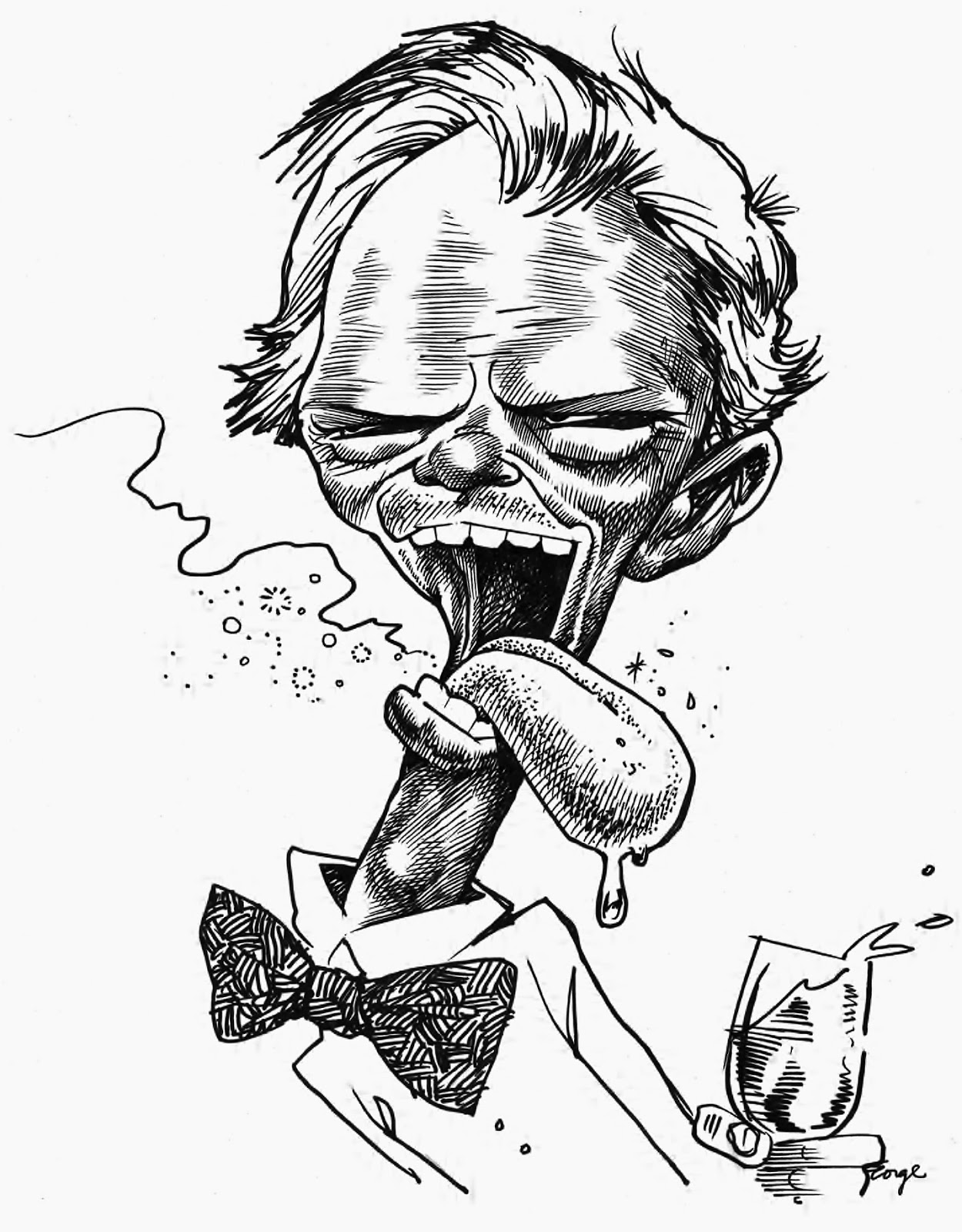
Which may be what Mr
Soccio meant by his "flight to safety: ... I think a lot of commodity
markets are going to be really shaken by this result until we can fully digest
it," he said. "The same goes for currency. These sorts of currency
shifts are going to take a while for commodity markets and financial and
general equity markets to recalibrate."
So. It's a matter of wait
and see. As I suggested earlier. Duh.
In the meantime, the
exporters of Australia's biggest discount wines to the traditional United
Kingdom market are in very deep trouble. Whether they can continue to screw our
embattled growers by convincing them to stay in their current unprofitable horror remains to be seen.
Cruelly, Brexit may simply
finally force the closure of a huge part of the big irrigation, high-volume,
minimal-profit market, when no amount of political wrangling over water and global
warming and whatnot will ever achieve the same harsh result.
No federal politician has
been game to face this.
As for that premium end
where the profits reside? Those little strugglers with the unconfirmed orders?
Right now, they're not
much better off.
So what has our Prime
Minister got to say about all this, with an election staring us down?

"I remind Australians
that, given that we are living in a world of great opportunities, but also
great challenges and uncertainties, now more than ever Australia needs a stable
majority Coalition government," he said.
I reckon that's worth another
"Duh!"
Hang both houses, I say.


For further reading check John Cassidy in The New Yorker or a local ABC take on the same. In the meantime,

Subscribe to:
Posts (Atom)


