“Sod the wine, I want to suck on the writing. This man White is an instinctive writer, bloody rare to find one who actually pulls it off, as in still gets a meaning across with concision. Sharp arbitrage of speed and risk, closest thing I can think of to Cicero’s ‘motus continuum animi.’

Probably takes a drink or two to connect like that: he literally paints his senses on the page.”


DBC Pierre (Vernon God Little, Ludmila’s Broken English, Lights Out In Wonderland ... Winner: Booker prize; Whitbread prize; Bollinger Wodehouse Everyman prize; James Joyce Award from the Literary & Historical Society of University College Dublin)


.

.

.

.

24 June 2011

FOSTERS' EX MISTRESS NEEDS NEW GENIUS

WHO ON EARTH DOES FOSTERS' WINEY OLD EX EXPECT TO ANSWER THIS AD? THE GALLO FAMILY?

Big Brewsta's Winey ExSqueeze
Drops Plot In Zerko B-Search:

New Glam Saviour Puh Leeze!!
by PHILIP WHITE

This is an advertisement from Treasury, the huge wine group which includes Penfolds and Wolf Blass, which Fosters the brewer has decided to sell. In this small matter (surely) of a job ad, DRINKSTER is alarmed at how long it takes these types to get down to the matter in hand: selling good wine.

Not to mention the English language, which the applicant must speak.

In this spirit we have included images of some of the types we are certain would never ever apply for such a position, and would have much less chance of filling it if they did.


LIKE WHO? MARY PENFOLD?

Associate Interactive Producer Napa CA Sales and Marketing Treasury Wine Estates

# 741820 ... Type of Work: Full Time ... Visit Website: https://secure.pageuppeople.com/apply/556/gateway/?c=apply&sJobIDs=741820&SourceTypeID=175&sLanguage=en

Description:

The Associate Interactive Producer is both the lead consultant and project coordinator for all interactive-related programs. This person not only manages projects, they drive them. They are responsible for evaluating client and company challenges, defining and offering solutions, and ensuring the overall quality of projects. Interactive programs include, but are not limited to: website redesigns and updates, landing pages, emails, iPhone apps, iPad apps, social media and mobile marketing initiatives.

MAX SCHUBERT?

KEY RESPONSIBILITIES & ACCOUNTABILITIES

• Manage the execution of brand-specific interactive marketing programs, including all project management, scheduling, trafficking, budgeting and creative production.

• Partner with Print Design to ensure current and consistent asset usage across all marketing channels.

• Provide scope of work and project estimates for client approval, bidding pieces out as needed.

• Develop creative solutions, producing artwork internally and outsourcing as needed.

• Route and obtain necessary approvals on all project elements.

PETER GAGO?

• Manage relationships with outside vendors and other creative resources.

• Facilitate weekly project status meetings focused on program execution issues, including communication of key deliverables, timelines, upcoming milestones and the presentation of creative assets.

• Ensure all deliverables are on time, on budget and executed at the highest level of quality.

• Maintain project management systems and tools, ensuring complete and accurate project records.

IAN HICKINBOTHAM?

• Train clients and other partners on departmental tools and processes.

• Build strong relationships with clients based on thorough planning, timely and professional communication, and intelligent problem-solving.

• Stay current on new technologies and functionality as they pertain to the business.

PERCE McGUIGAN?

• Collaborate with key cross-functional teams to hindsight programs and evaluate marketing efficiency.

QUALIFICATIONS & EXPERIENCE

• BA/BS degree.

• 3-5 years experience in an Interactive Production/Web Development role.

• Extremely strong project management skills.

• Proficient in HTML, CSS, basic JavaScript and Adobe Creative Suite.

RAY BECKWITH?

• Proven ability to juggle multiple projects and stakeholders in a dynamic environment.

• Strong creative eye and ability to make visual recommendations.

• Working knowledge of database interfacing, specifically website development and integration.

• Understand the basics of search engine optimization, pay-per-click advertising, and social media marketing.

• Extremely detail-oriented and organized.

• Proactive, with an affinity for problem-solving.

• Demonstrated ability to execute according to plan and deliver measurable results.

MARK ZUKERBERG?

• Excellent written and oral communication skills with peers, management and cross-functional teams at all levels.

KEY DECISION MAKING IN THIS ROLE

• Ensure that creative look and feel is always consistent with brand standards.

• Daily prioritization of projects - based on brand, timeline and impact on business.

• Recommend new media channels and ways of working as business needs evolve.

ROSS WILSON?

KEY CHALLENGES IN ACHIEVING GOAL(S)

• Managing multiple brands effectively; we have several clients and projects at any given time, and the service level must stay consistently high.

• Marketing teams are lean and people are responsible for a lot; this person will need to be extremely proactive and solution-oriented.

• Technology; while we are improving, there are limitations.

[reader: this is whitey intruding ... notice how frequently the words wine and gastronomy have been mentioned ... oh, sorry dear, there's a bit of that coming now]

ABOUT TREASURY WINE ESTATES

We are a wine company of remarkable history with over 50 exceptional brands and a culture that encourages creativity and recognizes high performance.

We see our role as making wines for all palettes [sic] around the world and marketing them to the world.

Your opportunity is to join a consumer focused company listed on the Australia Stock Exchange with a truly global presence in Australia, North America, New Zealand, Asia, Europe, Middle East and Africa.

We offer a diverse range of roles across sales, marketing, supply chain and corporate functions in some of the world’s most beautiful locations.

The jobs at Treasury Wine Estates are so great that we won Melbourne’s Ultimate Job competition in 2010.


TO APPLY:

If you are interested in this position please apply online. Go to www.treasurywineestates.com to submit your resume and apply online or click on the following link: https://secure.pageuppeople.com/apply/556/gateway/?c=apply&sJobIDs=741820&SourceTypeID=175&sLanguage=en


No recruiters or phone calls, please.

Treasury Wine Estates is an Affirmative Action/Equal Opportunity Employer
Salary Information:
Competitive
Contact Information:
Treasury Wine Estates

this advertisement was placed here free by DRINKSTER ... any fosters or treasury folks who'd like to learn the difference between palate and pallets and pallettes may like to have their people call my people

STOP PRESS:

Australia's defence industry has a job to match but a much more honest description of such:

Aircraft Armament Technicians maintain the aircraft weapon systems from the computers on board through to the actual missile or bomb and play a critical role in Australia's defence.

Job Details

Other Ranks (Technical)

The Armament Trade is responsible for the ongoing handling & maintenance of Armament systems, weapons and equipment at either flightline or workshop level. Accordingly, within normal employment and supervisory guidelines, Aircraft Armament Technicians are employed on duties which include aircraft flightline handling and replenishment; inspection, removal and installation of aircraft components under normal supervision at all levels of maintenance; employment in Armament workshops; disassembly and reassembly of aircraft components; preparation and use of aircraft support equipment; manufacture and repair of Armament based electrical looms; identification and demanding of aircraft spares; preparation and packaging of Armament & technical equipment for transportation and amendment and maintenance of technical publications; inspection, maintenance, servicing, repair test and fault diagnosis of electronic and mechanical armament components and systems; service of pneumatic and hydraulic components and systems, associated explosive ordnance and other weaponry.

You will be responsible for maintaining the aircraft weapon systems from the computers on board the aircraft through to the actual missile or bomb. As part of a team, you will also prepare, load and handle various aircraft weapons such as practice bombs, aircraft gun systems, unguided and guided bombs, air to air missiles, anti ship missiles and torpedoes. You'll also maintain ejection seats and aircraft fire extinguishing systems. With further training, you will learn how to become a Demolition Operator to safely dispose of unexploded or unserviceable ordnance and pyrotechnics. Demolition Operators can also go on to undertake more specialised training in Improvised Explosive Device Disposal and Explosive Ordnance Disposal.

Working Conditions.

The working environment varies because of the nature of the work encountered. Members are often exposed to outdoor conditions and inclement weather, cramped or awkward working positions, confined working spaces, poor light conditions, and aircraft, machinery and equipment noise and vibration. Where possible, work is performed in shelters, hangars or workshops that offer protection from inclement weather. Workshops may be of the open structure or climate controlled type, depending on the maintenance performed. Work may involve being deployed to other bases in Australia and overseas. It is often performed outside normal working hours and during stand-down periods.

Hazards.

Inherent hazards exist in tasks associated with aircraft, Armament and engine operations, explosive ordnance, electrical supplies, toxic materials, Ionising and non-Ionising radiation and cryogenic liquids. Tasks require constant care and development of safe working habits to avoid injury. Minor cuts and bruises may be sustained, but the possibility exists of sustaining more serious injury from machinery, plant, equipment and operational aircraft systems. Personal protective equipment is provided where necessary, and its use is enforced.

Physical Effort.

Some handling of both light and heavy tools and equipment is involved in daily tasks, with an occasional requirement for considerable strength for lifting and handling equipment, jigs, machinery, tools and components. While the physical effort required is normally low, on occasion, heavy and awkward objects must be manoeuvred in confined spaces.

Manual Dexterity and Physical Co-ordination.

A high level of physical co-ordination and manual dexterity is required to perform tasks that involve the operation of hand and power tools, and machinery. Close tolerance fits of components, sometimes large and heavy, also requires that dexterity and co-ordination be of a high order.

Speed and Accuracy of Movement.
A high degree of accuracy of movement is required for most tasks; however, rapid response or great speed of movement is not normally required.

Contact with Others.

Armament Tradespeople are required to frequently interact with other technical trades, engineering officers, aircrew and civilian staff. Because of the nature of their work, Armament Technicians have a strong teams based culture. Although many tasks can be completed by individuals under supervision, Armament Technicians must be able to work together to achieve their tasks.

Probability and Consequence of Error.

The probabilities of error normal to all engineering trades exist. High explosive weapons are designed to be safe to handle but equally, are designed to cause serious damage, injury and/or death if handled incorrectly. Errors in workmanship may also lead to expensive wastage of components and/or materials.

Responsibility for Money and Material.

The job does not involve any responsibility for the care of money. However, accounting responsibilities require the custody and correct use of valuable technical equipment, tools, machinery, publications, materials, job items and other military assets.

Trade Criticality.

The duties of an Armament Tradesperson are critical to the operational effectiveness of the RAAF. The trade performs a critical role in exercising judgement to ensure continued integrity of the Armament systems and equipment. A high standard of workmanship is necessary to satisfy airworthiness requirements with the RAAF.


Handling of Classified Documents and Equipment.

During the course of duties, Armament Tradespeople will be required to handle classified documents and equipment.

Employment Areas.

Armament Tradespeople are employed (almost exclusively) within areas that require dedicated Armament specialists to deal with explosive ordnance and weapons systems that deliver them. There are also some specific supplementary support roles that require armament expertise in non-aircraft roles.


PETAGNA: GOD AND DEVIL DANCE IN SHED

CLICK ON THIS QUIET PETAGNA VINTAGE LUNCH TO WATCH REVIEWS OF GOD AND THE DEVIL

COLES EARLY HERO IN PLONK HEALTH WAR

McLeod Shocks Plonky Lobbyists Coles Boss Raises Bottom Dollar Woollies Fosters & Lion Up Next?
by PHILIP WHITE

The wine industry stands indicted, shocked, and stone silent at the news that Coles, the huge retailer which the wine biz proudly hates for its discounting, has announced that it will dramatically raise the price of its cheap booze, starting in Alice Springs.

Coles’s savage duopolist rival, Woolworths, has indicated it will follow suit to one degree or another, and other key retailers are following these biggies.

Coles’s dramatic change comes into effect on July 1st.

This bold action by Coles managing director Ian McLeod (pictured top), follows years of intensifying lobbying by quiet and persistent original people, often senior women, and others like Russell Goldflam, Principal Legal Officer of the Alice Springs office of the Northern Territory Legal Aid Commission, Dr John Boffa, of the NT People’s Alcohol Action Committee, and one deeply troubled Lutheran pastor in The Alice, Basil Schilds.

This writer admits to having been, from afar, in there with them, and can guarantee that the ignorant hatred one can expect for taking such a stand is withering and constant. To the talkback glued-on, I have become “that posh racist wine snob bloke in bloody Adelaide who’s trying to put the price of booze up so we can’t have any.”

To the wine refinery owners, be they faceless transnationals, revered family-based companies, or indeed Woolworths itself, I am somewhere between an “idjit communiss” and a deplorable, ravaging wowser shit.

Coles’s heroic initiative flies directly in the face of keen and persistent wine industry lobbying against minimal pricing schemes proposed in turn by the health lobby. The winos also hate the excise tax which former Treasury boss Ken Henry wants government to apply to all alcohol: they spend a motza feeding slick lobbyists to fight this, although Henry's logical impost on the amount of pure alcohol in each container would equalize the tax rates across all booze, so cheap plonk gets more expensive, and expensive wine becomes less so.

The current scheme, with its totally deceptive name – the Wine Equalisation Tax - is completely, unequivocally biased in favour of the cheapest, most destructive plonk. The more effort you put into growing and making a really good clean wine, the more government will tax you. Use ridiculous amounts of irrigation water to make desert goonbag quality, three times the strength of average beer and generally full of sugar, and the government expects so little tax that you can sell this swill for less than the price of bottled water.

The old Coles/Woollies/wine industry axis has long enjoyed pumping plonk into places like the Alice at 25 cents per standard drink.

Both Prime Minister Gillard and opposition leader Mr. Abbot have been through the Red Centre lately, uttering great amounts of froth and bluster without showing the slightest hint of knowing how to fix the dread destruction that impossibly cheap alcohol wreaks in such communities.

25 cents per standard drink? Four for a dollar? You gotta be kidding.

“Coles’s action provides a model of good social policy without having to wait for government to come on board,” Rev. Schild said.

“I’m hoping the Fosters group and Lion Nathan might also be inspired to consider what positive work they could do, in particular to stop supplying those bars in Alice Springs that are open at 10AM and full by midday,” he continued.

“They cannot in good faith continue to subscribe to so-called Responsible Trading Practises and to continue to supply into those communities that are so desperately struggling with high rates of killing and addiction.

“To continue to supply into those communities is almost criminal.”

Rev. Schild knows what he’s talking about. He says of the last hundred funerals he’s conducted that two were for white people and eighty per cent involved alcohol. He cites little kids in his congregations who attend almost one funeral a month, burying friends and family who have died savagely and quickly from alcohol-related violence, or slightly less dramatically by more gradual self-inflicted alcohol damage.

Ian McLeod cites a letter Rev. Schild wrote describing his last decade in the Alice as the key factor which triggered his decision to back off with his discounting. The letter also went to Fosters, Lion Nathan and Woolworths.

“I told them that by the time those children are ten years old, some of them have been to a hundred funerals. Which is tragic, awful but very real here," Rev. Schild says.

"While in the rest of the country we talk about the gap in life expectancy between white and black being twenty years, in central Australia, that gap is actually forty years. The average age of women I conduct funerals for is thirty nine, the average age for men is about thirty seven.”

Coles will suspend its national liquor promotions in Alice Springs from July 1. Its minimum price will be $7.99 for bottled wine. It will no longer sell the popular two litre bladder packs or $2 cleanskins. Its minimum price of a standard drink of wine will be $1.14. The one litre bladders beloved by tourists will be $15, or $2 per standard drink.

In a statement that drew only disbelieving silence from the big wino lobbyists and the industry’s great councils, McLeod promised that the changes will be considered for introduction in other Australian stores "where there are sensitive community issues to manage."

Australia pays well over $15 billion a year on alcohol-related health problems and damage, much of which derives from cleanskin and bladder pack wine. Half of the wine Australia drinks is bladder pack. Half Australia’s wine comes from South Australia. The SA wine business is worth about $2 billion.

Put very roughly: $2 billion, or even $4 billion income for $15 billion loss won’t stack up in anybody’s language.

But it gets worse. Consider where the bladder packs come from. This business, and its international success, depends upon three breath-taking presumptions. One is an artificially soft Aussie dollar. That’s gone the way many of us believed it must inevitably go. Sales in the USA have withered in direct proportion to the price hike which resulted from the Aussie Dollar going back up to where it should be.

The second is a tax system biased incredibly in favour of the manufacturers of the most destructive plonk. This seems more and more tentative, especially now that Coles has admitted that some communities are better off paying more for their booze. I mean, Coles should know.

The third is an endless supply of impossibly cheap water for the irrigators of the Murray Darling Basin, where this wine is grown and made. Apart from the current deceptive flooding, which fell from the sky during the second wettest vintage in history, we know there is not enough water in the system to keep supplying this business in the way it would prefer.

There are entire communities from Blanchetown to Burke which are suffering disgusting economic, social and mental damage because they cannot continue to make a living attempting to supply transnational wine refineries, who supply Coles and Woolworths with cleanskins those retailers can profit on at $2 a bottle, or bladder packs to match.

This situation, where businesses profit from destroying communities in the Murray-Darling Basin by determinedly producing rotgut which we then tip into the people of the dry river beds around The Alice, where it kills them, is increasingly unlikely to survive.

Add the $15 billion worth of alcohol-derived public health damage to the total cost of fixing the human and environmental destruction along the Murray-Darling, and you’ll have a very big number indeed.

If the brave and surprising Mr McLeod can see that his policies are destroying one end of the equation, it cannot be long before he starts to think about the destruction wrought at the other end: the source.


STOP PRESS:


Alice Springs Council now opposes Coles/Woolworths attempt to alleviate the Red Center's alcohol horror:
http://www.smh.com.au/national/alice-springs-council-protests-against-cheap-alcohol-ban-in-woolworths-and-coles-20110628-1gp5a.html

Murray-Darling wine councils in dire financial crisis: http://www.weeklytimesnow.com.au/article/2011/06/29/351141_horticulture.html

More growers quit along the River:
http://www.abc.net.au/rural/news/content/201106/s3255402.htm
.

22 June 2011

BUKOWSKI & GLADSTONES HAVE A WRITE


Putting The Terror Back Into Terroir Dr John's Second Epistle No Emo In This Chill Memo
by PHILIP WHITE

Let me read you the first bit of a poem by the late lyric genius of the bottom of life, Charles Bukowski. The poem is called My Failure, and it starts like this:

“I think of devils in hell
and stare at a
beautiful vase of
flowers
as the woman in my bedroom
angrily switches the light
on and off
we have had a very bad
argument
and I sit here smoking
cigarettes from
India
as on the radio an
opera singer’s prayers are
not in my
language.”

Now, I know I don’t have to say this because you know it already but in the stray shard of a chance that somebody didn’t know it, I have to say that when you read a poem by Charles Bukowski you can actually feel the warts he got in his throat from all those cranky decades of abuse and intensely deep enjoyment and annoyance. You can smell the perfidious miasma of his lungs a-gurgle with his tobacco juice coming out of your mouth, and you want to fart and scratch your balls out of suspicion and guilt. If you got any. If you don’t, from my knowledge of the situation, you’re probably a woman, in which case you either hate Bukowski like the lady with the light switch when she turns it ON, or you love him unswervingly like the one who turns it OFF.

I’m talking about balls, not suspicion and guilt.

And the look of him.

Which leads me to this important new book I anxiously received for review from Wakefield Press. I can’t manage to hear the words Wakefield Press without thinking of the bumptious Christopher Pearson, who once owned it, one way or another. Now he writes a hard right Roman Catholic de facto Fr Frank Murray sort of a litany for Rupert’s last fish’n’chips tablecloth, The Weekend Australian, and has nothing to do with the brave little publishing house the taxpayer originally funded, thanks very much. I can’t think of the Wakefield Press without thinking of Pearson.

The new Wakefield Press book is Wine, Terroir and Climate Change, by John Gladstones (below). I’ve always regarded Gladstones as a genius, if a happily troubled one. He’s a grand godfather of modern Australian viticultural science, whose previous bible, Viticulture and Environment has been my constant reference companion for the last two decades.

Which is a habit espoused too by former Petaluma winemaker Brian Croser, who has written a blurb for the back of Wine, Terroir and Climate Change. “John Gladstones’ intricately researched understanding,” Croser writes, “of climate mechanisms and history, geology, soil and biology has created a welcome antidote to climate hysteria.”

A quote which for some reason reminds me of the bleat of that nerdy pinup of Australian industrial viticulture, Dr. Dick Smart, who told the Wineries for Climate Protection conference in Barcelona last week that “Many of the concepts behind organics and biodynamics are nonsense. They’re not good for the environment … When people buy food they don’t mind choosing products that have been grown on land treated with chemicals, so why should they care about how a wine has been treated?”

Which means that scientifically I can’t read Gladstones’ book without thinking of Dr Dick, and Dr Brian, who, coincidentally, was Pearson’s deeply caring and fearfully respected Head Prefect at Scotch.

Putting all that aside, I have tentatively probed Gladstones’ latest huge message, but withdraw repeatedly from it, for fear of it. It seems from the first hundred pages to be a typically forensic dissection of what’s going on, finishing with his splattering – with a mallet, not a scalpel – of biodynamics.

All that icy, precise analysis ends in a sledgehammer massacre.

Unlike a Bukowski jewel, Gladstones’ new work needs to be read many, many times to be digested and understood as thoroughly as it deserves. I shall no doubt be doing this, especially as an errant plunge ahead into the second half, Climate Change, reveals that over the last century, or century and a half, Gladstones believes that “of about 0.6ºC recorded temperature rise, half can be ascribed to variations in solar irradiance and magnetic field, and the rest probably to anthropogenic [human] causes. But much of the latter can be shown to derive from mistakes and biases in the thermometer record … ”

Great brain porridge here, if a little Plimerish at first sniff. GM breakfast replaces the morning dung. But it leads to a pondering of that mystifying buffer zone between science and religion, between reality and marketing, flavour and feeling, which, unfortunately for these slide-rule boffins, influences many, many wine buyers.

Humans are the single biggest aspect of terroir. All that dandy fluff about landscape, geology, climate and aspect provides an obvious mass to the old French theory of terroir, but whatever you think, the human intervention factor is the biggest when it comes to tipping somebody’s works into one’s own personal body.

I can’t drink a Croser wine without thinking of its maker. And those makers, like Croser, whose financial success depends almost entirely upon their missionary marketing zeal and the tireless zealotry with which they promoted themselves as vastly superior to their rivals.

Put very simply, it’s like Bukowski. You don’t have to know anything about his guttersnipe life to feel the HIM in his poems. But then, whether he believed it or not, he was a great poet. Only great winemakers can really influence terroir for the betterment of their wines, and these include those sufficiently sympathetic and sensitive to their piece of country that they can actually begin to improve its health, which may lead to an improvement in the flavour of its produce.

In my experience, those who claim to pursue biodynamic and organic practises generally produce flavours which are superior, from the vineyard up, to those who by rote apply the Monsanto/Adelaide University/hardhats/safety boots/petrochemical approach to sugar mining by industrial grape farming and dry, biochemical wine manufacture. By their very nature, the gentler, generally more caring folk have healthier gardens. They spend more time there, and are much more sensitive to the whims, folds and crannies of the land they farm, and the life abundant in it.

When they pick their fruit, they ferment it with similar sensitivity and respect. Of their grapes, and their customers. And themselves: their reputation.

You can taste it.

Which lies in stark contrast to the blank sky-to-sky Nuremberg Rally of the sort of mindless industrial viticulture proposed and practiced by those huge companies which have spectacularly failed, taking thousands of tragic grape-growers with them as they lose billions. Billions.

Because these wines have no human face, their addicts are more like those poor humans addicted to the drugs peddled by the biggest transnational pharmaceutical entities.

Similarly, the cleanskin racket mimics the way illicit drugs are dealt. There is no face.

I tend to favour great wines which remind me fondly of their maker. I can see the face.

If Colonel Sadness had catered for the five thousand with loaves and fishes, or McDonald’s, I doubt that history would remember them quite the same way as it does Our Lord Jesus Christ.

Gods aside, humans are the biggest aspect of terroir, see.

Respect of the law makes it impossible for me to give you a list of wines which I cannot abide in the gullet for my rotten memories of those who made them. Their prayers are not in my language. I could sing of vast cellars of wine which I cannot approach for the memory of the horrid drunken car ride their maker inflicted; the leering misogeny; the lies about illegal winemaking practises; the racist attitude to China; the bullying of, and withholding of payment from honest to goodness subcontractors; the lies we can suddenly follow on the internet as we track wandering Ocker winos around their evangelical tasting trails; the lies to the shareholders; those who brutally flog impossibly cheap ethanol to communities which simply cannot handle it; and not the least the brutes who habitually bugger their country whether it’s getting hotter or not.

There are far too many wines adorned with heap bling from the show circus which I simply cannot stomach for my bilious knowledge of their makers and their practices.

Which is one of the reasons these people absolutely hate reading me: they can smell me and my dangerous and disrespectful errancies in this ink.

If I want to taste warts in my throat, I’ll drink Bukowsi.

“I realise hell is only what we
create,” he resolves,
“smoking these cigarettes,
waiting here,
wondering here,
while in the other room
she continues to
sit and
switch the light
on and off
on and
off.”


My Failure excerpts are from The Pleasures Of The Damned – Poems 1951-1993, by Charles Bukowski (Canongate, 2007). I promise to write much more of John Gladstone's book as I begin to comprehend it. I see it, and the interminable discussion it will trigger, as a perfect handbook for the research that should be conducted on Glenthorne Farm.

SEAFORD HEIGHTS - LAST BID FOR SANITY

TRACTOR ACTION: THE FIRST BIG McLAREN VALE DEMO AGAINST THE LABOR GOVERNMENT'S SEAFORD HEIGHTS HOUSING DEVELOPMENT SAW THE MAIN ROAD CLOGGED WITH MANY MANY TRACTORS photo LEO DAVIS

Environment Resources Development??? Last Diplomatic Card Dealt ??? Patience Running Out??? You Betcha!!!

In about nine hours the Environment, Resources and Development Committee, made up of selected parliamentarians, meets to rubber stamp the stupid Seaford Heights housing development in some of the best vineyard or agricultural country in Australia. I managed to gain approval to have this document filed at the last minute.

Mr. Phil Frensham,
Executive Officer,
Environment, Resources and Development Committee,
Parliament House,
North Terrace,
Adelaide 5000.

Tuesday 21 June 2011

REGARDING SEAFORD HEIGHTS


Dear Phil and committee members,

understanding some of the principles your committee must stick to, I appreciate that it seems unusual that a citizen might attempt to place information before it this late in the piece.

However, given that most of the residents of the Willunga Embayment, including the McLaren Vale Grape Wine and Tourism Association, had barely 48 hours to engage in any consultancy relative to the Seaford Heights development, I feel that there are several urgent matters which need to be on the record.

These are vital instances of difference between the proposed Seaford Heights development as it now seems to stand and the government’s 30 Year Plan.

I quote items from the 30 year Plan:

Pg 3

This Plan will “Focus on creating mixed use precincts that bring together housing, jobs, transport, services, recreation & leisure”.

The current Seaford Heights plan, as approved, fails to fulfill this promise.


Pg 4
“Develop suburbs and neighbourhoods which are connected and represent world’s best practice in sustainability and urban design.”

There is no indicator that the Seaford Height plan, as approved, will fulfil this promise.

Pg 11
“The urban form needs to be more compact to avoid sprawl and the unnecessary expansion of residential and commercial activity into lands of environmental significance or lands that are vital for primary production.”

As the Seaford heights site is of exemplary farmland importance (it is famous for regularly growing barley with the highest sugar yield of any site in South Australia); and represents the region’s last chance to place vineyard on a small piece of priceless and rare geology which we know is capable of producing some of the best and most profitable Australian wine, there is absolutely no evidence that this suggestion has been heard or understood by anybody in the planning process thus far.

Pg 13

Further Principles of the plan:

“5) World class design and vibrancy”

The Seaford Heights proposal, as approved, is not of this standard.

“7) Heritage and character protection and enhancement”

The Seaford Heights proposal, as approved, destroys this site’s internationally-significant heritage and character.

“10) Economic growth and competiveness
12) Environmental protection, restoration and enhancement 13) Natural resource management”

The proposal totally ignores these aspects of the site’s unique agricultural potential.

“14) Community engagement”

There has been virtually NO wide community engagement other than a rushed amalgam of opinions from McLaren Vale Grape Wine and Tourism, the Onkaparinga Council, and perhaps a few community activists. Any resident of the Willunga Basin other than these people knew little of the development until it was approved.

Since then the plan has been changed significantly.

Forgive me if my limited legal capacity has this wrong, but I am of the understanding that there must be a new round of community consultation every time the development plan is significantly changed. I ask whether in fact this is the case, and if so, how many times was the original approved plan changed significantly without consultation?

Pg 29

“Greater Adelaide is a highly desirable place to live because it has an urban character typified by historic precincts and villages such as McLaren Vale”

and

“a central position in the nation’s wine industry… SA contributes 46% of Australia’s total wine production and generates up to $3 billon in gross wine revenue”

Even ignoring the tourism economic multiplier, the Seaford Heights plan as approved ridicules these obvious facts.

Pg 40

Paraphrase: “Decisions about land use over a 30 year period cannot be made definitively at the beginning of the period”.

The Seaford heights decision was made even before the beginning of this 30 year period, but there has been ample opportunity to reverse it or improve it.

Pg 56
“Chapter C – the vision for greater Adelaide: • maintaining and improving liveability increasing competitiveness • driving sustainability, environmental protection and resilience to climate change”

The Seaford Heights plan, as approved, ridicules these points.


Pg 59

Principle 13 includes avoiding irreversible damage. Building on some of the oldest and best agricultural or grape growing land in Australia is irreversible.

Pg 62

Places emphasis on good design and creating unique precincts, which the approved plan completely fails to do.

Pg 106

“Policies 11) protection of strategic areas for horticulture, viticulture, dairying and grain production.”

Ditto.

There is one essential international example of what could be done on Seaford Heights.

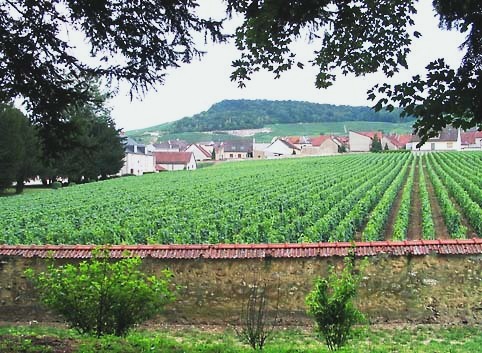
In Champagne, France, there is a medieval walled village of 2-3 storeys called Mesnil.

The houses are outside the wall. Inside the wall is the Clos du Mesnil vineyard, which is owned by Champagne Krug. The Chardonnay fruit of this vineyard goes into one of the world’s most revered Champagnes, which sells for thousands of dollars per bottle.


So, instead of providing a buffer zone to hide the proposed housing from view, why can’t we design a three to four-story intensive residential development to be built on the currently approved buffer zones, and develop a world-class vineyard within the ring of houses, where the best and least polluted ground lies.

People would come from all over the world to visit such a place.

It seems the prohibiting presumption is that the proposed housing is to be so unsightly that it must be hidden from the public view.

Why can’t we have an urban-rural development of such creative beauty that people will actually desire to view it, live in it, visit it, and spend money in it?

Is this State of such intellectual decrepitude that we cannot envisage and build something which will draw the admiration, respect, and money of the world?

Can’t government manage to follow its own 30 Year Plan from the start?

It seems to many of us that this first chance at it is being squandered in the most stupid and unimaginative manner, and will always serve to undermine any good will remaining between government and those of us who are passionately keen to see South Australia retain such vitally important slices of country.

Thankyou for your consideration,

Philip White
.FEDERAL LABOR PARLIAMENTARIAN AMANDA RISHWORTH'S CAMPAIGN POSTERS WERE STOLEN FROM POWER POLES AND STAKED ALL OVER SEAFORD HEIGHTS DURING THE LAST ELECTION CAMPAIGN