“Sod the wine, I want to suck on the writing. This man White is an instinctive writer, bloody rare to find one who actually pulls it off, as in still gets a meaning across with concision. Sharp arbitrage of speed and risk, closest thing I can think of to Cicero’s ‘motus continuum animi.’

Probably takes a drink or two to connect like that: he literally paints his senses on the page.”


DBC Pierre (Vernon God Little, Ludmila’s Broken English, Lights Out In Wonderland ... Winner: Booker prize; Whitbread prize; Bollinger Wodehouse Everyman prize; James Joyce Award from the Literary & Historical Society of University College Dublin)


.

.

.

.

25 August 2016

WAUGHS MOVE TO HEART OF MARANANGA

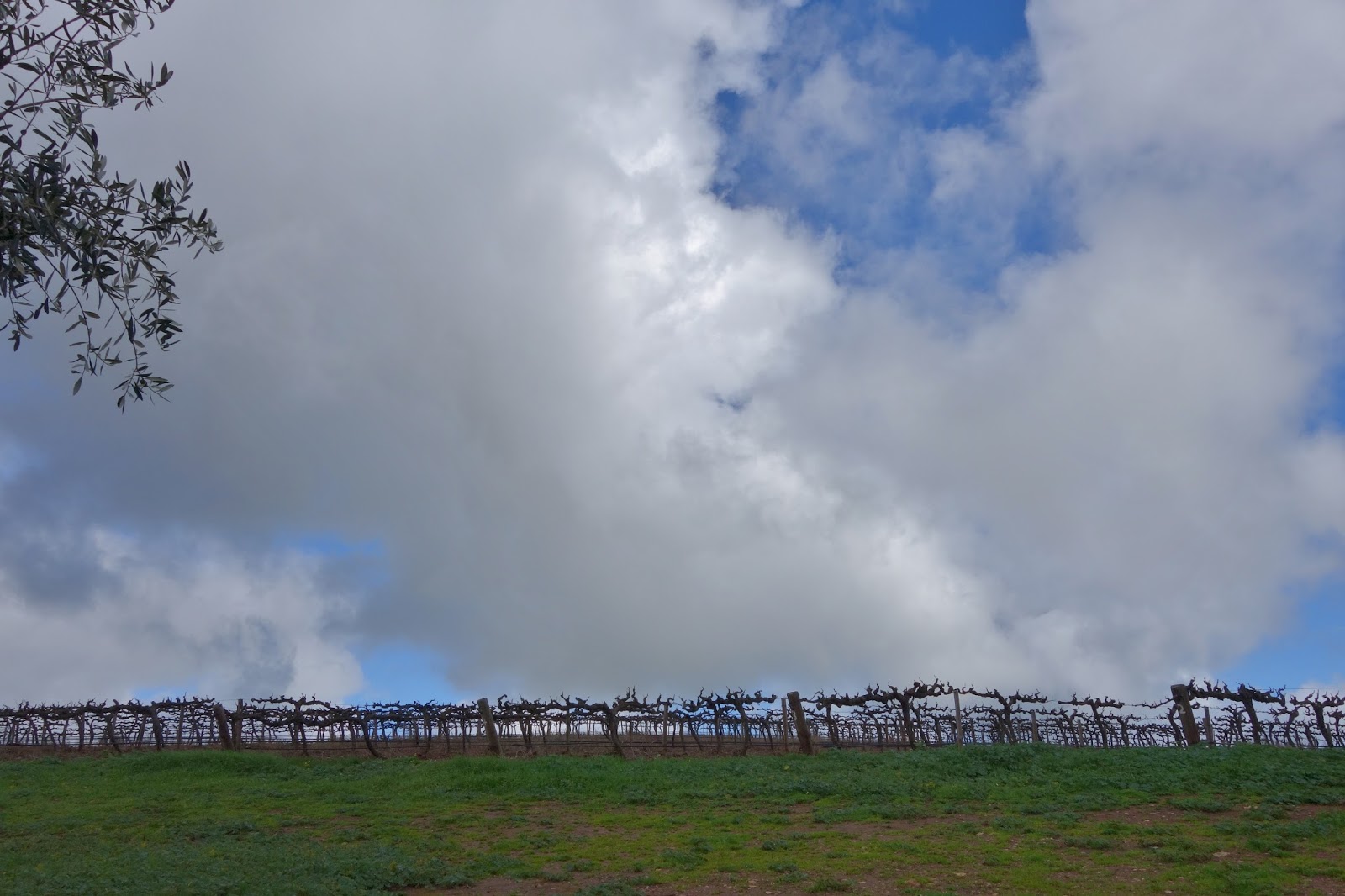
Pruning's done, which means it's time for the annual preview of the next release of reds from Michael and Annabelle Waugh's Greenock Creek Vineyards and Cellars in the Barossa.

Having had all their customer tastings in their home for decades, Michael and Annabelle have bought Derek Jolly's old restaurant/gallery/B&B complex right in the heart of Marananga, about midpoint between their Creek Block vineyard and home to the west, and the Roennfeldt vineyard and winery a couple of kilometres to the east. After a year's renovation, they're now open for tasting and sales in Marananga every day except Tuesday and their home can be their own once more.

That's Michael with the author and our good friends Vern and Jenny Schuppan below. A Booleroo Centre kid and a born go-kart ace, Vern has driven to victory at Le Mans and Monte Carlo, and won seconds and a third at Indianapolis, amongst other great successes during a life on the track. Read it all here.

Discussing autonomous vehicles with Vern's a bit like talking to a bloke who thinks that for now they should each have a man in uniform walking ahead of them with a police whistle and a red flag in the day, a lamp at night ... him and Jenny met at school in Whyalla.

Norty Schluter, Ronnie Lo, yours truly and Cheong Liew. You can read the local geology in the walls behind us: recent ironstone and ancient siltstone and schists covering some 750 million years. 

In 2020  Norty and his family will celebrate 150 years of continuous Schluter ownership of the legendary Greenock Creek Tavern. I suspect that's an Australian record. Norty laughs about having to stay alive 'til he's ninety, because it'll be such a party ... these group shots by Leo Davis ... That's a Barossadeutscher stock trough (below), hewn from a single trunk of red gum at Greenock Creek ... life musta bin tough ... photo by Philip White


The new wines will be available at Marananga from September 10th. From their fifty acres, the release includes five individual vineyard Shiraz wines, two Cabernets and a Grenache. 

After 15 years of dissatisfaction with the dry-grown bush vine Mataro he planted on the Creek, Michael has finally restrained its vigour sufficiently to release the first Greenock Creek Mataro. Asked why he didn't call it Mourvรจdre, he said he thought that was an Italian motorbike.

Folks critical of high alcohol should wallow in the beautiful Cabernets, which sit at 12.5% (2014 home block) and 13.5% (2011 Roennfeldt's). The five individualistic Shiraz wines average 14.6 ... here's a rainbow over Marananga and Greenock Creek below, with the famous Seppeltsfield Para Grenache vineyard in the foreground ... photo Philip White  
 

24 August 2016

THE BUDBURST OF VINTAGE 2017

Sheep rats weeds and wine: first shoots of '17 bring a new green attitude to clean grape-growing
by PHILIP WHITE

After that perfectly wet winter, there is peace in the valley. Budburst has commenced in McLaren Vale, as in other regions, before some farmers have finished their pruning. Bits of the steeper ground have been a bit too dangerous in the bountiful rains, and some of the creek flats stay really muddy after the streams fill and flood. But the sun's been out these last days, it's been unseasonably warm, and they're all on it now: the home stretch; snips clacking.

It's probably my global warming paranoia that has me imagining the new buds are early, but Inkwell Wines co-prop Dudley Brown, whose vineyards are way south at the other end of the region, says this timing is normal there on his California Road patch ... these things vary from one spot to another.

My bellwether indicator is the Pirramimma Chardonnay vineyard (above) which lies halfway between us: opposite The Salopian Inn, on the south side of McMurtrie Road. I emerged from a car there on Friday and yep, budburst: some leaves were already two or three centimetres wide.

Half-way through a perfect lunch it hailed. I squished across to take a look as we left: some of the buds were damaged, but not too many. I've seen much worse in other years. They'll make up for that early blitz.

The author with Kerry Flannagan in August 1984: the first stages of the rebuild of The Salopian Inn, now McLaren Vale's pre-eminent fine dining establishment and a very cool pitstop for the thirsty traveller ... this photo by Steve Richardson; all others by Philip White 


 Zannie Flannagan, co-founder of Prewett's Kangarilla and then The Salopian Inn, in about 1984 ... photo Philip White ... amongst other amazing achievements, Zannie has since played a big role in getting the Willunga Farmers' Market functioning


But back to now. There were other bands of hail belting through different swathes of the Vales over a 24 hour stint, but again, these were mercifully early, narrow and brief.

Budburst is also occurring in the South Mount Lofty Ranges, the Barossa, the Lower Hunter, the Yarra and parts of Tasmania, where things are supposed to be cooler and later ... I suspect that once it's all rounded up and properly considered, we may actually find it to be a touch earlier than average.

I couldn't handle being a farmer. My stoicism doesn't stretch as far as to slave away all year, painstakingly preparing a crop of grapes to produce a beautiful, profitable result only to see it belted by bad weather and spoiled.

But then, I suppose sensible writers never really expect a profit. Gotta remember to build them losses into the International Sonnet-writers' Prospectus before we poets float. Whatterya reckon? Budget for one good crop in ten?

Snigger.

One of the most satisfying aspects of a drive around this district, and increasingly in others, is the way vignerons have learned to use sheep in just a few quick years. Where vineyards were for 35 or 40 years blitzed mindlessly with Monsanto's Roundup glyphosate, growers are finding that while sheep bring the one-off cost of fencing with them, they eat the winter weeds and leave a healthy short sward and a well-dispersed layer of perfectly natural fertiliser pellets behind them.

Then they are rounded-up and removed before budburst. Sheep love those juicy little buds.

The venerable Leo Pech was for many years the representative of the grapegrowers of the Barossa. Very early in this career - like early '80s - the young Whitey went to visit Leo to discuss the state of viticulture. Leo was pruning in the rain. His vineyard looked something like a raked Zen temple garden: apart from the immaculately-pruned vines in the row behind him, and a pad of moss here and there, there was not a blade of vegetation of any other sort.

It seemed to me to be the classic example of recreational cultivation: if there was ever nothing else to do, a good farmer jumped on his tractor and went out and killed everything that didn't make wine. It seemed vengeful and spiteful.

Leo made me wait in the ute while he finished schnipping his row; something to do with teaching the ignorant hack a thing or two about Barossadeutscher stubbornness. When he eventually joined me in the truck he turned the windscreen wipers on so we could see and explained how well-kept and healthy his vines were.

I was brash enough to suggest that if all the vines were suddenly removed in a flash, the field would be completely barren at this, the end of winter, which hardly indicated a healthy piece of ground. Healthy ground is supposed to have grass at the end of winter.

Leo didn't spend much energy hiding his irritation at such blasphemy.

Now, however, we see fewer such grapeyards but grassy vinegardens with sheep everywhere. In future winters, take notice if the vineyard with the sheep is signposted: very simply, those beasties indicate a new enlightened sense of responsibility on behalf of that grower. Support those people with a purchase.

You still see many vineyards betraying their owners' scorched earth policy: fields with no grass at all, or tell-tale stripes of bare earth right below each vine row. These growers are probably still on the old glyphosate regime: a rote cycle shown to kill all sorts of bacteria and bugs, like the helpful micro strands of fungi that keeps dirt rich and alive. Glyphosate has the opposite effect of mulch.

Ewes with lambs cleaning up weeds in a corner of the Yangarra Ironheart Shiraz vineyard

Living as I do in an old cottage in Yangarra Estate's big biodynamic/organic vineyard, I find it a delight after harvest when they put the sheep in. 

It's fascinating to watch the fussy order the beasties show in the types of plants they eat. The girls have already been to visit the boys. When the lambs arrive, they're just hilarious to watch, and one grows to enjoy their bleat.

I had a whinge here earlier in the season about the rodents who prefer to move in by the fire with Unca Phil once the grass is chewed back to a couple of centimetres and there's nowhere for such field mice and rats to hide. To think these wee beasties are so prevalent in thicker fields is another indicator of good pasture health.

Rodents lure raptors. Raptors scare grape-eating birds away.

Roger the Rat II: on his way back to risking it on the range ... he couldn't resist a big dollop of peanut butter with a pistachio on the top after I interrupted him making this mess:

If they aren't poisoned with the sorts of stuff still used widely by many, these critters form what winemakers politely call protein at vintage: the machine harvesters interrupt the rodents dozing, feasting, or frozen with fear in the vine canopies.

Protein makes wine hazy and unstable. Winemakers use fining agents to remove the particles. Better to have no protein in the fruit.

If your crop is picked by hand, most of this gross protein never reaches the crusher/destemmer. Even more finicky bunch sorting, and now mechanical berry selection, will remove all the protein donated by earwigs, ants, millipedes, moths, spiders and whatnot.

So. Here's Yangarra winemaker Shelley Torresan about to load some real clean hand-picked Shiraz whole bunches in to the grape sorter:

... here's what it'll reject if you put crap in there (click, enlarge, see the protein):

... bad berries, grubs, worms, millipedes: machine-harvested 2011 rejection bin botrytis-infected Langhorne Creek fruit ... this is the sort of stuff a good grape sorting machine strips out of your crop to be sent off to distillation ... leaving berries like this hand-picked, machine-sorted 2012 material [presuming there were some berries this good amongst whatever you tipped in there in the first place, it'll polish them like caviar]:

Fortunately, these bugs don't follow the rats and mice in here for company once the sheep have done their job. Which they have, just as those new fluffy leaves emerge; a subtle green wave moving gradually up the hills toward the rim of the Onkaparinga Gorge at the northern end of the vignoble.

Now the ewes are sick of the endless suckling and nudging of their offspring, which are no longer frail wee things. They have eaten no poison, those beauties: no pesticide, no herbicide, no petrochem fertiliser. They've been sorted and sexed and tailed and they're so fat they make me dribble.

Welcome to vintage 2017.

Roundup is now a thing you with the sheep and lambs at budburst ... once they've turned the weeds into fertiliser, you round 'em up before they get a taste for the new vine shoots ... here's  the view south from The Salopian across the faultline to the Willunga Escarpment and the Front Hills as they slide into Gulf St Vincent, patron of viticulturers, at Sellicks


22 August 2016

MORE WINE OLYMPICS BY GEORGE


TIMES ARE A-CHANGIN UP THE BIG RIVERS


Big changes in the irrigated Basin: water worth more than wine; surprise push to organics
by PHILIP WHITE

GoFarm Australia, a Melbourne-based investment group, recently bought the Belvino Investments' 900 hectare Del Rios vineyard near Swan Hill for somewhere around $22-$25 million.

The vendor, bankrolled largely by Hong Kong's CK Life Sciences International, retains 463 ha of vineyard at Balranald. Many expect this to be offered for sale soon.

Planted by Bruce Chalmers in the mad vineyard expansion of the late 'nineties, and leased for years to the troubled McGuigan Wines, the Del Rios vineyard is one of Australia's biggest. It joins GoFarm's 4,200 ha of purchases in the same Sunraysia region last year.

Before you begin exhaling some relieved hope for the future of the beleaguered Murray-Darling Basin wine business, have another coffee.  

While CK ironically withdraws to concentrate on its Cheetham Salt business, also one of the country's largest, it seems GoFarm is more interested in the Del Rios' water allocation: 5,476 megalitres.

GoFarm's chairman, Robert Costa, is a fruit'n'nuts man. They're talking about using that precious water, and that land, to grow almonds.

In last year's report on the state of the viticulture business, Production Profitablity Analysis, the Winemakers' Federation of Australia (WFA) found that grape-growers in the Swan Hill Sunraysia region are enduring as tough a time as the rest of the vast Basin: 88% of the grapes grown there for sale to wineries are sold at a loss, picked at an average of 19.4 tonnes per hectare (about 8 tonnes per acre).

Grapes and almonds tend to shadow-box each other. Respected viticulturer and biodynamics pioneer David Paxton, for example, began life growing almonds in the Murray-Darling and McLaren Vale. The latter region managed to replace most of its almonds with inappropriate grape varieties - like Chardonnay - in the same boom that saw Del Rios planted. Within a decade, international almond prices were soaring as big tonnage irrigated wine prices plummeted.

Follow the Murray downstream across the border to South Australia's Riverland, where the same WFA report found grape-growers enduring a 92% loss at an average 20 t/ha and here we see somebody have a brilliant and brave, if belated idea.

They're mentioning the O word.

Chris Byrne, executive officer of Riverland Wine, the regional body, last week told a big gathering of locals "because of our very low rate of pest and disease the Riverland could well and truly lay claim to becoming the organic vineyard of the world ...

"The emerging populations who are going to be drinking our wines in the future, and particularly in the Asian countries but increasingly also in the European and US markets, are looking for wines grown with less chemical input."

Organic? Riverland? I never believed I'd ever hear such utterance. For years big Riverland farmers have enjoyed ridiculing organic farmers as dukkah producers and fish-slapping hippies.

The notion of big-scale organic farming has always seemed an impossibility to their most vocal and their troubled upstream neighbours.

At which point I expect great irritation that I overlook Accolade Wines' Banrock Station, the old BRL-Hardy enterprise utterly dependent upon big irrigation, but long marketed as an environmental triumph, regardless of the forgettable nature of most of the wine produced there.

Which is why I've mentioned tonnages in the figure above. It's not at all scientific, but internationally, within reason, the rule of thumb is that lower yields per hectare produce better flavours than big tonnages: put water on your vines; get water in your wines.

Speaking very generally, premium, profitable wines begin to appear below 5 tonnes per acre (about 12-13 t/ha).

profitable wines ... photo Philip White

I hear from bemused and enlightened locals that even Banrock's playing with reducing its irrigation in selected parts of that huge grapeyard, to make better wine as much as to use less water.

Mr Byrne has an unenviable job; all strength to him. He went on to explain it can take up to a decade for the conversion to properly kick in: it may take that long for the vines learn to live without the prophylactic mechanism offered by the old high-irrigation industrial regime of petrochem fungicide, herbicide, fertiliser and whatnot. But eventually the advantages of organic management begins to properly kick in and the vines find their own natural balance in their environment. They grow tougher.

Eventually, it's cheaper, and surprise, surprise, if you're smart the wine is better, healthier, more wholesome and environmentally-responsible. Workers no longer have to wear masks and gloves to handle the poisons the old regime mindlessly demands while they make our drinks.

"Once you get into the five to 10-year time frame," Byrne explained, "there is a diminishing cost in terms of those inputs as the more natural growing methods take over. There are longer term benefits ... overall the soils and vines become more sustainable.

"As the world population grows and as their water resource diminishes, we just have to become far more aware of how we optimise the work that we do in the vineyard," he said.

"Investing in these methods of growing has some fairly significant paybacks."

Somewhere between these extremes - replacing vines with nuts vs. growing grapes at a profit with a new enlightenment and pride - lies a glimmer of hope for winemaking in that vast, troubled, terribly mismanaged  Basin.

It will be interesting to see what happens to the next big Murray-Darling vineyard to go: the 902 ha Dunvar vineyard near Griffith has been on the market for months. Will it sell for its water, the quality and worth of its industrial-grade fruit, its potential as a huge organic or biodynamic wine producer or its capacity to grow nuts?

Perhaps the time for the ridicule of dukkah-makers is past. You can make a helluva lot of dukkah from 900 hectares of nuts.

CYBORG WINE BIKER BY GEORGE


LOVELY OAKRIDGE 2015 CHARDONNAYS

A mix of wiser winemaking, better, more subtle oak and cooler vineyard locations has put an end to the rich old butterscotch and honeyed peach Chardonnays that clumsily launched the variety in Australia. By Bacchus they were awkward fat bastards. It's amazing that the market put up with it.

Now we regularly see lovely elegant wines like the annual Chardonnay release from Oakridge: wines which offer more total pleasure at much lower alcohol; wines of a higher gastronomic intelligence.

Something about the warmish season leading to the 2015 harvest saw the disparate vineyards of Oakridge produce a range of aromas and flavours that remind me Cheong Liew's kitchen at Neddy's in the late 'seventies: they're redolent with the aromas of the warm salads he conjured with white vegetables, green salads, tropical fruits and meat. 

Oakridge Over The Shoulder Yarra Valley Chardonnay 2015 ($23; 13% alcohol; screw cap) is a gentle Chardonnay from vineyards at Coldstream, Woori Yallock, Gladysdale and Wandin. It reflects its warmish spring with estery banana, peach and crรจme caramel bits and pieces; even bean sprouts slide around in this pan with the flaming crฤ›pes ... hang on - it's tofu ... a dash of rice wine ... pale soy ... so there you have the food ... it's really good fresh loveliness with clean white flesh as brisk and innocent as cucumber or honeydew. Prawns. Sheesh. Call it an Issye Miyake Chardonnay. 

Oakridge Lusatia Park Vineyard Yarra Valley Chardonnay 2015 ($38; 13% alcohol; screw cap) Move up a gear and you get all the above very lightly fried with straps of pork belly and a squeeze of lemon juice. It's fruit is a good thick jungle step beyond pineapple: there's some jackfruit in here with the smell of a grill of coconut meat, starfruit, cashew, bacon fat and ly-chee ... other smoky hawker whiffs coming off the coals ... you'd think perhaps all these barbecue and wok insinuations may have come from smoky barrels, but the wine saw only big, fairly neutral puncheons. The deeper you delve the more relaxing and mellow the whole deal gets. 

Oakridge Willowlake Vineyard Yarra Valley Chardonnay 2015 ($38; 13% alcohol; screw cap) is another step towards a deeper complexity, which it takes without adding extra flesh or body: instead, we have a finer, more glowering and surly wine. All the fruit salad and pork fat notions of the above adventures are here but in a finer, more focused and finely-honed structure.

And this one has that acrid reek of spent cordite wafting in the quarry. Edgy and dark. It makes it slightly sinister. It's not so much the overtly juicy tropicals as drier fruits like the slightly chalky cherimoya - Annona cherimola - in the wok with a flash of flaming tequila or bamboo spirit.  This wine is more austere, waxy and dry. When I drink them in this order, and go back to the previous two, the gap widens between their open fruity flesh and the tighter, more savoury nature of this Willowlake.

This does have some flesh, of course, with its fruit. It's avocado. Avo. Olive oil. Lemon juice. Black pepper. Spoon. Willowlake. Okay. Have toast. Newspaper. Sunday morning. Any left? Have it with tea-smoked duck at lunch. Hey Cheong, you feel like a duck?

Cheong Liew; paella; Hickinbotham Clarendon vineyard ... photo Milton Wordley
 

PLUCKING THE RED GUITAR BY GEORGE