


26 July 2012
SOMETHING TO CHEER YOU UP

24 July 2012
CHATEAU REYNELLA 175 JOBS GONE

Chateau Reynella photo Kate Elmes
THIS MORNING'S PRESS RELEASES
FROM ACCOLADE AND TREASURY
10:00am July 24, 2012 (Adelaide, Australia)
ACCOLADE WINES MAKES GROUND-BREAKING CHANGE
Accolade Wines and Treasury Wine Estates (TWE) today announced a major transformation of the wine industry entering into reciprocal bottling and packaging contracts that will see Accolade Wines bottle for TWE in the UK and TWE bottle for Accolade Wines in Australia.

Accolade Wines Chief Executive Troy Christensen (left) said the agreements would strengthen the Australian wine industry by improving the efficiencies of both Accolade Wines and TWE.
"This ground-breaking agreement will enable each of us to secure economies of scale in each region," Mr Christensen said.
"Our decision to enter a reciprocal bottling agreement with TWE underpins Accolade Wines continued success in Australia and globally.
"This agreement is important for the thousands of people in Australia and globally who rely on our business, including employees, customers, grapegrowers and other suppliers. It will allow us to put more effort into growing the sales of Australian wine in Asia and North America.
"We are delighted to partner with TWE in the UK where we will undertake all of TWE's UK bottling. This will move to Accolade Park in Bristol which will increase production there by 30pc."
Mr Christensen said changing market dynamics had created surplus Australian bottling capacity which was holding back the Australian wine industry.
"For a number of years we have researched alternatives to avoid outsourcing our Reynella bottling and distribution facility, including relocating assets within the business. No other option delivered such long term benefits.
"We were faced with the difficult realisation that the best option for our business, and for the Australian industry was to ensure that the most efficient facilities were fully utilised even if they were not our own.
"This is a very significant decision for the Australian wine industry as it creates a new paradigm for the industry. It recognises that we are in the business of producing wine and getting it to consumers. Just as we do not own all our own vineyards, or all our own trucks, we don't have to own every piece of equipment that helps us get wine to the consumers' glass."
Mr Christensen said the decision was not taken lightly because it means that 175 employees at Reynella will be made redundant.
"All employees made redundant will receive their full redundancy entitlements and further support in the form of outplacement services to help find new jobs," Mr Christensen said.
Approximately 20 of the redundancies relate to a separate arrangement where Accolade Wines will outsource its Reynella warehousing and distribution to MacKenzie Hillebrand's facilities at Outer Harbor, South Australia.
"We are working with Treasury and separately with MacKenzie Hillebrand on plans that we anticipate will see us fully transitioned by January 2013," Mr Christensen said.

Accolade Wines and Treasury Wine Estates Agreement
There is compelling business logic behind the agreement between Accolade Wines and Treasury Wine Estates.
The agreement recognises that optimum business efficiency is achieved when capacity at the most efficient operations is fully utilised.
The market conditions described above have had negative impacts on Accolade Wines bottling facilities which have not been operating at full capacity for some time. Accolade Wines has made significant efforts to win contract bottling work to keep its plant operational however due to the prevailing industry conditions cited previously there is significant spare bottling capacity within the Australian industry.
Outsourcing Accolade Wines' bottling operation to Treasury Wine Estates in Australia builds on a partnership developed in the UK where Accolade Wines has been producing all European Cask volume for Treasury Wine Estates. Under the terms of this agreement Accolade Wines will now takeover all the bottling for Treasury Wines Estates in the UK.
The business case for the agreement is compelling. The agreement underpins Accolade Wines continued success in Australia and globally. This arrangement enables Accolade Wines to increase investment towards distributing Australian wine in Asia and North America.
All Accolade Wines' brands will still be made from grapes sourced from the same regions, the same vineyards and processed under the supervision of Accolade Wines' winemakers. The only change in the production of our wine will be that the wines will be sent to a different plant for bottling and packaging.
The business relationship between Accolade Wines and Treasury Wine Estates will remain that of principal and contractor. In Australia Treasury Wine Estates will pack for Accolade Wines and in the UK Accolade will pack for Treasury Wine Estates.
It is expected the transition will be completed by January 2013.
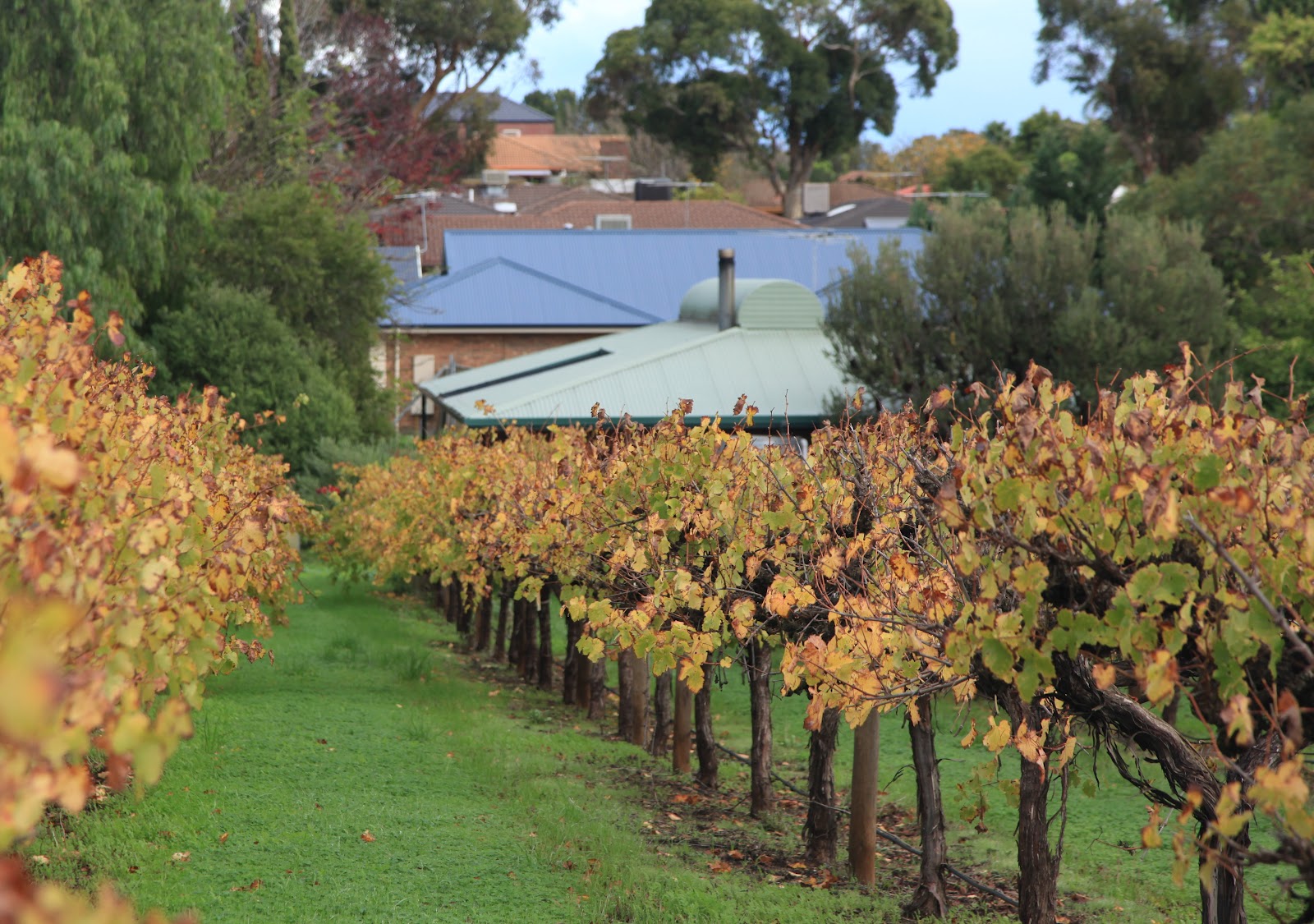
The 2ha John Reynell vineyard Constellation had removed from the Heritage List to make way for the intensive housing which now covers the site.
24 July 2012
TREASURY WINE ESTATES DRIVES SUPPLY CHAIN EFFICIENCY IN PACKAGING
Treasury Wine Estates (ASX: TWE) is pleased to announce it has signed contractual terms with Accolade Wines for new packaging arrangements between the two companies. Under the contract announced today, TWE will pack wine for Accolade in Australia with Accolade packing wine for TWE in the United Kingdom.
Stuart McNab, Chief Supply Officer for TWE said the new arrangements will utilise the best and most efficient assets of both companies.
"We have put a big focus on increasing efficiencies in our supply network and this new arrangement with Accolade will leverage these efficiencies by utilising spare capacity in our Australian facilities."
Historically, TWE has used several service providers for wine packaging in England, but under the new arrangements, the company will consolidate all United Kingdom packaging into Accolade Park, in Bristol.
David Dearie, Chief Executive Officer for TWE says these packaging arrangements strengthen our global supply chain and position Treasury Wine Estates for future sales growth.
"Both businesses compete in the global wine market and these new arrangements will enable us to better capitalise on our resources and state of the art facilities in the regions where we can best leverage the benefits."
The new arrangements will commence over the coming weeks with both companies increasing their volumes over a six month period to meet full planned packaging volumes by January 2013.
These new arrangements
are part of a longer-term supply optimisation strategy aimed at better utilisation of
TWE's packaging and distribution assets around the globe.
For background, type REYNELLA into the search box at the top left.
21 July 2012
LA TÂCHE 2009 - THE UNSPOKEN WORD

The Odd Tasting Note emerges:
why does one think like this?
Domaine de la Romanée-Conti La Tâche 2009
AU$2500(USA)-AU$4000(UK and Fr.); 13.5% alcohol; cork; 96+++ points
I know I'm gonna get a backful of silver forks for this, but I honestly wonder how many Australian winemakers would recognise this as Pinot noir. All the stuff most were taught to find in good Pinot is barely here. Unless indicating abject derision, I rarely use capitals in my tasting notes, but on this wine they're huge: "NO STRAWBERRIES NO RASPBERRIES NO CHERRIES" they shout. The secret is the La Tâche vineyard, which has been there by the Burgundian village of Vosne-Romanée for over 800 years. Think six hectares of 50± year old vines on the world's most expensive irony limestone, pruned so hard it takes three vines to fill a bottle. The vineyard is managed using very old organic and biodynamic methods; like Moon, horses, no tractors, only vine-derived compost. Along with the wine from its neighbouring 1.8 ha Romanée-Conti vineyard, it's as good and expensive as Pinot gets, and is simply revered in the arcane world of the Burgundiac and Pinotphile. This 2009 is being compared to the majestic 1990. But if there's no primary fruit, what makes it great? Structure. Tannin. Acidity? The most ethereal and fleeting wafts of perfume? But really, the damn thing seemed chockers with the nightshade aromas: the dark green aromas of those leaves, as if in thick black tea. Pepper, juniper, leather, valerian, coaldust, iron all sat there. Surly, glowering. Daring me. "Maybe the closest we get to fruit is a faint whiff of coconut butter", I concluded, mystified. But then, wakey-wakey: the initial glimmers of something between tart juniper berry, sweet beetroot and very bitter cherry began to stir, and long after pouring the thing had awoken sufficiently to give just a glimpse of the overt sensuality which will dominate if the juice of those very special grapes eventually matures to swell and fill the wine's dusty, tannic whalebone corset. A good whipping would be in order before we do any mouth work.
Hurley Vineyard Balnarring Mornington Peninsula Pinot Noir 2010 $45; 13.5% alcohol; Diam cork; 89+ points
The Pinots Kevin Bell and Trycia Byrnes grow and make at Balnarring are amongst the best in Australia each year; increasingly so as their suite of vineyards matures. This is the most junior of their four delicious wines, and the cheapest. It's a blend of the barrels that just miss the cut, and fail to earn their place in the Lodestone ($65); the Hommage ($65) or the Garamond ($75). Each of these comes from its own specific vineyard on irony volcanic loams. This blend is brimming with maraschino cherries. It has hints of that dust and leaf, but minor. All the overt fruitiness missing from the La Tâche is here in such carnal fleshiness that it's impossible to imagine they're made from the same grape. This is silky, supple, healthy-tasting juice. You could stick a cocktail brolly in it. The Lodestone has more iron and dust, and while it's still cherries, these are the darker marello. Again, it is a plush, silky drink, but has that little extra tannin, and the riper fruit leaves the faintest alcohol heat in the aftertaste (91++ points; 14.2% alcohol). Hommage is a step back toward tightness and structure rather than tender Rubens flesh, but it still abounds with wickedness (93+++; 12.8%). And the Garamond? In style, this is between La Tâche and the entry point Balnarring, but where the French wine has true might and grandeur, this is still immediately simply, overtly sensual. No whipping. Straight to the cot (93+++; 13.7%).
18 July 2012
T-CHOW ORIGINALS RE-OPEN AT PARK LOK

In March 2009, the founders of Adelaide's great duck temple, T-Chow, sold up and left, breaking many hungry hearts. Since then, the food has changed much. Where the original Chui-chow tucker was unique to one specific part of Canton, it has gradually been influenced by bogans addicted to yum cha and duck with no bones. Aficionados will be delighted to learn that Chef So and wife Sandy, and her sister Helen Chow have emerged from retirement to open another great dining house in Chinatown. Called Park Lok, it's at 130 Grote Street, just off Morphett on the north side. It rocks: the old menu of delicate Chui-chow dishes is back, intact, ducks have bones again, and dear So is beaming. The Milton Wordley photograph above is from the final lunch under the old regime at the T: Chef So, the author, and Cheong Liew having a bit of a cackle. I will write more of Park Lok soon. In the meantime, get in there and feast! Book at 08 8212 8316. Below, Milton photographed the surviving founders of the infamous Saturday Table with the original T-Chow team on the occasion of the last lunch they cooked for us before their 2009 retirement. Click here to read about the Saturday Table.


16 July 2012
WOOLIES KNOWS THE PUNTER'S NO MUG
 A sense of place. The author shrinking as he's gripped by demons on the new round thing outside the Holy Rollers joint at Chateau Dorrien. Known for its self-deprecatory square and box-headed jokes, the Barossa found the insertion of this prominent round thing quite a challenge. 100 year old Ray Beckwith joked about the locals wondering how the train would get around it. As far as appellations go, this place was called Siegersdorf until "the enemy" German names were replaced by British names in World War I. A great allied warrior, Sir Horace Lockwood Smith-Dorien was the British Governor of Gibraltar. photo Leo Davis
Woolworths extends winery size
More about the sense of place
Or, put better, wine of locality
by PHILIP WHITE"You should listen only to music recorded within 100 km of your home", some wag recently tweeted in ridicule of the burgeoning army of local slow tucker emos. Marry this to Woolworths' extravagant propaganda panic to convince us to suddenly believe what we all quite sensibly doubt about how far and long its fruitaveg has been dragged around Australia in trucks with photoshopped dreamfarms on the side, then think of how much their ad campaign is costing, and you get a fair measure of just how big local food has become.
The punter is not a mug.
Which leads me to local wine. Or, put better, wine of locality.
Last week I reviewed a stunning wine from Le Minervois, a spectacular part of France's Languedoc-Roussillon on the north-west Mediterranean. Spread about the Roman city of Minerve, this appellation shares much with McLaren Vale.Like the Vales, Minervois is a hilly ampitheatre facing the sea, with an unlikely mix of recent (less than 55 million years) marine and riverine geologies directly atop much older stuff (around 500 million years).
Le Minervois has appellation laws. Reds wearing the Minervois AOC are blends of some or all of the following varieties: Carignan (no more than 40% of the mixture) and Cinsault (the original varieties of the vignoble); the more recent arrival, Grenache (in both its standard form and the downy-leaved type called Lledoner Pelut); and those modern fads, Mourvèdre (Mataro), and Syrah (Shiraz).
The whites, tellingly, are Viognier, Marsanne, Roussanne, Maccabeu, Bourboulenc, Rolle, Clairette and Muscat.
 The Abbotts & Delauney Alto Stratus wine I loved is an
outspoken tribute to the old Carignan, and because it's 100% pure, it cannot be
called Minervois, regardless of the fact that it comes from there and it's a
much better wine than many of those which carry the patch. At $40, it's more expensive than the same
maker's Minervois AOC, a Syrah-Grenache-Carignan blend.
Distances and outdatedness aside, these are the types of details wine enthusiasts increasingly desire and deserve to know. The Minervois locals first worried out their wine laws for official recognition in 1909, a long time since the joint sat like a hinge between the Romans and the Celts. But in the century since the law was made, much more has changed than in the two previous millennia, and those regulations must eventually be altered to suit modern viticultural and winemaking realities and the evermore forensically-curious gastronome.
Details, details.
But changes are on the way: even the French are gradually modifying their appellations.
You wouldn't know it, but Australia has two basic wine appellations.The cycnic could suggest that (1) these are barely responsible to any legislation, other than what has been imposed by Europe in exchange for our right to sell our wine there, and (2) the novice has no way of telling them apart.
One is wine which is honestly a product of place. The other is not. 37.6% of our production is in bladder packs; increasingly this wine is sold also in bottles. Fair enough. But while the vast majority of wine made in Australia is not a product of place, most of it masquerades as such: Jacob's Creek comes to mind. Sacred Hill. All those whole mountain ranges of ridges. Why do they do this? Because they think place is as important to the drinker as is the freshness and provenance of their fruitaveg.
 We used to rip off European names. They took us to the international courts and stopped us. Now we rip off Australian names. photo Philip White
Woolworths should be planning a similar campaign to save its grog division.It owns BWS, Dan Murphy's, Wine Market, Cellarmasters, and the wine auction house, Langton's, whose results it must watch closely when setting its retail prices and choosing what to buy.
It also owns Dorrien Estate, one of the Barossa's bigger wine refineries, and is expanding into Beckwith Park, which was the old Southcorp winery at Nuriootpa. At Dorrien, Woolworths already crushes about as much as Penfolds do at Nuri; the humungous volume of bulk wine that also passes through these Woolworths joints for finishing after being crushed somewhere else is nobody's business but their own. Consider it big.
These are the factories that feed the shelves of Dan's and BWS with those myriad bottles with brands that are the vinous equivalent of the dreamfarms on the fruitaveg trucks.
These artificed brands often refer to a famous wine family or place. Often, these sources sell the fruit, or bulk wine, to Woolworths because they're finding it hard to compete against the rock bottom prices in Dan's and BWS. Who knows? The Woolworths buyer might have suggested their original branded wine was too expensive for his needs "but if you like we can take the fruit off your hands to help you out ... and our art department will be in touch about adjusting your old label to suit the new, ah, position, no?"
So we see an army of brands emerging that looks like a whole lot of joint ventures between somebody respected somewhere and some other vague entity, with no mention of Woolworths. And if the company accountants weren't looking very closely at claiming the WET rebate at every opportunity with all these products they should be out on their arses. The rebate is there to be claimed and shareholders rule.
And then come the oceans of miserable plonk that make no pretence of place at all. Most of the wine in that first appellation should really be in with this.
It's high time the makers of true wines of place are guaranteed the recognition they deserve for their honesty.One handy step toward this would be to legislate that the name and address of the manufacturing winery, like the place or places where the wine was actually made, should be clearly presented on every package, along with the name of the owner.
As in MADE AT DORRIEN ESTATE BY WOOLWORTHS.
 A sense of place: former chief winemaker at Pernod-Ricard's Orlando, Phil Laffer, on the edge of Jacob's Creek, Rowland Flat, Barossa.
Being French, and presumably pernickity about appellations, even the Jacob's Creek people might now join me in suggesting that it should be illegal for any wine to be branded in such a way that it appears to come from a place which is not in fact its source. Pernod Ricard's ongoing use of its famous Australian brand could be guaranteed in exchange for them accurately listing the regional sources, wineries and percentages of the fruit within.
Once they got wind of the plan, it'd be sickening watching the PO Box winemakers, flash harries all, run to register every town, ridge and wetland, real or not, before the cut-off date came round, but I'd rather walk into a wine store where place actually meant something.
As it does with the Minervois wines.Their laws might not be perfect, but at least they're out in the open for all to see. And they can be refined.
As for restricting your music to local recordings only? Australians are pretty good at supporting their musicians, and there are many similarities between the music and wine businesses. If you want to save your local littley from Woolworths' big slurpmachine, buy your wine accordingly. I'll bet you'll enjoy it more.
 The Yearlings play at Yangarra Estate ... Like many vignobles, McLaren Vale loves its local artists, and tries to keep them busy and eating. photo Milton Wordley
Abbotts & Delaunay Alto Stratus Carignan 2010
$40; 14% alcohol; cork; 94+++ points
And this is what Carignan's supposed to taste like. Sanjay Chhabra's very smart Fourth Wave Wine Partners has begun to ship this treasure through Sydney; Chace Agencies will do it in Adelaide. I am hugely relieved. It is a rare 100% Carignan. It comes from the north-west Mediterranean, at the freshly-nascent region called Minerva, as do an increasing number of stunning red wines. But a 100% pure Carignan like this is not permitted to claim it comes from Minerva, which is a classic piece of Gallic dumb – the outdated appellation insists anything called Minerva must be a blend of at least two prescribed varieties. But no other flavour is necessary here: the wine is entire; whole; intact: without being fat, it is quite simply a gorgeous soft plumpness of luxurious proportion and entirely satisfying form. I have studied the one bottle for over a week now, and it'll run out before it falls apart. It still has beautiful fruit after all that air, with fig, date and prune taking over from the primary blackberries and satsuma, and it has some lovely deep leafy hints, like grilled beetroot greens. The wine is still in elegant balance, its persistent acidity teasing more length and satisfaction from that plush fruit and its enduring, velvet tannins. In other words, it'll last for many years if you need it to, and make you very happy in the meantime if you want it to.
CHAOS PLEASE: RETURN OF THE FRACTALS
 Yangarra sunshower just after harvest 2012 photo Philip White
Wet, windy and cold for pruners
The first suite of winter frosts
It's time to send in the sheep
by PHILIP WHITE Jack Frost pinched my ear so sharply at five I got up and turned the heater on. The light woke me next or the feeling that I was not alone: the lawn was crunchy white all the way down to the dam. It was twitching with Elegant parrots, studiously grazing on something. We get all manner of parrots and the like here, but these are not common. Equally distributed, perhaps a hundred of them chatted and squeaked quietly, each bird lifting its own little genie of steam from the icy grass.Like the insects, the bird population changed a lot when the Yangarra vineyard went organic and the frogs came back. If you're gonna have healthy frogs, you've gotta have healthy insects. If you've got healthy insects and frogs you'll have healthy birds. You can't have a healthy textured and balanced bird population without the whole joint being healthy. Turn the petrochem off, and you get the old natural texture of life returning.
These changes, and others, seem to come into sharper focus on such a morning. After a good sousing month of rain, the first real frost of the year performs miracles to the smell of country. It thins the aromas, giving each one greater distinction. The bouquet of the place becomes crisper, cleaner, better defined.
It's been too frigid and wet for a writerly sop like me to be out there looking pruners in the eye, but it looks like they're past the half-way mark in these big vineyards. Once they're done, it's much easier to see the sheep spread through the vines. This is a huge change. Where just a few years ago, vineyards were blitzed habitually with common poisons like Roundup, leaving a landscape devoid of cover or life and a bad taste in my mouth, a great deal of the McLaren Vale vignoble is now fenced, and the moment the grape crop's off the sheep go in. They mow weeds and grasses indiscriminately, turning them into tiny pellets of fertilizer which stay put, trapped in the remaining sward.
When the vines start to shoot in the spring the sheep must go, but there's a handy queue for their flesh, which has fattened on that thick organic pasture. No petrochem; no poison. And like the influence of the frost on the air, the wines too are cleaner, more vibrant and healthy.
It's hard to give this change of mentality the emphasis it deserves. I can soon see the day when back labels can state "free of glyphosate".
 Lambing time again: vineyard manager of Yangarra and Clarendon Estates, Michael Lane pumps some patented prep into Timmy the orphan bleater ... Timmy was a pioneer vineyard Roundup replacer
Speaking of labels, there are other huge changes afoot there. The random spread about my desk at this moment includes seven Shiraz, three Cabernets, one blend of the two, and a couple of Merlots. Then there's Syrah/Dolcetto, Sangiovese, Saperavi, Sagratino and a ravishing Touriga nacional/Tinta amarella/Tinta cao blend. Dining table? Shiraz (11 bottles), Cabernet (5), Chardonnay (3), Merlot (2) Pinot noir (1) and Riesling (1). Then there's a radical change of gears. This is the general tasting stock that ambles through my week: they are random. But after those common varieties, the rest go like this: Carignan (1), Mataro (aka Mourvèdre and Monastrell) (6), Cinsault (1), Vermentino (1), Sangiovese (1), Tempranillo (1), Tinta negro mole (1), Durif (1) and Touriga nacional (1).
This change of the colours of Australia's wine rainbow is as radical as the vineyard changes outside my window. Neither my view nor the load on my table is reflective of what's on the shelves of your BWS, by any means, but I can recall no time in the last thirty-plus years where this critical funnel was confronted by such an incredible array of flavours.
How this happened is not yet clear. It is partly a response to a shrinking wine world, where people and wines travel more and faster than ever before; and it's partly a response to global warming, which threatens the old status quo varieties, but I think it's mainly a contrary response to what was taught by rote in our wine schools over the last thirty years. There's a generation of winemakers who tested the water with a little Tempranillo or Sangiovese; since then there's another which seems desperate to try not just anything, but everything.
And I've only mentioned six varieties which end in O. Others popping up include Trebbiano, Souzão, Prosecco, Primitivo, Nebbiolo, Montepulciano, Greco, Graciano, Fiano, Aleatico, Aglianico, Albariño, and so on. I'm sure I've missed some – I only found these by reading the ampelography upside-down. Just how the people who planted them chose to go for the O's beats me, but I'm sure it has nothing to do with typography, terroir or market research. It's a reactionary whim. A fad.
Gimme that chaos. Bring on the fractals.
 Brrrr sunset last night photo Philip White
Once this new wave of old varieties really begins to break across the shelves, they're gonna present the retailer with a great deal of trouble. Like, what do you stack? When confronted by a new grape variety, Australians typically try the first one they encounter, then another brand's attempt at the same thing, and so on, until they've tried them all: like, "I done all the Viogniers." Then they change varieties, leaving the retailer reeling.
Since Woolworths bought one of the biggest wineries in Australia, Cellarmasters in the Barossa, it makes a continually-increasing percentage of the wine it sells in its own shops, like BWS and Dan Murphy's. This is killing many small producers: they cannot possibly manage the pricing, or match the economies of scale. And so they whine as they dwindle and fade.
One thing worth remembering: Woolworths will not plant vineyards. It will not take risks. So these winemakers who are bravely or stupidly attempting to give us something new to drink have a range of products that Woollies cannot quickly match. It'll be those who plant too much of something new that get in the shit, and they'll soon imagine that the only way they'll get out is to sell the balance in bulk to Woolworths. Woolworths will use their industrial rote recipe to make wine from it, undercut everybody else who's trying to do the new variety justice, and probably tarnish its name forever.
Until you get that happening broadscale, and the entire viticulture industry reacts badly by retreating to what it thinks is the safety of the old standards, there's a very good chance for the dwindling number of independent wine stores to specialize in getting these new flavours to an increasingly curious marketplace.
As a buyer and consumer, it's really up to you now. Find your specialist, and encourage them to make you happy. Because it looks to me that the winemakers, for the first time in my life, are seriously trying to replace the old industrial mindlessness with something that will be better for everybody, including our tired old planet.
10 July 2012
ANNABELLE COLLETT SHOW ON FLEURIEU

W-Wheel (detail) plastic plates, lids, washing basket parts, utensils 90x90x10cms 2012
Miss Ya Ya Makes Big Plastic
by PHILIP WHITE
Over the turbulent decades - this is a treacherous business - one of
the DRINKSTER's most reliable shotgun riders has been the South Australian designer and artist, Annabelle
Collett. Local fashionistas remember her Ya Ya shop in the East End;
more recently she's dug in to the estuarine wilds of the Murray Mouth and
the Lakes where she now lives at the foot of this Fleurieu Peninsula.

Annabelle Collett by Cynthia Jones
For years now Annabelle's
been dredging junk shops and roadsides, old houses, sheds and wrecks for bits
of plastic, which she sorts into potato pallets according to their colour.
Between travelling soirees this last twelvemonth she's
been churning out intricate wall and ceiling hangings from this hoard of junk. It doesn't look so much like junk at Annabelle's place, however: it's forensically sorted and stored according to its type. It looks really valuable like that. And she makes it much more so.
 Jewel Mask - plastic tray, utensils, beads, lids, toys 90x75x10cms 2012
Lately, she's been living in
plastic up to her waist; it hangs from the roof above her. I have watched her industriously churn these dazzling items out for months, each piece a brilliant punch in the nose of this strange
civilisation's addiction to plastic and the horrid way we leave it everywhere.
Some estimate the GreatPacific Garbage Patch to contain about 100 million tonnes of plastic, covering a part of the Pacific
Ocean which could be twice the size of the USA.
 Flouro Wall Fringe - plastic rackets, utensils, toys, containers 100x190x10cms 2012
As part of the government's
Just Add Water Regional
Centre of Culture Program in the old riverport town of Goolwa, Annabelle's
mounting Plastic Fantastic, a huge exhibition from the 28th July through to 2nd
September at the Signal Point gallery.
At last count, she said she had around eighty pieces complete, but Bacchus only knows how many she'll eventually squeeze in.
 Josephine - plastic coat hangar, bath mat, utensils, toys 90x42x10cms 2012
It'll be very, very trippy.
Tony Kearney, the designer
& plastics' collector seen on ABCTV's The Collectors open the show at 2pm on
the 28th.
Every room needs one of these dazzlers somewhere.
 Annabelle Collett in her Ya Ya suite 1983 image by Steve Hardacre, from Made In Adelaide
Subscribe to:
Posts (Atom)


