

Subscribe to:
Post Comments (Atom)
“Sod the wine, I want to suck on the writing. This man White is an instinctive writer, bloody rare to find one who actually pulls it off, as in still gets a meaning across with concision. Sharp arbitrage of speed and risk, closest thing I can think of to Cicero’s ‘motus continuum animi.’
Probably takes a drink or two to connect like that: he literally paints his senses on the page.”
DBC Pierre (Vernon God Little, Ludmila’s Broken English, Lights Out In Wonderland ... Winner: Booker prize; Whitbread prize; Bollinger Wodehouse Everyman prize; James Joyce Award from the Literary & Historical Society of University College Dublin)
"Taste is first and foremost distaste - disgust and visceral intolerance of the taste of others." PIERRE BOURDIEU

"Relishing the power concealment brings, I refuse to hide." PHILIP WHITE
tweet @whiteswine



"After enough years newspapermen begin to pall on other newspapermen; they begin to take their good qualities for granted and wince at their shortcomings, of which the most common are a vanity that sometimes borders on the thespian and a sort of perpetual mental adolescence that I think stems from starting a fresh story every day or every week or month and never having time to get to the bottom of anything. They forget that newspapermen as a class have a yearning for truth as involuntary as a hophead’s addiction to junk. The question of whether the junkie really loves hop is academic; he can’t get along without it. A newspaperman may write a lie to hold his job, but he won’t believe it, and the necessity outrages him so that he craves truth all the more thereafter. A few newspapermen lie to get on in the world, but it outrages them, too, and I have never known a dishonest journalist who wasn’t patently an unhappy bastard."
A.J. Liebling,
war correspondent,
New Yorker,
January 1942.

"Take the hair", it is well written,
"of the dog by which you're bitten.
Work off one wine by his brother,
chase one poison with another".
Antiphanes, 479BC

"Stay me with flagons, comfort me with apples: for I am sick of love." Shiva to Solomon, Song of Songs, which is Solomon's, ch2v5

Coda
(for Laurence Smulders
4 April 1932 - 28 June 1997)
Some go without any money,
Some go without any clothes;
Some go like ants stuck in honey,
Some go where nobody goes.
Philip White
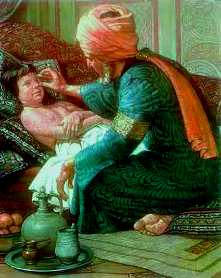
“Ale, especially that made from barley, clogs the sinews, causes headache and congestion of the head, yet it overstimulates the action of the kidneys, and, when drunk to excess, lowers the temperature. That, however, which is brewed from wheat, and is flavoured with mint and parsley, is judged better for everybody. Still, in the case of persons exposed to the sun’s heat, in feverish conditions and sultry weather, its use is inadvisable.”

1 comment:
hi ... just note to p0int out that the photo illustrating the quote from Marcus Aurelius' Meditations is acually of Marcus Aurelius Antoninus called Caracalla. Different emperor altogether.
"Although his name claimed his descent from early emperors, Marcus Aurelius Antoninus (r. 211–17 A.D.), nicknamed Caracalla, soon abandoned the iconographic traditions of the Antonine dynasty that had been employed in his early portraits in favor of a military style characterized by closely cropped curls and a stubble beard. In this portrait head, once part of a statue of which other fragments survive, the shortness of Caracalla's hair and beard were created by stippling a chisel across the surface of the stone, a technique called "negative carving." This technique not only marks a drastic shift away from the long, deeply drilled locks typical of Antonine (1998.209) and early Severan portraits, but, together with an intense rendering of facial expression, produces an immediate and powerful presence—the emperor's scowl is threatening and entirely realistic.' it is on display at the Met in NY . Cheers
Post a Comment